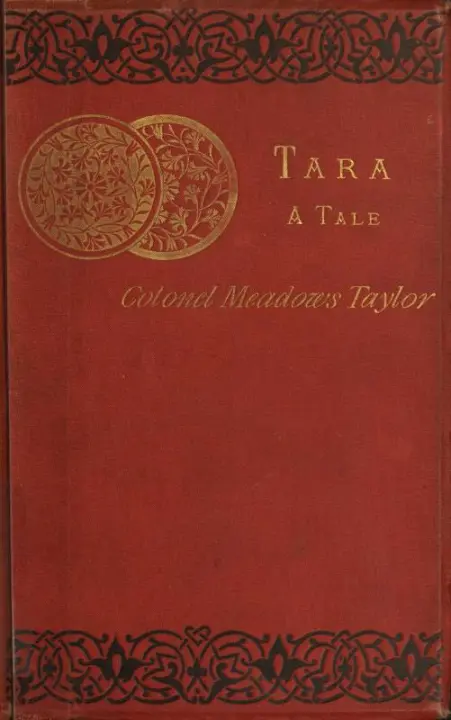
Tara: A Mahratta Tale
Meadows Taylor
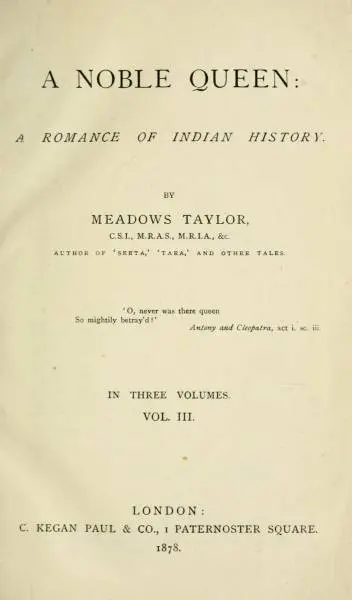
THE CLASSIC COLLECTION · 1878
"A Noble Queen: A Romance of Indian History" by Meadows Taylor is a historical novel written in the late 19th century. The narrative unfolds against the backdrop of ancient Indian politics and romance, centered around the figure of King Ibrahim II of Beejapoor, alongside the intertwined lives of characters such as Zóra, her grandfather Syud Luteef Shah Wallee, and the military leader Abbas Khan. The book explores themes of loyalty, justice, and the complexities of love as the characters navigate through triumphs and betrayals in a richly described historical setting. At the start of the novel, the triumphal entry of King Ibrahim II into Beejapoor marks the end of prolonged conflicts with rival states. The atmosphere is celebratory, as the people express their joy after years of turmoil, but this joy is soon set against historical injustices, particularly the plight of Zóra and her grandfather, who have suffered at the hands of the treacherous Osman Beg. As the narrative progresses, Zóra's complex emotions regarding her past and her connection with Abbas Khan become central to the plot, illustrating her strength and resilience. The opening establishes not only the historical context but also the personal stakes involved, setting the stage for a tale of redemption and royal intrigue.
Introduction adapted from the source catalogue; source summaries may be automatically generated.
Free to read · English · 71,518 words · No account needed
MAKE TIME FOR A GOOD BOOK
On by default. Untick to stop anonymous reading totals. Each page counts after 10 seconds in view. How this works.
Anonymous counting is on unless you have switched it off.
"Blessed Mother of God!" exclaimed Maria, sitting down hastily; "it cannot be Diego. What could have brought him here?"
"Diego! Yes, that was the name thy brother called him. But why dost
thou ask?"
"He was my malignant enemy, sister."
"And Alla hath delivered thee from him. And thou wilt forgive him, Maria, even as I forgave mine."
"Yes," she replied, slowly, "I will indeed forgive him. See, my brother hath put on his vestment; he is holding up the cross, and the men about are kneeling, and the dying man is confessing his sins. Look!"
It was as she said. And the ghostly confession was proceeding, one of the men holding a cup of cordial to the sufferer's lips as he made motions for it--a broken tale of sin and crime, which we dare not attempt to record. Yet it came forth from the dry, parched lips hardly without a break till its close. Francis d'Almeida had not missed a word; though, from his extreme weakness, Dom Diego had sometimes spoken in low, broken whispers, gasping for breath.
"There is no more to tell," he said, faintly, at its close. "As I shall answer in the judgment, no more. I have hidden nothing; but, with the absolution of the Church, I pray thee let thy sister say, while I can hear and see, 'I forgive thee, Diego,' and I shall then die happy."
Then Francis sent for his sister, and whispered, "It is he. Dost thou
forgive him, Maria?"
"Freely and truly," she said, firmly, "as I may be forgiven."
Dom Diego could not speak now, but he could hear the words which fell from the woman he had loved so madly and with so sinful a purpose. He tried to raise his hands, but they fell back on the sheet helplessly and his large bright eyes were glazing fast, and becoming dim. "Maria! Maria! forgive--pardon!" they heard him say in a whisper scarcely audible. And while the Bishop was holding up the cross before him, and preparing to recite the Beaticum, she could not resist the impulse, but took the cold hand of the dying man, and said, "I forgive; fear not." Then a soft smile of peace and resignation seemed to pass over his features. "Forgiven," he murmured; and as the words of "Depart, Christian soul, in the name of God the Father Almighty who created thee," were spoken, the spirit passed away with a slight shivering convulsion, and the body lay still in death; and the Bishop and his sister, their sweet voices mingling, chanted the Litany for the dead, which seemed to linger amidst the small domes and grooves of the high roof, echoed, as it were, by angels.
Your reading position is saved on this browser. Take it to another device with a library code. Reading pages adapt to text, rather than matching a printed edition.
Meadows Taylor
Meadows Taylor
Meadows Taylor
Meadows Taylor
BEHIND THE BOOK
This eBook is for the use of anyone anywhere in the United States and most other parts of the world at no cost and with almost no restrictions whatsoever. You may copy it, give it away or re-use it under the terms of the Project Gutenberg License included with this eBook or online at www.gutenberg.org. If you are not located in the United States, you will have to check the laws of the country where you are located before using this eBook. Read the source licence.
The original source file, including credits and licence, is retained by this library. Request an original-format copy at no charge. Please include the book title and Project Gutenberg identifier #44789.
KEEP YOUR CURIOSITY GOING
Cécile Tormay

Moritz Busch
Coulson Kernahan
John L. Ransom

Maurice Baring
Frances Wright