THE CLASSIC COLLECTION✦My diaries, being a personal narrative of events 1888-1914, Part 2 (1900-1914)CLASSIC FREE BOOKS
My diaries, being a personal narrative of events 1888-1914, Part 2 (1900-1914)
Wilfrid Scawen Blunt
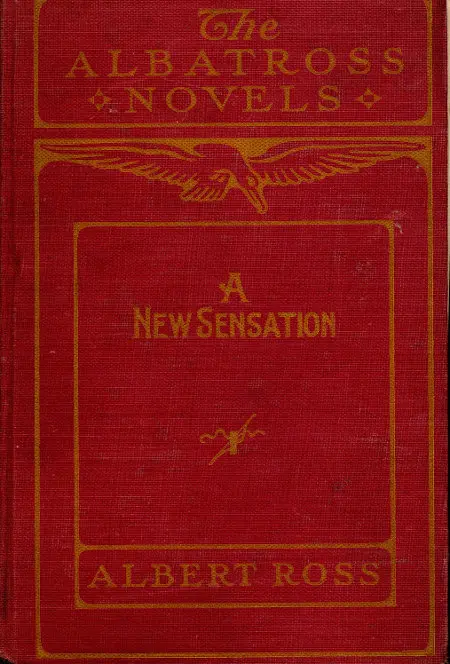
THE CLASSIC COLLECTION · 1898
"A New Sensation" by Albert Ross is a novel written in the late 19th century. The story revolves around the main character, Donald Camran, who is recovering from an illness and contemplating a journey to the Caribbean. Seeking company, he decides to hire a female typewriter to assist with his writing and serve as a traveling companion, leading him to navigate the complexities of personal relationships and societal expectations. At the start of the novel, Donald is engaged in a conversation with his friends, who suggest he needs a "new sensation" to rejuvenate his spirit. After a failed marriage proposal, he resolves to take a trip and advertise for a typewriter to accompany him. The opening portion introduces his humorous and candid determination to embark on this unconventional journey while setting the stage for the exploration of his interactions with women, specifically the potential companions responding to his advertisement, including the intriguing letters he receives. The narrative establishes a blend of light-heartedness and introspection as Donald grapples with his past and the uncertainties of the impending journey.
Introduction adapted from the source catalogue; source summaries may be automatically generated.
Free to read · English · 81,766 words · No account needed
MAKE TIME FOR A GOOD BOOK
On by default. Untick to stop anonymous reading totals. Each page counts after 10 seconds in view. How this works.
Anonymous counting is on unless you have switched it off.
It was rather dull, take it altogether, the dinner, but when we were again in a cab and rolling toward Forty-fifth Street, Miss May brightened, like the close of a cloudy day, just before the sun sinks into the obscurity of the western sky. She put one of her hands on mine, quite as if the act was a wholly thoughtless one, but it sufficed to cheer me up. She even volunteered a prophesy that we would be good friends and contented fellow voyagers.
Before we reached her door she asked me at what hour I would call on the morrow, quite as if anxious to see me. After a little debate I decided upon three in the afternoon. That would give her the entire morning with her dressmaker, for necessary alterations in the garments she had purchased.
She did not seem to notice particularly when I raised the gloved hand I held and pressed it to my lips at parting. It was an act that any lady might pardon, and she probably thought nothing of it.
"To-morrow, then, at three," she said, smiling at me from the curbstone.
"Yes. Don't keep me waiting," I answered, remembering the morning.
"I will try not to; these dressmakers are so unreliable, though. You--you wouldn't rather I would come to your rooms? Perhaps there is another of those rules we have been running across, against it. If there is none, and you prefer--"
I said I approved of the idea highly and that I was at liberty to invite to my apartment any person I pleased.
"You spoke of a machine that I have never used," said Miss May, tentatively. "If you have one there, as a sort of excuse--"
"I have one," said I. "Although it won't be needed for that purpose. You remember the number, -- West Thirty-fourth."
She nodded and spoke to my driver, repeating it to him. Then with another of her bright smiles she waved me good-by and ascended the steps, while I was driven away.
"Henry," I was saying ten minutes after, to the hall boy, "I expect a young lady to-morrow, between three and four, who will ask for Mr. Camwell."
"There isn't any Mr. Camwell in the house, sir," said the boy.
"There will be at that hour. He will be in my rooms. You may not see him enter and you may not see him leave, but he will be here. All you have to do is to say 'Yes, ma'am,' to the lady and bring her to my door."
"I understand," said Henry, with a wholly superfluous grin, that showed how little common sense the average hall-boy possesses.
Your reading position is saved on this browser. Take it to another device with a library code. Reading pages adapt to text, rather than matching a printed edition.
BEHIND THE BOOK
This eBook is for the use of anyone anywhere in the United States and most other parts of the world at no cost and with almost no restrictions whatsoever. You may copy it, give it away or re-use it under the terms of the Project Gutenberg License included with this eBook or online at www.gutenberg.org. If you are not located in the United States, you will have to check the laws of the country where you are located before using this eBook. Read the source licence.
The original source file, including credits and licence, is retained by this library. Request an original-format copy at no charge. Please include the book title and Project Gutenberg identifier #40937.
KEEP YOUR CURIOSITY GOING
Wilfrid Scawen Blunt
Wilfrid Scawen Blunt

E. W. (Edgar Watson) Howe
Coulson Kernahan

Maurice Baring
Frances Wright