THE CLASSIC COLLECTION✦My diaries, being a personal narrative of events 1888-1914, Part 2 (1900-1914)CLASSIC FREE BOOKS
My diaries, being a personal narrative of events 1888-1914, Part 2 (1900-1914)
Wilfrid Scawen Blunt
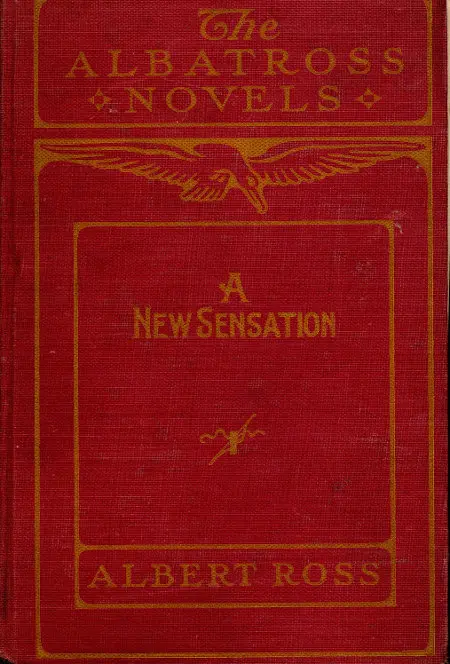
THE CLASSIC COLLECTION · 1898
"A New Sensation" by Albert Ross is a novel written in the late 19th century. The story revolves around the main character, Donald Camran, who is recovering from an illness and contemplating a journey to the Caribbean. Seeking company, he decides to hire a female typewriter to assist with his writing and serve as a traveling companion, leading him to navigate the complexities of personal relationships and societal expectations. At the start of the novel, Donald is engaged in a conversation with his friends, who suggest he needs a "new sensation" to rejuvenate his spirit. After a failed marriage proposal, he resolves to take a trip and advertise for a typewriter to accompany him. The opening portion introduces his humorous and candid determination to embark on this unconventional journey while setting the stage for the exploration of his interactions with women, specifically the potential companions responding to his advertisement, including the intriguing letters he receives. The narrative establishes a blend of light-heartedness and introspection as Donald grapples with his past and the uncertainties of the impending journey.
Introduction adapted from the source catalogue; source summaries may be automatically generated.
Free to read · English · 81,766 words · No account needed
MAKE TIME FOR A GOOD BOOK
On by default. Untick to stop anonymous reading totals. Each page counts after 10 seconds in view. How this works.
Anonymous counting is on unless you have switched it off.
"Don't laugh at me, but I am going to begin, to-morrow, a--novel!"
"A--novel!" she repeated, wonderingly. "Do you write novels?"
"I am going to write one, with your help," I said, decidedly. "It won't be exactly a novel, either, because it will be based on fact, pretty nearly all fact--in fact. What would you say to a novel based on the very trip we are making?"
She was lost in thought for some minutes.
"Are you serious?" she asked, finally.
"Entirely."
"But, do you think it would be interesting--to--any one else?"
"I am sure of it. Of course I shall suppress our real names, but the rest I mean to put in print precisely as it has occurred. If I am not mistaken it will make the hit of the summer season."
She was silent again.
"Doesn't an author have to know--before he begins his story--how it will end?" she asked, after awhile.
"I suppose he does. I certainly know how this one will."
"How?"
"The hero will marry the heroine, make her the happiest woman on earth, and they will live contentedly ever after."
"Hardly exciting enough, I fear, to suit the popular taste," she commented. "A story, like a play, should have a 'villain.'"
I laughed and said I would use Wesson for that character. I could, if necessary, invent some disreputable things and attach them to his pseudonym.
"And how shall you describe me?" she asked, demurely.
"You will have to wait and see. I shall make one important stipulation. Your part of this writing will be merely mechanical unless I call for aid. It is to be my story, not yours."
"It is a strange idea," she said, watching my face. "Really, I think you had best keep on with your family tree. I am getting quite interested in the Alexanders and Colins who preceded the Dugalds and the Donalds."
"No, I am determined," was my reply. "We will leave those aged gentlemen in their graves and begin the true history of the Marjories and the Dons. There will be time enough for both before you and I end our partnership."
She responded dutifully at last that she was at my disposal, as far as the use of her time was concerned. It was agreed that on the very next morning the novel would be begun.
"And you must not interrupt me, either with approval or disapproval?" I said. "For whatever is written I alone will be responsible."
Your reading position is saved on this browser. Take it to another device with a library code. Reading pages adapt to text, rather than matching a printed edition.
BEHIND THE BOOK
This eBook is for the use of anyone anywhere in the United States and most other parts of the world at no cost and with almost no restrictions whatsoever. You may copy it, give it away or re-use it under the terms of the Project Gutenberg License included with this eBook or online at www.gutenberg.org. If you are not located in the United States, you will have to check the laws of the country where you are located before using this eBook. Read the source licence.
The original source file, including credits and licence, is retained by this library. Request an original-format copy at no charge. Please include the book title and Project Gutenberg identifier #40937.
KEEP YOUR CURIOSITY GOING
Wilfrid Scawen Blunt
Wilfrid Scawen Blunt

E. W. (Edgar Watson) Howe
Coulson Kernahan

Maurice Baring
Frances Wright