Home Life in All Lands—Book III—Animal Friends and Helpers
Charles Morris
THE CLASSIC COLLECTION · 1899
"A New History of the United States" by Charles Morris is a historical account written in the late 19th century. This work provides a comprehensive overview of American history, tracing the nation's development from the earliest days of discovery and settlement to the transformative events surrounding the Spanish-American War and the expansion of the United States into the "Greater Republic." The book aims to highlight the growth and achievements of the nation as well as the significant figures and movements that shaped its history. The opening of the book sets the stage by contextualizing the United States' historical journey, beginning with early explorations by the Northmen and subsequent discoveries by notable figures such as Christopher Columbus and Amerigo Vespucci. It discusses the transformative impact of European settlers on the indigenous populations and outlines the establishment of the original thirteen colonies. Moreover, it introduces the competing interests of Spanish, French, and English explorers in the New World, emphasizing the challenges these early colonists faced while striving for political and religious freedom. This introduction effectively establishes a narrative thread that promises an in-depth exploration of the complex tapestry of American history.
Introduction adapted from the source catalogue; source summaries may be automatically generated.
Free to read · English · 230,395 words · No account needed
MAKE TIME FOR A GOOD BOOK
On by default. Untick to stop anonymous reading totals. Each page counts after 10 seconds in view. How this works.
Anonymous counting is on unless you have switched it off.
It was a serious problem, now that the president of the defunct Confederacy was captured, what should be done with him. He was kept in Fort Monroe until his health was impaired, when he was released on bail; Horace Greeley, the well-known editor of the New York Tribune, being one of his bondsmen. He had been indicted for treason in 1866, being released the following year, but his trial was dropped on the 6th of February, 1869. He passed the remainder of his life in Memphis, and later at Beauvoir, Mississippi, dying in New Orleans, December 6, 1889, in the eighty-second year of his age.
The most carefully prepared statistics of the Civil War give the following facts: Number of men in the Union army furnished by each State and Territory, from April 15, 1861, to close of war, 2,778,304, which, reduced to a three years' standing, was 2,326,168. The number of casualties in the volunteer and regular armies of the United States, according to a statement prepared by the adjutant-general's office, was: Killed in battle, 67,058; died of wounds, 43,012; died of disease, 199,720; other causes, such as accidents, murder, Confederate prisons, etc., 40,154; total died, 349,944; total deserted, 199,105. Number of soldiers in the Confederate service, who died of wounds or disease (partial statement), 133,821. Deserted (partial statement), 104,428. Number of United States troops captured during the war, 212,508; Confederate troops captured, 476,169. Number of United States troops paroled on the field, 16,431; Confederate troops paroled on the field, 248,599. Number of United States troops who died while prisoners, 30,156; Confederate troops who died while prisoners, 30,152. It is safe to say that the number of men killed and disabled on both sides during the War for the Union was fully one million. The public debt of the United States, July 1, 1866, was $2,773,236,173.69, which on the 1st of November, 1897, had been reduced to $1,808,777,643.40.
Mention has been made of the frightful brutalities of Captain Wirz, the keeper of Andersonville prison. He richly merited the hanging which he suffered on the 10th of November, 1865. As has been stated, he was the only person executed for his part in the Civil War.
England, upon receiving news of the arrest of Jefferson Davis, declared all ports, harbors, and waters belonging to Great Britain closed against every vessel bearing the Confederate flag. The French government took the same action a few days later.
More than a generation has passed since the close of the great Civil War, which resulted in the cementing of the Union so firmly that the bonds can never again be broken. Whatever resentment may have been felt lasted but a brief while, and the late war with Spain removed the last vestige.
Your reading position is saved on this browser. Take it to another device with a library code. Reading pages adapt to text, rather than matching a printed edition.
Charles Morris
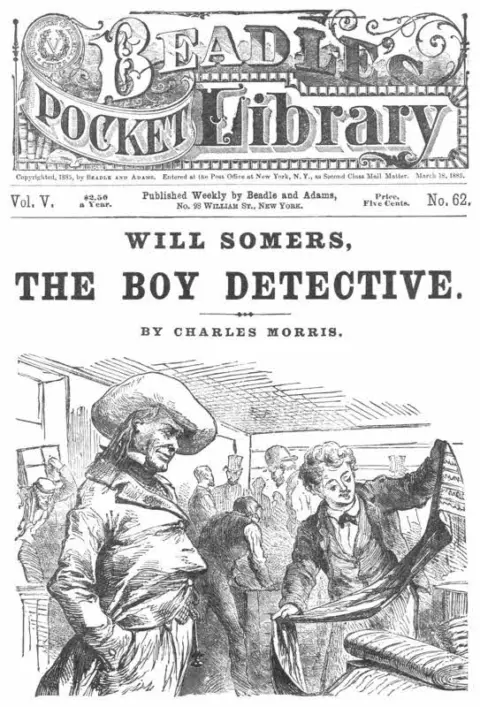
Charles Morris
Charles Morris
Charles Morris & Thomas, Sir Malory
BEHIND THE BOOK
This eBook is for the use of anyone anywhere in the United States and most other parts of the world at no cost and with almost no restrictions whatsoever. You may copy it, give it away or re-use it under the terms of the Project Gutenberg License included with this eBook or online at www.gutenberg.org. If you are not located in the United States, you will have to check the laws of the country where you are located before using this eBook. Read the source licence.
The original source file, including credits and licence, is retained by this library. Request an original-format copy at no charge. Please include the book title and Project Gutenberg identifier #33000.
KEEP YOUR CURIOSITY GOING
Cécile Tormay

Moritz Busch
John L. Ransom
Frances Wright
Cécile Tormay

Mabel Potter Daggett