
The William Henry Letters
Abby Morton Diaz
THE CLASSIC COLLECTION · 1909
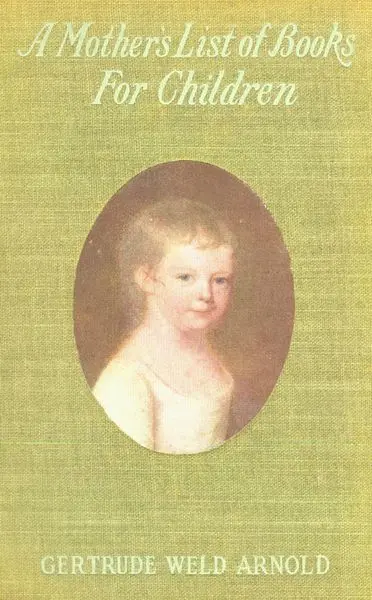
"A Mother's List of Books for Children" by Gertrude Weld Arnold is a compilation aimed at parents seeking quality literature for their children, written in the early 20th century. This resource categorizes children's books based on their suitability for various age groups, providing parents with guidance on selecting appropriate and engaging reading material for their kids. The book focuses on fostering a love of reading through carefully chosen titles, emphasizing the importance of kind and humorous literature. The opening of the book establishes the author's intent and methodology in curating this list. Arnold provides a preface that highlights her attempts to organize the selections according to age rather than school grade, recognizing the varying capacities of young readers. She expresses gratitude to various librarians and acknowledges the historical context of children's literature, reflecting on how some titles have fallen out of favor while new works emerge to shape young minds. The tone is informative and nurturing, aiming to create a resource that will bring joy and enlightenment to families through the medium of literature.
Introduction adapted from the source catalogue; source summaries may be automatically generated.
Free to read · English · 46,165 words · No account needed
MAKE TIME FOR A GOOD BOOK
On by default. Untick to stop anonymous reading totals. Each page counts after 10 seconds in view. How this works.
Anonymous counting is on unless you have switched it off.
This volume, written with Dickens' own eight children in mind, now more than fifty years ago, holds the interest of the boys and girls of to-day as keenly as when it first appeared. The many excellent illustrations add to its attraction and value.
DOLE, C.F.
The Young Citizen.
Heath. .45
Permeated by the spirit of a broad and noble patriotism, and written in the interests of national peace, law, and good government, in regard to which it gives, very simply, much information. There are also chapters on voting, the proper use of the people's money, the ideal city and town, policemen and their duties, et cetera; all quite within the comprehension of a child. The book contains many illustrations.
FOA, EUGÉNIE.
The Boy Life of Napoleon.
Edited by E.S. Brooks.
Lothrop. 1.25
Children will enjoy reading of the childhood days of Napoleon and his brothers and sisters, and of the school-boy life of this remarkable lad who grew up from poverty to become the most wonderful man of his time. Napoleon's experiences as a "king's scholar" in Paris, and as lieutenant of an artillery regiment, are also described. Madame (p. 145) Foa's work is historically accurate, and her style very interesting.
HART, A.B., and MABEL HILL (Editors).
Camps and Firesides of the Revolution.
Macmillan. .50
The second volume of Source Readers is, like the first, wholly made up of pieces written at the time of the events and incidents here described. The language is modernized wherever necessary.--Preface.
LANG, JEANIE.
The Story of General Gordon.
Dutton. .50
The character, as well as the deeds, of this remarkable man, whose life stands for faith, courage, and charity, is interestingly drawn. There are eight pictures in color.
SCUDDER, H.E.
Boston Town.
Houghton. 1.50
Events in the early annals of this old city recounted in pleasant familiar fashion by a grandfather who visits the famous spots with the boys. Many illustrations help to make real the happenings described.
See, saw, sacradown!
Which is the way to Boston Town?
One foot up, the other foot down,
That is the way to Boston Town.
OLD RHYME.
SEAWELL, M.E. (p. 146)
Paul Jones.
Appleton. 1.00
Although this story is professedly and confessedly a romance, history has been consulted at every point. Log-books, journals, and biographies, have been searched, especially the logs, journals, and letters, of Paul Jones himself. Much relating to him has been left out, but nothing of consequence has been put in that is not historically true. The language ascribed to him is, whenever possible, that used by him at the time, or afterward, in his letters and journals.--Introduction.
For Captain Paul Jones ever loved close fighting. FRANKLIN.
Your reading position is saved on this browser. Take it to another device with a library code. Reading pages adapt to text, rather than matching a printed edition.
BEHIND THE BOOK
This eBook is for the use of anyone anywhere in the United States and most other parts of the world at no cost and with almost no restrictions whatsoever. You may copy it, give it away or re-use it under the terms of the Project Gutenberg License included with this eBook or online at www.gutenberg.org. If you are not located in the United States, you will have to check the laws of the country where you are located before using this eBook. Read the source licence.
The original source file, including credits and licence, is retained by this library. Request an original-format copy at no charge. Please include the book title and Project Gutenberg identifier #19157.
KEEP YOUR CURIOSITY GOING
Abby Morton Diaz
Helen Hunt Jackson
Mary Frances Blaisdell
Stuart Dodgson Collingwood

Kate Douglas Smith Wiggin
Hesba Stretton