
Stolen Idols
E. Phillips (Edward Phillips) Oppenheim
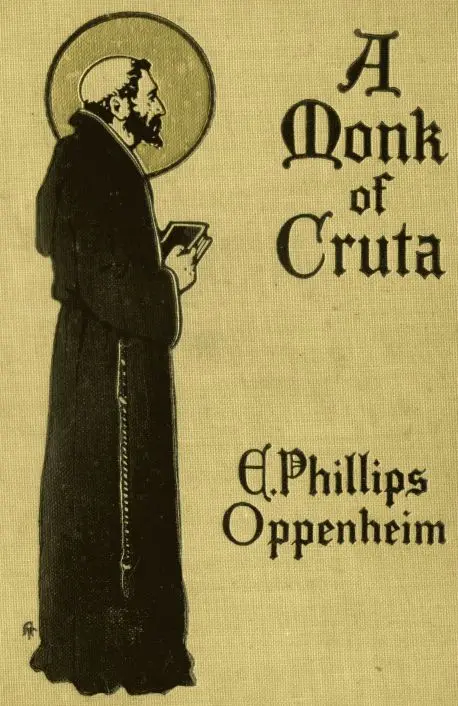
THE CLASSIC COLLECTION · 1894
"A Monk of Cruta" by E. Phillips Oppenheim is a novel written in the late 19th century. The story begins with a dramatic scene set in a dimly lit monastery, focusing on a dying man and his attending priest, Father Adrian, as they confront mortality and the inevitability of death. The narrative hints at themes of sin, redemption, and the weight of secrets, particularly through the protagonist, Martin de Vaux, as he approaches his final moments. The opening of the book introduces us to a tense atmosphere where Father Adrian administers the sacrament to a dying man, who reveals a strong desire to see light in the distance, hinting at hope amidst despair. As the dying man, clearly filled with a mixture of fear and determination, awaits the arrival of a mysterious vessel, the tension builds. This scene culminates in a tragic, violent confrontation that shapes the fates of several characters, including a child and a former associate of the dying man. It sets in motion a chain of events affected by past secrets, suggesting that the interplay of love and vengeance will play pivotal roles throughout the narrative.
Introduction adapted from the source catalogue; source summaries may be automatically generated.
Free to read · English · 71,932 words · No account needed
MAKE TIME FOR A GOOD BOOK
On by default. Untick to stop anonymous reading totals. Each page counts after 10 seconds in view. How this works.
Anonymous counting is on unless you have switched it off.
"I don't believe you'll like it, but--the fact is, Adrea wants you to go and see her. I promised that I would do my best to get you to call with me this afternoon. If you don't mind, I wish you would," he added wistfully.
"I will go with you certainly, if you wish it," Paul answered, not too cordially, for he did not wish his brother to know that it was what he had already planned to do. "Did she tell you that we had already a slight acquaintance?"
"Yes! You rode home in a cab together from Lady Swindon's, didn't you? There was only one, and it was raining, so you shared it. Adrea told me that."
Paul nodded. He meant, after he had seen Adrea, to consider whether it would not be best to tell his brother everything. But, for the present, her story was enough. They turned into Pall Mall, and, almost immediately, Arthur's hat was in his hand, and he was on the edge of the pavement, colouring with pleasure. A small victoria had pulled up by the side, and Paul found himself face to face with Adrea.
She was muffled up in rich brown furs, and almost invisible, but her dark eyes flashed into his from underneath her thick veil. After the first greeting she scarcely noticed Arthur; it was Paul upon whom her eyes were bent.
"You are in London again, then, Mr. de Vaux," she remarked. "Have you discovered that, after all, the country is a little triste in this land of damp and fogs--the country in November, I mean--or is it only important business which has brought you up!"
"The latter," he answered, "as it happens. I am glad to see that the damp and fogs which you complain of have not affected your health."
"I am quite well, thanks," she answered. "How long are you staying in
town?"
"For less than a week, I think."
"Well, it is too cold to talk here. Will you come and let me give you some tea this afternoon, after the fashion of you strange islanders? I want you to, please."
Paul looked her straight in the face. "You are very kind; I shall be
glad to," he answered.
She nodded. "About five o'clock. I go to sleep till then. Shall you come, Arthur?" she added carelessly.
"I cannot, so late as that," he answered despondently.
"Ah, I forgot. You are going down to Aldershot, aren't you? Don't
overwork yourself."
Your reading position is saved on this browser. Take it to another device with a library code. Reading pages adapt to text, rather than matching a printed edition.
E. Phillips (Edward Phillips) Oppenheim

E. Phillips (Edward Phillips) Oppenheim
E. Phillips (Edward Phillips) Oppenheim
E. Phillips (Edward Phillips) Oppenheim
BEHIND THE BOOK
This eBook is for the use of anyone anywhere in the United States and most other parts of the world at no cost and with almost no restrictions whatsoever. You may copy it, give it away or re-use it under the terms of the Project Gutenberg License included with this eBook or online at www.gutenberg.org. If you are not located in the United States, you will have to check the laws of the country where you are located before using this eBook. Read the source licence.
The original source file, including credits and licence, is retained by this library. Request an original-format copy at no charge. Please include the book title and Project Gutenberg identifier #31535.
KEEP YOUR CURIOSITY GOING
Coulson Kernahan

Maurice Baring
Frances Wright
Cécile Tormay

Frederic Jesup Stimson

W. H. P. (William Henry Pope) Jarvis