
Stolen Idols
E. Phillips (Edward Phillips) Oppenheim
THE CLASSIC COLLECTION · 1894
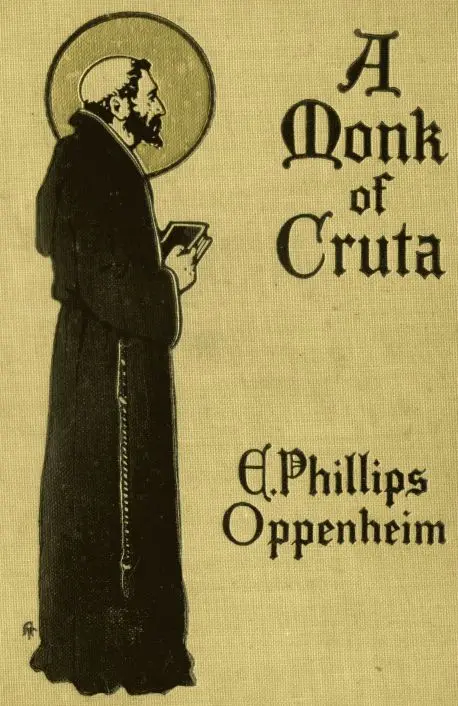
"A Monk of Cruta" by E. Phillips Oppenheim is a novel written in the late 19th century. The story begins with a dramatic scene set in a dimly lit monastery, focusing on a dying man and his attending priest, Father Adrian, as they confront mortality and the inevitability of death. The narrative hints at themes of sin, redemption, and the weight of secrets, particularly through the protagonist, Martin de Vaux, as he approaches his final moments. The opening of the book introduces us to a tense atmosphere where Father Adrian administers the sacrament to a dying man, who reveals a strong desire to see light in the distance, hinting at hope amidst despair. As the dying man, clearly filled with a mixture of fear and determination, awaits the arrival of a mysterious vessel, the tension builds. This scene culminates in a tragic, violent confrontation that shapes the fates of several characters, including a child and a former associate of the dying man. It sets in motion a chain of events affected by past secrets, suggesting that the interplay of love and vengeance will play pivotal roles throughout the narrative.
Introduction adapted from the source catalogue; source summaries may be automatically generated.
Free to read · English · 71,932 words · No account needed
MAKE TIME FOR A GOOD BOOK
On by default. Untick to stop anonymous reading totals. Each page counts after 10 seconds in view. How this works.
Anonymous counting is on unless you have switched it off.
At the corner of the square, two men were standing together talking, and as the hansom passed within a yard or two of them both glanced idly in, and then started. Paul, who had been looking straight ahead of him, and seeing nothing, turned round, startled by a familiar exclamation, just in time to see his brother Arthur, and Leslie Horton, gazing after the cab. The incident troubled him, as much for her sake as his own. But, looking into her face, he could not see that she was in any way disturbed, although she must have seen the two men, and would probably have recognised them as having been present at Lady Swindon's reception. Her face was quite unmoved, but in a moment or two she asked a question.
"Who was the younger and better looking of those two men; the one with violets in his coat, like yours?"
"It was my brother," he answered simply. "I am afraid, too, that he
recognised you."
"So far as I am concerned, that is of no consequence at all," she
answered lightly.
He turned away with a sudden sinking of the heart. He knew, too well, that her carelessness was not assumed. How was he to interpret it?
Their drive was finished in silence, and they pulled up before a handsome, though somewhat sombre-looking house in a back street.
"My rooms are here," she remarked.
He stepped on to the pavement, and assisted her to alight. The thought of leaving her so abruptly was painful to him, and yet he dreaded to hear her invite him to go in with her; nevertheless, she did so.
"If you are not in a hurry, perhaps you will come in, and let me give you a cup of tea," she said, looking him full in the face.
His heart sank. What was he to think now? And yet he was absurdly glad that he was not to leave her.
"Do you mean it?" he asked.
"Of course! I should not have asked you else. Are you very much shocked?" she added, with a mocking gleam in her eyes. "It is not proper, is it! I confess I did not think of that. But do come," she added, with a sudden bewitching smile.
"I shall be delighted," he answered, gravely enough, but truthfully. He turned to pay the cabman, and followed her into the house.
"My rooms are upstairs," she remarked, leading the way. "The luxury of a first floor is at present beyond me."
Your reading position is saved on this browser. Take it to another device with a library code. Reading pages adapt to text, rather than matching a printed edition.
E. Phillips (Edward Phillips) Oppenheim

E. Phillips (Edward Phillips) Oppenheim
E. Phillips (Edward Phillips) Oppenheim
E. Phillips (Edward Phillips) Oppenheim
BEHIND THE BOOK
This eBook is for the use of anyone anywhere in the United States and most other parts of the world at no cost and with almost no restrictions whatsoever. You may copy it, give it away or re-use it under the terms of the Project Gutenberg License included with this eBook or online at www.gutenberg.org. If you are not located in the United States, you will have to check the laws of the country where you are located before using this eBook. Read the source licence.
The original source file, including credits and licence, is retained by this library. Request an original-format copy at no charge. Please include the book title and Project Gutenberg identifier #31535.
KEEP YOUR CURIOSITY GOING
Coulson Kernahan

Maurice Baring
Frances Wright
Cécile Tormay

Frederic Jesup Stimson

W. H. P. (William Henry Pope) Jarvis