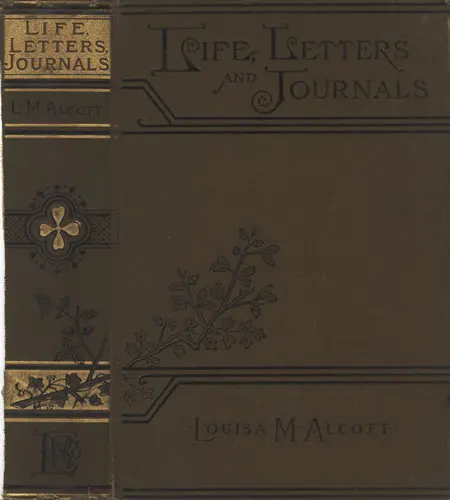
Louisa May Alcott : Her Life, Letters, and Journals
Louisa May Alcott
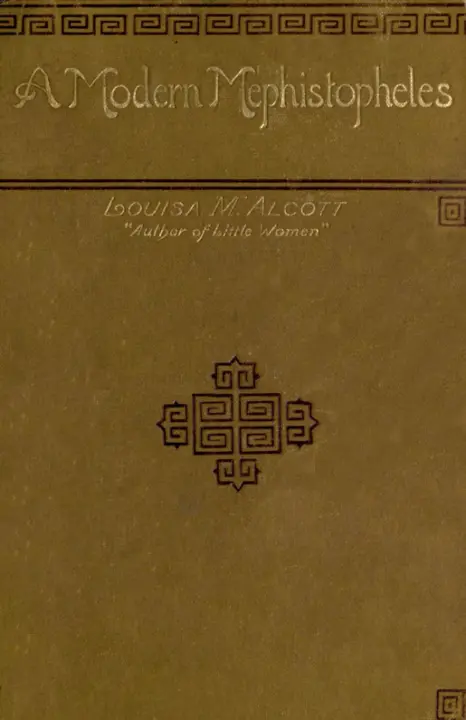
THE CLASSIC COLLECTION · 1877
"A Modern Mephistopheles, and A Whisper in the Dark" by Louisa May Alcott is a novel written in the late 19th century. The book delves into the struggles of its main characters, Felix Canaris, a young man grappling with despair and hopelessness, and Jasper Helwyze, a mysterious benefactor. Their relationship appears complex, with elements of mentorship, power dynamics, and the exploration of artistic ambition against a backdrop of personal turmoil. The beginning of the novel sets a somber tone, beginning with a desolate scene of a cold garret where Felix Canaris contemplates his despair as he burns his manuscripts—a symbol of his failed dreams. The introduction of Jasper Helwyze shifts the narrative; he interrupts Canaris's dark resolve and offers him a chance at redemption through work and mentorship. As Canaris accepts Helwyze's offer, it becomes clear that their relationship will intertwine ambition and dependency. The mood subtly shifts from despair to an uncertain hope as Canaris embarks on a new chapter, influenced by the enigmatic figure of Helwyze, whose intentions feel both alluring and dangerous.
Introduction adapted from the source catalogue; source summaries may be automatically generated.
Free to read · English · 73,492 words · No account needed
MAKE TIME FOR A GOOD BOOK
On by default. Untick to stop anonymous reading totals. Each page counts after 10 seconds in view. How this works.
Anonymous counting is on unless you have switched it off.
By this time Gladys was no longer quite herself: an inward excitement possessed her, a wild desire to sing her very heart out came over her, and a strange chill, which she thought a vague presentiment of coming ill, crept through her blood. Every thing seemed vast and awful; every sense grew painfully acute; and she walked as in a dream, so vivid, yet so mysterious, that she did not try to explain it even to herself. Her identity was doubled: one Gladys moved and spoke as she was told,—a pale, dim figure, of no interest to any one; the other was alive in every fibre, thrilled with intense desire for something, and bent on finding it, though deserts, oceans, and boundless realms of air were passed to gain it.
Olivia wondered at her unsuspected power, and felt a little envious of her enchanting gift. But she was too absorbed in “setting the stage,” dressing her prima donna, and planning how to end the spectacle with her favorite character of Cleopatra, to do more than observe that Gladys’s eyes were luminous and large, her face growing more and more colorless, her manner less and less excited, yet unnaturally calm.
“This is the last, and you have the stage alone. Do your best for Felix; then you shall rest and be thanked,” she whispered, somewhat anxiously, as she placed Elaine in her tower, leaning against the dark screen, which was unfolded, to suggest the casement she flung back when Launcelot passed below,—
“And glanced not up, nor waved his hand, Nor bade farewell, but sadly rode away.”
The “lily maid of Astolat” could not have looked more wan and weird than Gladys, as she stood in her trailing robes of dead white, with loosely gathered locks, hands clasped over the gay bit of tapestry which simulated the cover of the shield, eyes that seemed to see something invisible to those about her, and began her song, in a veiled voice, at once so sad and solemn, that Helwyze held his breath, and Canaris felt as if she called him from beyond the grave:—
“Sweet is true love, tho’ given in vain, in vain; And sweet is death, who puts an end to pain; I know not which is sweeter, no, not I.
Love, art thou sweet? then bitter death must be; Love, thou art bitter; sweet is death to me. O Love, if death be sweeter, let me die.
Sweet love, that seems not made to fade away, Sweet death, that seems to make us loveless clay, I know not which is sweeter, no, not I.
Your reading position is saved on this browser. Take it to another device with a library code. Reading pages adapt to text, rather than matching a printed edition.
Louisa May Alcott
Louisa May Alcott
Louisa May Alcott
Louisa May Alcott
BEHIND THE BOOK
This eBook is for the use of anyone anywhere in the United States and most other parts of the world at no cost and with almost no restrictions whatsoever. You may copy it, give it away or re-use it under the terms of the Project Gutenberg License included with this eBook or online at www.gutenberg.org. If you are not located in the United States, you will have to check the laws of the country where you are located before using this eBook. Read the source licence.
The original source file, including credits and licence, is retained by this library. Request an original-format copy at no charge. Please include the book title and Project Gutenberg identifier #54212.
KEEP YOUR CURIOSITY GOING
Coulson Kernahan

Maurice Baring
Frances Wright
Cécile Tormay

Frederic Jesup Stimson

W. H. P. (William Henry Pope) Jarvis