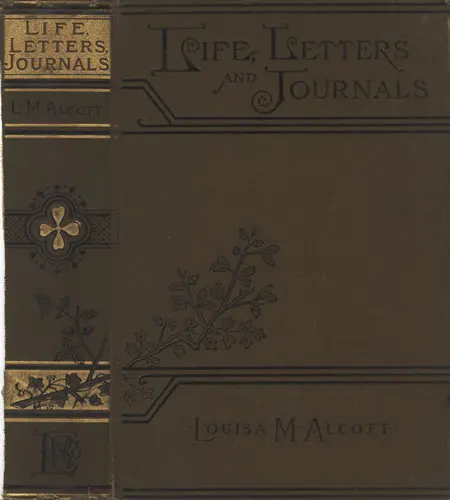
Louisa May Alcott : Her Life, Letters, and Journals
Louisa May Alcott
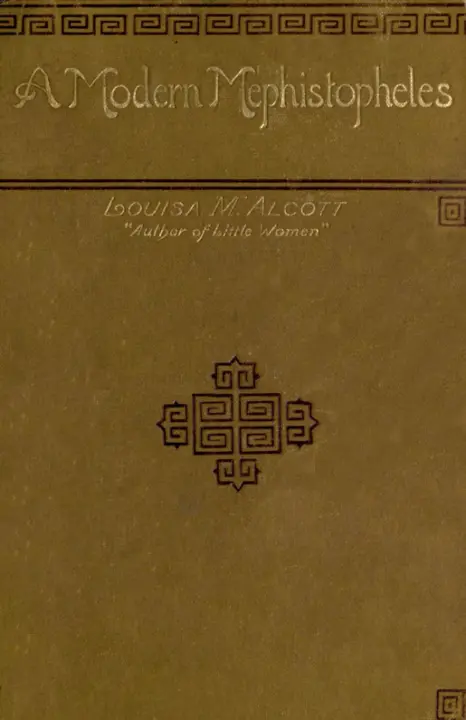
THE CLASSIC COLLECTION · 1877
"A Modern Mephistopheles, and A Whisper in the Dark" by Louisa May Alcott is a novel written in the late 19th century. The book delves into the struggles of its main characters, Felix Canaris, a young man grappling with despair and hopelessness, and Jasper Helwyze, a mysterious benefactor. Their relationship appears complex, with elements of mentorship, power dynamics, and the exploration of artistic ambition against a backdrop of personal turmoil. The beginning of the novel sets a somber tone, beginning with a desolate scene of a cold garret where Felix Canaris contemplates his despair as he burns his manuscripts—a symbol of his failed dreams. The introduction of Jasper Helwyze shifts the narrative; he interrupts Canaris's dark resolve and offers him a chance at redemption through work and mentorship. As Canaris accepts Helwyze's offer, it becomes clear that their relationship will intertwine ambition and dependency. The mood subtly shifts from despair to an uncertain hope as Canaris embarks on a new chapter, influenced by the enigmatic figure of Helwyze, whose intentions feel both alluring and dangerous.
Introduction adapted from the source catalogue; source summaries may be automatically generated.
Free to read · English · 73,492 words · No account needed
MAKE TIME FOR A GOOD BOOK
On by default. Untick to stop anonymous reading totals. Each page counts after 10 seconds in view. How this works.
Anonymous counting is on unless you have switched it off.
Down fell the curtain there, and the two men looked at one another in silence for an instant, dazzled, troubled, and surprised; for in this brilliant, impassioned creature they did not recognize the Gladys they believed they knew so well.
“What possessed her to sing that? She is so unlike herself, I do not know her,” said Canaris, excited by the discoveries he was making.
“She is inspired to-night; so be prepared for any thing. These women will work wonders, they are acting to the men they love,” answered Helwyze, warily, yet excited also; because, for him, a double drama was passing on that little stage, and he found it marvellously fascinating.
“I never knew how beautiful she was!” mused Canaris, half aloud, his eyes upon the blue draperies which hid her from his sight.
“You never saw her in such gear before. Splendor suits her present mood, as well as simplicity becomes her usual self-restraint. You have made her jealous, and your angel will prove herself a woman, after all.”
“Is that the cause of this sudden change in her? Then I don’t regret playing truant, for the woman suits me better than the angel,” cried Canaris, conscious that the pale affection he had borne his wife so long was already glowing with new warmth and color, in spite of his seeming neglect.
“Wait till you see Olivia as Guinevere. I know she cannot resist that part, and I suspect she is willing to efface herself so far that she may take us by storm by and by.”
Helwyze prophesied truly; and, when next the curtains parted, the stately Queen sat in the nunnery of Almesbury, with the little novice at her feet. Olivia was right splendid now, for her sumptuous beauty well became the costly stuffs in which she had draped herself with the graceful art of a woman whose physical loveliness was her best possession. A trifle too gorgeous, perhaps, for the repentant Guinevere; but a most grand and gracious spectacle, nevertheless, as she leaned in the tall carved chair, with jewelled arms lying languidly across her lap, and absent eyes still full of love and longing for lost Launcelot.
Gladys, in white wimple and close-folded gown of gray, sat on a stool beside the “one low light,” humming softly, her rosary fallen at her feet,—
“the Queen looked up, and said, ‘O maiden, if indeed you list to sing Sing, and unbind my heart, that I may weep.’ Whereat full willingly sang the little maid,
Late, late, so late! and dark the night and chill! Late, late, so late! but we can enter still. Too late! too late! ye cannot enter now.
Your reading position is saved on this browser. Take it to another device with a library code. Reading pages adapt to text, rather than matching a printed edition.
Louisa May Alcott
Louisa May Alcott
Louisa May Alcott
Louisa May Alcott
BEHIND THE BOOK
This eBook is for the use of anyone anywhere in the United States and most other parts of the world at no cost and with almost no restrictions whatsoever. You may copy it, give it away or re-use it under the terms of the Project Gutenberg License included with this eBook or online at www.gutenberg.org. If you are not located in the United States, you will have to check the laws of the country where you are located before using this eBook. Read the source licence.
The original source file, including credits and licence, is retained by this library. Request an original-format copy at no charge. Please include the book title and Project Gutenberg identifier #54212.
KEEP YOUR CURIOSITY GOING
Coulson Kernahan

Maurice Baring
Frances Wright
Cécile Tormay

Frederic Jesup Stimson

W. H. P. (William Henry Pope) Jarvis