THE CLASSIC COLLECTION✦Great Men as Prophets of a New EraCLASSIC FREE BOOKS
Great Men as Prophets of a New Era
Newell Dwight Hillis
THE CLASSIC COLLECTION · 1896
"A Man's Value to Society: Studies in Self Culture and Character" by Newell Dwight Hillis is a philosophical text written in the late 19th century. The work delves into the importance of self-culture, character building, and one's contributions to society. The author examines the intrinsic worth of individuals, drawing connections between personal development and social value, positing that a person's moral qualities significantly impact their utility to the community. At the start of the text, Hillis introduces the concept of human beings as wasteful in both material and spiritual aspects, prompting a reflection on each person's value to society. He critiques societal tendencies to overlook individual potential and stresses the importance of self-awareness and moral integrity. He emphasizes that the richness of a person's life experience, knowledge, and cultivation of virtues is vital for societal progress. Hillis elucidates that rather than being merely economic units, individuals should seek to maximize their ethical and intellectual contributions to civilization.
Introduction adapted from the source catalogue; source summaries may be automatically generated.
Free to read · English · 64,113 words · No account needed
MAKE TIME FOR A GOOD BOOK
On by default. Untick to stop anonymous reading totals. Each page counts after 10 seconds in view. How this works.
Anonymous counting is on unless you have switched it off.
Journeying across the plains, travelers looking through the car windows behold the California trail. The wagon ruts have become ditches, and the old route is marked by human graves. But long ago men exchanged the ox cart, the deep wagon ruts, and the wearisome journey, for palace cars. Thus there are many paths of sin worn deep by pressure of human feet. Many would fain forsake them. But is there any divine power to cast up some divine highway? Is there a happiness? Nature is kind to her grains and sweeps them forward toward harvests; is kind toward her apple seeds and bids them journey unto orchards; is kind unto the March days, and bids them journey into perpetual summer.
And man would fain find some divine friend who will lead him unto great personal worth. As if to fulfill man's deepest needs, Jesus Christ enters the earthly scene. He comes to hasten man's step along that pathway that leads from littleness unto largeness. Before our admiring vision the Divine Teacher seems like some sacred husbandman, His garden our earth, good men and great earth's richest fruit. He asks each youth to love and make the most of himself, that later on he may be bread to the hungry, medicine to the wounded, shelter to the weak. He bids each love his own reason, getting wisdom with that eager passion that Hugh Miller had for knowledge. He bids each make the most of friendship, emulating Plato in his love for his noble teacher. He asks each to love industry, emulating Peabody, whose generosity gushed like rivers. He asks each to make the most of courage and self-reliance, emulating Livingstone in self-denying service. He bids each emulate and look up to Jesus Christ, as Dante, midst the pitchy night, looked up toward the star. He bids each move heaven and earth to achieve for himself a worthy manhood. For thus only can earth ever be moved back unto heaven.
Abelard, 166
Abraham, influence on posterity, 16
Abundant Life, 29
AEschylus, 198
Agassiz, 102, 237
Aristotle, 124
Arkwright, 99
Arnold, 135, 216, 292
Thos., 164
Aspirations and Ideals, 53
number and kind, 61
power to lift life, 58
the use of, 63
rebuke lower life, 66
enemies of, 70
Babbage, 287
Bancroft, Geo., 10
Beatrice, 44
Beecher, 19, 95, 134, 142, 188, 258
Bible, 32, 98, 142, 164, 255
Body, a thinking machine, 80
delicacy of sensation, 80
evolution, 81
its needs as stimuli, 88
channel of knowledges, 88
system of moral registration, 92
Books and reading, 233
increase of power of vision, 238
show men at their best, 239
tools for the mind, 240
multiply brain forces, 242
preserve the spirit of great men, 243
give information, 246
show unity of progress, 249
choice of books, 250
Brooks, Phillips, 44, 254
Brown, John, 58
Browning, Mrs., 248
Bulwer Lytton, 135
Bunyan, 114
Burns, 158, 294
Byron, 48, 188, 198, 250
Cadmus, 16
Caird, 84
Capital, original, 13
Carlyle, 76, 214, 234, 239, 255
Castelar, 40
Channing, 192, 225, 234
Character, 31, 44
defined, 34
materials of, 34
Charles IX., 203
Clay, 154, 262
Climate, effect on race, 16
Coleridge, 47, 132, 200, 293
Your reading position is saved on this browser. Take it to another device with a library code. Reading pages adapt to text, rather than matching a printed edition.
Newell Dwight Hillis
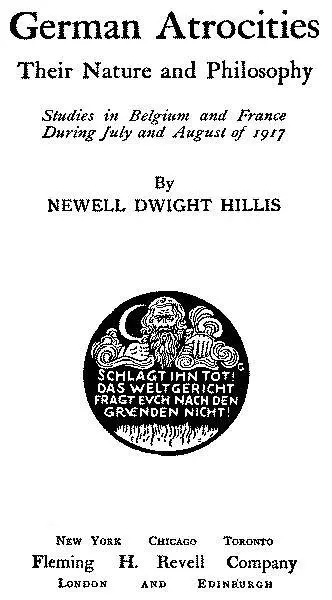
Newell Dwight Hillis

Newell Dwight Hillis
Newell Dwight Hillis
BEHIND THE BOOK
This eBook is for the use of anyone anywhere in the United States and most other parts of the world at no cost and with almost no restrictions whatsoever. You may copy it, give it away or re-use it under the terms of the Project Gutenberg License included with this eBook or online at www.gutenberg.org. If you are not located in the United States, you will have to check the laws of the country where you are located before using this eBook. Read the source licence.
The original source file, including credits and licence, is retained by this library. Request an original-format copy at no charge. Please include the book title and Project Gutenberg identifier #28875.
KEEP YOUR CURIOSITY GOING

David Patterson (Spirit) Hatch
Coulson Kernahan

Ralph Waldo Emerson
Frances Wright

Edwin Abbott Abbott

Joseph Droz