
The lost dirigible
Ralph Henry Barbour
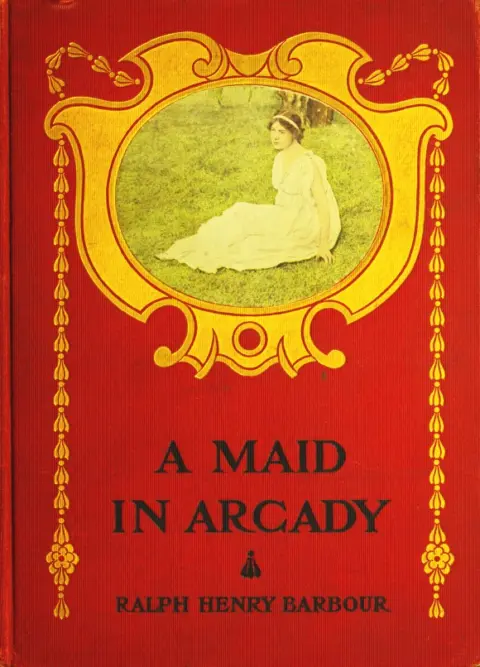
THE CLASSIC COLLECTION · 1906
"A Maid in Arcady" by Ralph Henry Barbour is a novel written in the early 20th century. The story unfolds in a picturesque setting, likely in a fictional New England town, and revolves around Ethan Parmley as the main character. The narrative introduces themes of youthful romance and a touch of mythology, particularly through the charming interactions between Ethan and a young woman he encounters at a beautiful lotus pool. The opening of the book paints a vivid scene along a serene river, where Ethan, a recent law school graduate, is captivated by the tranquility of his surroundings and a mysterious maiden. As he navigates this enchanting setting in his canoe, he discovers Clytie, a water-nymph who evokes classic mythological imagery. Their dialogue is playful and flirtatious, hinting at the budding romance as well as Ethan's inner thoughts about love and desire. The initial chapters set the stage for a leisurely summer romance filled with wit, charm, and a hint of adventure, inviting readers to delve deeper into Ethan's journey as he seeks to connect with Clytie in this idyllic setting.
Introduction adapted from the source catalogue; source summaries may be automatically generated.
Free to read · English · 26,182 words · No account needed
MAKE TIME FOR A GOOD BOOK
On by default. Untick to stop anonymous reading totals. Each page counts after 10 seconds in view. How this works.
Anonymous counting is on unless you have switched it off.
“Greetings, O Clytie!” he said.
She turned to him startledly. A little smile quivered about her lips.
“Good morning, Vertumnus,” she answered. Perhaps his gaze showed a trifle too much interest, for after a brief instant hers stole away. He picked up the paddle and moved the canoe closer to the shore.
“I’m very glad to find you have not yet taken root,” he said gravely.
“Taken root?” she echoed vaguely.
“Yes, for that was your fate at the last, wasn’t it? If I am not mistaken you sat for days on the ground, subsisting on your tears and watching the sun cross the heavens, until at last your limbs became rooted to the ground and you just naturally turned into a sunflower. At least, that’s the way I recollect it.”
“Oh, but you shouldn’t tell me what my fate is to be,” she answered
smilingly.
“Forearmed is forewarned; no, I mean the other way around!” he replied. “Maybe if you just keep your feet moving you’ll escape that fate. It would be awfully uncomfortable, I should say! Besides, pardon me if it sounds rude, sunflowers are such unattractive things, don’t you think so?”
“Yes, I’m afraid they are. The fate of Daphne or Lotis or Syrinx would
be much nicer.”
“What happened to them, please?”
“Why, Daphne was changed to a laurel; have you forgotten?”
“No, but how about the other ladies?”
“Lotis became a lotus and Syrinx a clump of reeds. Pan gathered some and made himself pipes to play on.
“‘Poor nymph!――Poor Pan!――how he did weep to find Naught but a lovely sighing of the wind Along the reedy stream; a half-heard strain Full of sweet desolation――balmy pain.’”
“Shelley, for a dollar,” he said questioningly.
She shook her head smilingly. “Keats,” she corrected.
“Oh, I have a way of getting them mixed, those two chaps.” He paused. “Do you know, it sounds odd nowadays to hear anyone quote poetry?”
“I suppose it does; I dare say it sounds very silly.”
“Not a bit of it! I like it! I wish I could do it myself. All I know,
though, is
“‘The Lady Jane was tall and slim,
The Lady Jane was fair,
And Sir Thomas, my lord, was stout of limb,
But his breath was short, and――――’
and so on. I used to recite that at school when I was a youngster; knew it all through; and I think there were five or six pages of it. I was quite proud of that, and used to stand on the platform Saturday mornings and just gallop it off. I think the humor appealed to me.”
Your reading position is saved on this browser. Take it to another device with a library code. Reading pages adapt to text, rather than matching a printed edition.
Ralph Henry Barbour
Ralph Henry Barbour

Ralph Henry Barbour

Ralph Henry Barbour
BEHIND THE BOOK
This eBook is for the use of anyone anywhere in the United States and most other parts of the world at no cost and with almost no restrictions whatsoever. You may copy it, give it away or re-use it under the terms of the Project Gutenberg License included with this eBook or online at www.gutenberg.org. If you are not located in the United States, you will have to check the laws of the country where you are located before using this eBook. Read the source licence.
The original source file, including credits and licence, is retained by this library. Request an original-format copy at no charge. Please include the book title and Project Gutenberg identifier #60612.
KEEP YOUR CURIOSITY GOING
Coulson Kernahan

Maurice Baring
Frances Wright
Cécile Tormay
Francis Greenleaf Allinson & Anne C. E. (Anne Crosby Emery) Allinson

Frederic Jesup Stimson