THE CLASSIC COLLECTION✦A Few More VersesCLASSIC FREE BOOKS
A Few More Verses
Susan Coolidge
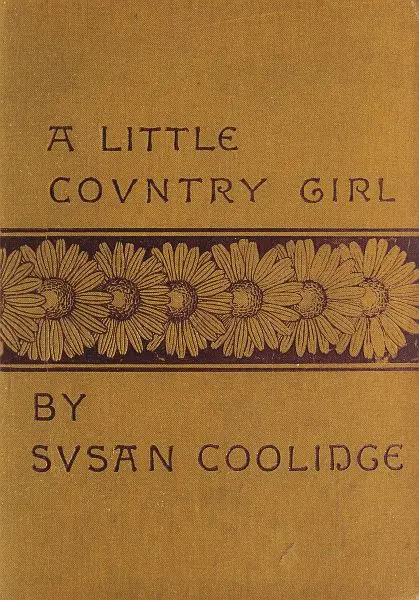
THE CLASSIC COLLECTION · 1885
"A Little Country Girl" by Susan Coolidge is a novel written in the late 19th century. The story centers around the main character, Candace Arden, who embarks on a summer journey from her rural home in Connecticut to stay with her cousin in Newport. The narrative captures her experiences in this new environment, emphasizing themes of growth, social class, and the challenges of adapting to a more refined lifestyle. The opening of the book introduces readers to Candace as she travels on the steamer "Eolus" to Newport, where she feels both excitement and trepidation. Her interactions with Captain King show her shyness and the innocent charm that makes her likable. Upon arriving at her cousin's home, Candace is overwhelmed by new experiences and societal expectations, which heighten her feelings of homesickness and unease. The chapter adeptly sets the stage for her struggles with adapting to the etiquette and lifestyle of her cousins, presenting a tender portrayal of a young girl caught between her country roots and the more sophisticated world she is entering.
Introduction adapted from the source catalogue; source summaries may be automatically generated.
Free to read · English · 49,458 words · No account needed
MAKE TIME FOR A GOOD BOOK
On by default. Untick to stop anonymous reading totals. Each page counts after 10 seconds in view. How this works.
Anonymous counting is on unless you have switched it off.
"But there is something here that I really want to know about," said Candace. "May I read it to you, Cousin Kate? It's in a chapter called 'Correspondence.'"
"Oh, my!" cried Marian, who still held fast to one side of the Manual. "It tells how to refuse gentlemen when they offer themselves to you. Here it all is. You must say,--
"'SIR,--I regret extremely if anything in my manner has led to a misapprehension of my true feelings. I do not experience for you the affection which alone can make the marriage relation a happy one; so I--'"
"No, no," interrupted Candace, blushing very pink, and pulling the book away from Marian; "that isn't at all what I wanted to ask you about, Cousin Kate. It was--"
"Oh, then perhaps you meant to accept him," went on the incorrigible Marian, again getting possession of one side of the "Manual of Gentility." "Here you are:--
"'DEAR FRIEND,--Your letter has made me truly happy, breathing, as it does, expressions of deep and heartfelt affection, of which I have long felt the corresponding sentiments. I shall be happy to receive you in my home as an accepted suitor, and I--'"
"Cousin Kate, make her stop--isn't she too bad?" said Cannie, vainly struggling for the possession of the book.
"'And I'--let me see, where was I when you interrupted?" went on Marian.
"Oh, yes, here--
"'And I am sure that my parents will give their hearty consent to our union. Receive my thanks for your assurances, and believe--'"
But Candace had again got hold of the volume, and no one ever learned the end of the letter, or what the lover of this obliging lady was to "believe."
"This is what I wanted to ask you about, Cousin Kate," said Candace, when quiet was restored. "The book says:--
"'The signature of a letter should depend upon the degree of familiarity existing between the writer and the person addressed. For instance, in writing to a perfect stranger a lady would naturally use the form,--
Yours truly,
Mrs. A. M. Cotterell.'"
"Oh! oh!" interrupted Georgie. "Fancy any one signing herself 'Yours truly, Mrs. A. M. Cotterell.' It's awfully vulgar, isn't it mamma?"
"That is a very old-fashioned book," observed Mrs. Gray; "still I don't think, even at the time when it was published, that well-bred people used a signature like that. It may not be 'awfully vulgar,' but it certainly is not correct; nothing but the Christian name should ever be used as a signature."
"But suppose the person you were writing to did not know whether you were married or not," said Candace.
Your reading position is saved on this browser. Take it to another device with a library code. Reading pages adapt to text, rather than matching a printed edition.
Susan Coolidge
Susan Coolidge
Susan Coolidge
Susan Coolidge
BEHIND THE BOOK
This eBook is for the use of anyone anywhere in the United States and most other parts of the world at no cost and with almost no restrictions whatsoever. You may copy it, give it away or re-use it under the terms of the Project Gutenberg License included with this eBook or online at www.gutenberg.org. If you are not located in the United States, you will have to check the laws of the country where you are located before using this eBook. Read the source licence.
The original source file, including credits and licence, is retained by this library. Request an original-format copy at no charge. Please include the book title and Project Gutenberg identifier #27162.
KEEP YOUR CURIOSITY GOING
Coulson Kernahan

Maurice Baring
Frances Wright
Cécile Tormay

Frederic Jesup Stimson

W. H. P. (William Henry Pope) Jarvis