THE CLASSIC COLLECTION✦Hearts and the highwayCLASSIC FREE BOOKS
Hearts and the highway
Cyrus Townsend Brady
THE CLASSIC COLLECTION · 1917
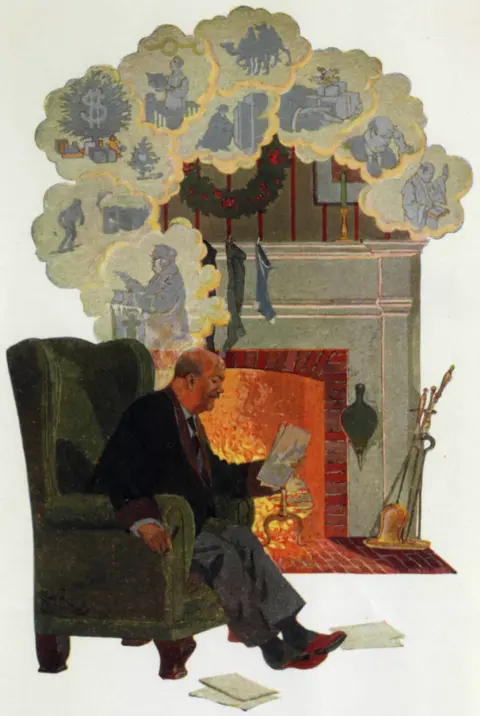
"A Little Book for Christmas" by Cyrus Townsend Brady is a collection of Christmas-themed essays and stories written in the early 20th century. The volume encompasses a variety of pieces, including personal reflections, a carol, meditations, and three short stories centered around the spirit and traditions of Christmas, making it suitable for readers of all ages. The work appears to explore the themes of goodwill, nostalgia, and the importance of the holiday spirit, aiming to uplift and inspire during the Christmas season. The opening portion of the book features a preface where the author reflects on the significance of Christmas in both religious and worldly contexts. He emphasizes the joy and communal spirit that the holiday fosters, encouraging acts of kindness and goodwill among people. Following the preface, the beginning of the first short story introduces the familiar biblical parable of the prodigal son, however, it twists the narrative to focus on the aftermath of the younger son’s return home, revealing a poignant tale of loss, regret, and the longing for familial reconciliation amidst the backdrop of Christmas. Through heartfelt prose and rich imagery, Brady sets the tone for a reflective and meaningful Christmas experience.
Introduction adapted from the source catalogue; source summaries may be automatically generated.
Free to read · English · 23,778 words · No account needed
MAKE TIME FOR A GOOD BOOK
On by default. Untick to stop anonymous reading totals. Each page counts after 10 seconds in view. How this works.
Anonymous counting is on unless you have switched it off.
“You needn’t go,” said the girl; “we are all dressed.” She threw back the covers and sprang out of bed. She was very pretty and about Henry’s own age, he discovered, although she was pale and haggard with cold and hunger.
“Goody, goody!” exclaimed little Philip, as his feet landed on the floor. “Maybe we’ll have some Christmas, too.”
“Maybe we will,” said Henry, smiling at him. “At least we will have something to eat.”
“Well, let’s start right away then,” urged George.
This brought Henry face to face with a dilemma. “I have only one pair of snow-shoes,” he said at last, “and you probably don’t know how to use them anyway, and you can’t walk on the snow.”
“I have a sled,” suggested George.
“That won’t do,” said Henry. “I’ve got to have something that won’t sink in the snow—that will lie flat, so I can draw you along.”
“How about that table?” said the girl.
“Good suggestion,” cried Henry.
It was nothing but a common kitchen table. He turned it upside down, took his Scout axe from its sheath, knocked the legs off, fastened a piece of clothesline to the butts of two of them.
“Now if I could have something to turn up along the front, so as not to dig into the snow,” he said, “it would be fine.” He thought a moment. “Where is that sled of yours, George?”
“Here,” said George, dragging it forth. The runners curved upwards. Henry cut them off, in spite of Philip’s protests. He nailed these runners to the front of the table and stretched rope tightly across them so that he had four up-curves in front of the table.
“Now I want something to stretch on these things, so as to let the sled ride over the snow, instead of digging into it,” he said to the girl.
She brought him her father’s old “slicker.” Henry cut it into suitable shape and nailed and lashed it securely to the runners and to the table top. Now he had a flat-bottomed sled with a rising front to it that would serve. He smiled as he looked at the queer contrivance and said aloud: “I wish Mr. Lesher could see that!”
“Who is Mr. Lesher?” asked George.
“Oh, he’s my Scoutmaster back in Ohio. Now come on!”
He opened the door, drew the sled outside, pushed it up on the snow and stepped on it. It bore his weight perfectly.
“It’s all right,” he cried. “But it won’t take all three of you
at once.”
“I’ll wait,” said Mary, “you take the two boys.”
Your reading position is saved on this browser. Take it to another device with a library code. Reading pages adapt to text, rather than matching a printed edition.
Cyrus Townsend Brady
Cyrus Townsend Brady
Cyrus Townsend Brady
Cyrus Townsend Brady
BEHIND THE BOOK
This eBook is for the use of anyone anywhere in the United States and most other parts of the world at no cost and with almost no restrictions whatsoever. You may copy it, give it away or re-use it under the terms of the Project Gutenberg License included with this eBook or online at www.gutenberg.org. If you are not located in the United States, you will have to check the laws of the country where you are located before using this eBook. Read the source licence.
The original source file, including credits and licence, is retained by this library. Request an original-format copy at no charge. Please include the book title and Project Gutenberg identifier #15343.
KEEP YOUR CURIOSITY GOING

David Patterson (Spirit) Hatch

David Patterson (Spirit) Hatch

David Patterson (Spirit) Hatch
Coulson Kernahan

Ralph Waldo Emerson

Maurice Baring