Notes on Bookbinding for Libraries
John Cotton Dana
THE CLASSIC COLLECTION · 1899
"A Library Primer" by John Cotton Dana is a practical guide on library management written in the late 19th century. This work serves as an introduction to the establishment and operation of small public libraries, offering insights into organization, policy, and the essential role of libraries within communities. It covers a wide array of topics, aimed at empowering librarians and community members to create effective library spaces that serve the public's needs. The opening of the primer sets the stage for an exploration of the legal and organizational foundations required to establish a public library. Dana begins by emphasizing the necessity of understanding local library laws and statutes for funding and support through taxation. He encourages starting small, prioritizing community needs, and learning from existing libraries. The introduction underscores the library's vital functions, such as offering educational resources, promoting cultural enrichment, and providing recreational reading to the public while also establishing a collaborative environment among librarians to continually improve library services.
Introduction adapted from the source catalogue; source summaries may be automatically generated.
Free to read · English · 39,458 words · No account needed
MAKE TIME FOR A GOOD BOOK
On by default. Untick to stop anonymous reading totals. Each page counts after 10 seconds in view. How this works.
Anonymous counting is on unless you have switched it off.
Books wear better if they are carefully opened in a number of places before they are placed on the shelves. This makes the backs flexible and less likely to break with rough handling. In cutting the leaves be sure that the paper knife does its work to the very back edge of the top folds, that it is never sharp enough to cut down into the leaves, and that it is held nearly parallel to the fold to be cut.
The following is a list of things to be done before books are ready
for use in a public library:
1 Book notices and reviews are read and the library's needs and funds
considered.
2 Order slips are made out, arranged alphabetically, and compared with the catalog to see if the books listed on them are already in the library.
3 Order list is made out, approved, and sent to dealer.
4 Books arrive and are checked by the bill, and brief notes of date of purchase, initials of dealer, and price are written on the left margin of the second page after the title-page.
5 Bill is checked for items and prices by order slips.
6 Gifts when received are a) properly acknowledged; b) entered in gift book; c) marked with small gift-book plates pasted inside the front cover.
7 Books are looked over (if you wish), collated, especially the expensive ones, to see if complete and sound.
8 Books are entered in the accession book.
9 Books are stamped with library stamp.
10 Books are opened to loosen binding, and pages cut, if necessary.
11 The book-plates are pasted inside the front cover--if book-plates
are used.
12 Pockets are pasted on the inside of front cover or wherever the
system adopted places them.
13 Labels are put on the backs.
14 Books are classified, author-numbered and call-numbered.
15 Books are entered on shelf-list.
16 Catalog cards are written--author, title, and subject.
17 Bulletin lists of the books are made out for posting up and for
newspapers.
18 Call-numbers are written on the labels, the pockets, and the book
slips.
19 Labels are varnished.
20 The call-number of each book is entered in the proper place on the line which that book occupies in the accession book.
21 Books are placed on the library shelves for public use.
22 Catalog cards, author, title, and subject, are arranged alphabetically in one series and distributed in catalog.
Your reading position is saved on this browser. Take it to another device with a library code. Reading pages adapt to text, rather than matching a printed edition.
John Cotton Dana
BEHIND THE BOOK
This eBook is for the use of anyone anywhere in the United States and most other parts of the world at no cost and with almost no restrictions whatsoever. You may copy it, give it away or re-use it under the terms of the Project Gutenberg License included with this eBook or online at www.gutenberg.org. If you are not located in the United States, you will have to check the laws of the country where you are located before using this eBook. Read the source licence.
The original source file, including credits and licence, is retained by this library. Request an original-format copy at no charge. Please include the book title and Project Gutenberg identifier #15327.
KEEP YOUR CURIOSITY GOING
John Muir
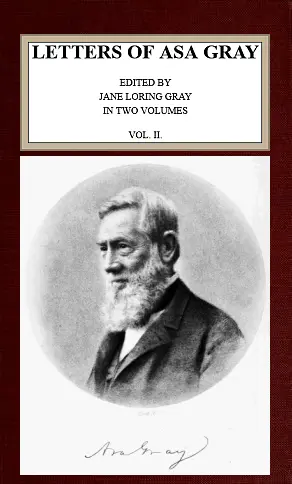
Asa Gray
Asa Gray
Florence Nightingale
Elizabeth Robins Pennell
Denison Olmsted