THE CLASSIC COLLECTION✦An outlaw’s diary: the CommuneCLASSIC FREE BOOKS
An outlaw’s diary: the Commune
Cécile Tormay
THE CLASSIC COLLECTION · 1903
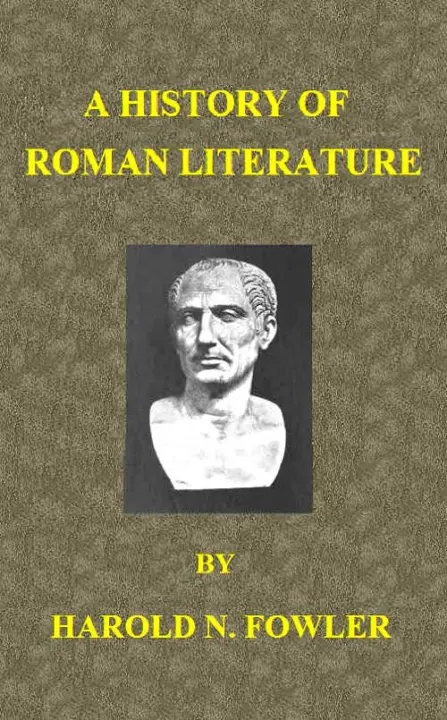
"A History of Roman Literature" by Harold North Fowler is a historical account written in the early 20th century. The book explores the development of Roman literature from its origins during the Republican period through various subsequent eras, detailing key authors and their contributions. It serves as both an educational text for schools and colleges and a reference work about the literary accomplishments of Rome. At the start of the book, the author outlines the significance of Roman literature, noting its roots in Greek literary traditions and its overarching political influence. Fowler discusses the practical character of Roman society, which shaped its literature to reflect political and military concerns rather than pure artistic expression. He introduces key figures, such as Livius Andronicus and Ennius, while also indicating the evolution of literary forms like tragedy and comedy in the context of Roman culture. Through these early chapters, Fowler sets the stage for a comprehensive exploration of the rich tapestry of Roman literary history.
Introduction adapted from the source catalogue; source summaries may be automatically generated.
Free to read · English · 97,375 words · No account needed
MAKE TIME FOR A GOOD BOOK
On by default. Untick to stop anonymous reading totals. Each page counts after 10 seconds in view. How this works.
Anonymous counting is on unless you have switched it off.
[67] Sat. I, iv, 103-120, freely translated by Conington.
[68] Sat. I, x, 40-49, freely translated by Conington.
[69] Epode ii, 1-4.
[70] Epist. I, xix, 23.
[71] Od. I, xxxviii, translated by Sir Theodore Martin.
[72] Od. I, ix, Calverley’s version.
[73] I, iii, 1-9, 53-56, translated by James Grainger.
[74] I, xii. Elton’s translation.
[75] Ex Ponto, IV, xvi.
[76] Book i, 499-507. The same subject is continued through line 530.
[77] Book v, 540-615.
[78] Tristia, IV, x, 69.
[79] Tristia, II, 107 ff.
[80] Ovid, Amores II, xviii, 27 ff.
[81] Lines 177 ff.
[82] Tristia, I, vii, 13 ff.
[83] Argonautica, III, 750 ff. Virgil, Æneid, IV, 522 ff., imitates Apollonius more closely.
[84] Especially Tristia, IV, x.
[85] Ibid., I, iii, 1-4.
[86] Ibid., I, vi, III, iii, IV, iii, V, ii, 1-44, xi, xiv, Ex
Ponto, I, iv, III, i.
[87] Tristia, III, vii.
[88] xxxvii, 39 ff.
[89] xxi, 10.
[90] This is the generally accepted date, but it is possible that Vitruvius may have lived somewhat later.
[91] Hercules Furens, Troades (or Hecuba), Phœnissæ (or Thebaïs, two disconnected scenes from Theban myths), Medea, Phædra (or Hippolytus), Œdipus, Agamemnon, Thyestes, and Hercules Œtæus. The Fabula Prætexta entitled Octavia is not by Seneca.
[92] Lines 893-944. Translated by Ella Isabel Harris.
[93] This Lucilius has been supposed, though without sufficient reason, to be the author of the Ætna (see p. 141).
[94] Pharsalia, ix, 256-283.
Verum hæc ipse equidem spatiis exclusus iniquis Prætereo atque aliis post me memoranda relinquo.
Virgil, Georgics, iv, 147 f.
[96] Thebais, xi, 580-585.
[97] Pliny, Ep. III, xxi.
[98] I, xiii. These selections are translated by Goldwin Smith in Bay
Leaves.
[99] III, xxxv.
[100] III, xli.
[101] IV, viii.
[102] Inst. Orat., vi, 3, 5.
[103] Ibid., vi, 3, 5.
[104] Ibid., vii, 7, 2
[105] The prænomen is uncertain. The best manuscript (Mediceus I)
gives it as Publius, later manuscripts and Sidonius Apollinaris as
Gaius.
[106] Agricola, 2.
[107] Annals, i, 58.
[108] Ann., ii, 77.
[109] Ann., iii, 6.
[110] Ann., iii, 27.
[111] Hist., ii, 95.
[112] Hist., iv, 74.
[113] Agric., 9.
[114] Sat. i, 30.
[115] Sat. i, 79.
[116] Sat. i, 85 f.
[117] Sat. iii, 41 ff.
[118] Sat. x, 356.
[119] Sat. vi, 165.
[120] Sat. x, 81.
[121] Sat. vi, 223.
[122] Sat. vi, 347.
[123] Sat. viii, 84.
[124] Sat. xiv, 47.
[125] Ep., II, xvii.
[126] Ibid., V, vi.
[127] Ibid., VI, xvi, xx.
[128] Ibid., VII, xxxiii.
[129] Ep., VII, xx.
To-morrow he shall love who ne’er has loved, and he who has loved
to-morrow shall love.
It is new spring; spring already harmonious; in spring Jove was born. In the spring loves join together; in the spring the birds wed.
She (the swallow) is singing, we are silent. When will my spring come? When shall I become like the swallow and cease to be silent? I have lost the Muse by keeping silent, and Apollo cares not for me.
Your reading position is saved on this browser. Take it to another device with a library code. Reading pages adapt to text, rather than matching a printed edition.
BEHIND THE BOOK
This eBook is for the use of anyone anywhere in the United States and most other parts of the world at no cost and with almost no restrictions whatsoever. You may copy it, give it away or re-use it under the terms of the Project Gutenberg License included with this eBook or online at www.gutenberg.org. If you are not located in the United States, you will have to check the laws of the country where you are located before using this eBook. Read the source licence.
The original source file, including credits and licence, is retained by this library. Request an original-format copy at no charge. Please include the book title and Project Gutenberg identifier #44975.
KEEP YOUR CURIOSITY GOING
Cécile Tormay

Moritz Busch
John L. Ransom
Frances Wright
Cécile Tormay

Mabel Potter Daggett