THE CLASSIC COLLECTION✦An outlaw’s diary: the CommuneCLASSIC FREE BOOKS
An outlaw’s diary: the Commune
Cécile Tormay
THE CLASSIC COLLECTION · 1909
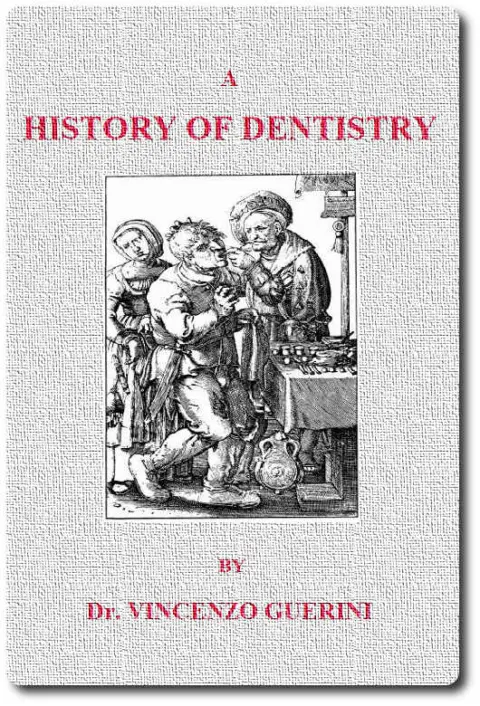
"A History of Dentistry from the Most Ancient Times until the End of the Eighteenth Century" by Dr. Vincenzo Guerini is a historical account written in the early 20th century. The work delves into the development of dental practices and knowledge across different civilizations, tracing its roots from ancient eras through to the 18th century. The book aims to compile comprehensive information on the evolution of dentistry, based on thorough research and primary sources, offering a detailed view of this specialized field. The opening of the book introduces the author's motivations for writing a complete history of dentistry and outlines the structure of the work. Dr. Guerini conveys his commitment to providing a thorough narrative that incorporates both historical data and his personal research efforts, which he began after participating in the Eleventh International Congress of Medicine. He expresses the importance of documenting the advancements in dental science, likening its historical significance to that of medicine as a whole. The initial chapters promise a rich exploration of the practices among ancient peoples, including Egyptians, Hebrews, and Chinese, setting the groundwork for understanding how dentistry was perceived and developed over thousands of years.
Introduction adapted from the source catalogue; source summaries may be automatically generated.
Free to read · English · 140,838 words · No account needed
MAKE TIME FOR A GOOD BOOK
On by default. Untick to stop anonymous reading totals. Each page counts after 10 seconds in view. How this works.
Anonymous counting is on unless you have switched it off.
About six hundred years later, Galen wrote three books of commentaries on this treatise of Hippocrates. He says, among other things, that the doctor’s shop ought to be spacious and furnished with wide openings, to let in abundance of light. These medical stations to which the sick and infirm repaired in great numbers to ask advice, to undergo operations, or receive medical dressings, must have been of great importance, as is to be presumed from the cited books of Hippocrates and Galen.
The greatest doctors of antiquity practised the medical art in these places. It is also said that the great philosopher and naturalist, Aristotle, who came of a race of doctors, had inherited a doctor’s shop of great value, but that notwithstanding this he refused to dedicate himself to the medical profession.
The doctors’ shops were at the same time real pharmacies, where doctors prepared medicines, and where all the remedies then in use, either simple or compounded, were kept and sold to the public. Besides, there were to be found instruments of every kind and articles for medicating; and, therefore, bandages, compresses, lint, sponges, cupping glasses, cauteries, knives, bistouries, lancets, sounds, needles, hooks, pincers, files, saws, scrapers, splints, appliances for replacement of luxated bones, speculums, trepans, apparatus for fumigation, trusses, and a thousand things besides.
Naturally, dentistry was also practised in these shops, either by doctors who occupied themselves with dental maladies as with those of any other part of the body, or, later on, by individuals who dedicated themselves exclusively to this specialty.
Medicine and surgery were exercised, however, not only in doctors’ shops, but also at the patients’ houses, and it was Hippocrates who especially inaugurated clinical medicine—that is, the practice of visiting patients in their beds.
But we must not digress from our argument.
Many observations relative to the teeth are to be found in the seven books of Hippocrates on Epidemics. Unfortunately, the observations are not always given in clear and precise terms, which principally depends on the fact that these books consist for the most part of simple and most concise notes, written by Hippocrates on cases observed by him, and not intended for publication under such form, but rather constituting the material for further work.
Here is a passage from the fourth book on Epidemics, which reveals Hippocrates’ extraordinary power of observation, for even teeth that had fallen out were minutely examined by him, to the end of acquiring precise ideas on the anatomical conformation of these organs, held by him to be of the highest importance.
Your reading position is saved on this browser. Take it to another device with a library code. Reading pages adapt to text, rather than matching a printed edition.
BEHIND THE BOOK
This eBook is for the use of anyone anywhere in the United States and most other parts of the world at no cost and with almost no restrictions whatsoever. You may copy it, give it away or re-use it under the terms of the Project Gutenberg License included with this eBook or online at www.gutenberg.org. If you are not located in the United States, you will have to check the laws of the country where you are located before using this eBook. Read the source licence.
The original source file, including credits and licence, is retained by this library. Request an original-format copy at no charge. Please include the book title and Project Gutenberg identifier #51991.
KEEP YOUR CURIOSITY GOING
Cécile Tormay

Moritz Busch
John L. Ransom
Frances Wright
Cécile Tormay

Mabel Potter Daggett