THE CLASSIC COLLECTION✦An outlaw’s diary: the CommuneCLASSIC FREE BOOKS
An outlaw’s diary: the Commune
Cécile Tormay
THE CLASSIC COLLECTION · 1909
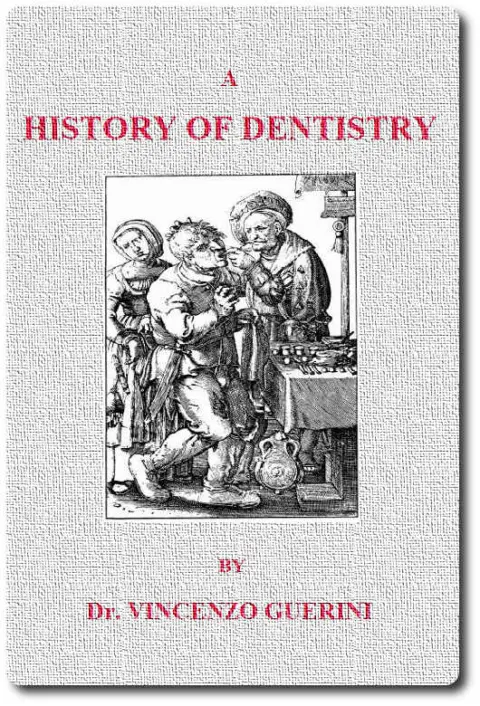
"A History of Dentistry from the Most Ancient Times until the End of the Eighteenth Century" by Dr. Vincenzo Guerini is a historical account written in the early 20th century. The work delves into the development of dental practices and knowledge across different civilizations, tracing its roots from ancient eras through to the 18th century. The book aims to compile comprehensive information on the evolution of dentistry, based on thorough research and primary sources, offering a detailed view of this specialized field. The opening of the book introduces the author's motivations for writing a complete history of dentistry and outlines the structure of the work. Dr. Guerini conveys his commitment to providing a thorough narrative that incorporates both historical data and his personal research efforts, which he began after participating in the Eleventh International Congress of Medicine. He expresses the importance of documenting the advancements in dental science, likening its historical significance to that of medicine as a whole. The initial chapters promise a rich exploration of the practices among ancient peoples, including Egyptians, Hebrews, and Chinese, setting the groundwork for understanding how dentistry was perceived and developed over thousands of years.
Introduction adapted from the source catalogue; source summaries may be automatically generated.
Free to read · English · 140,838 words · No account needed
MAKE TIME FOR A GOOD BOOK
On by default. Untick to stop anonymous reading totals. Each page counts after 10 seconds in view. How this works.
Anonymous counting is on unless you have switched it off.
[380] In a chapter entitled “Of the Excellence and Nobility of the Barber’s Office,” Cintio d’Amato speaks of several barbers of that period, who were in great repute by their writings, or by the high offices with which they were invested, or by honors received from princes and sovereigns. Among the writers, Tiberio Malfi, barber of Montesarchio, deserves mention; he published, in 1626, a book entitled The Barber, written in excellent style, and giving proof of solid literary culture, and of much erudition. This work treats of all that concerns the barber’s art (decorative medicine, bleeding, etc.). In it, however, there is absolutely nothing about the treatment of the teeth or their extraction; and this constitutes a valid confirmation of our own opinion, that is, that the dental art was not at that time in any way in the hands of the barbers.
[381] Portal, vol. iii, p. 618.
[382] Antonii Nuck operationes et experimenta chirurgica, Lugduni
Batavorum, 1692.
[383] Caroli Musitani opera omnia, pp. 121 to 128, Venetiis, 1738.
[384] J. Drake, Anthropologia nova, London, 1707.
[385] J. M. Hoffmann, Disquisitiones anatomico-pathologicæ, Altorf,
1713, p. 321.
[386] Probably through the nose.
[387] H. Meibomii de abscessum internorma natura et constitutione discursus. Dresdæ et Lipsiæ, 1718, p. 114. (This edition was published after the author’s death, which took place in 1700.)
[388] St. Yves, Nouveau traité des maladies des yeux, 1722, p. 80.
[389] Sprengel, Geschichte der Chirurgie, vol. ii, p. 301. Carabelli, Systematisches, Handbuch der Zahnheilkunde, vol. i, p. 60.
[390] This work was published in 1690.
[391] Here one also verifies the absurdities pronounced by those who, not being dentists, but merely general practitioners or surgeons, still risk speaking on dental subjects.
[392] Dionis, Cours d’opérations de chirurgie, Paris, 1716, p. 507 and
following.
[393] [The Dresden edition of 1710 of Guillemeau’s work contains no reference to the artificial tooth composition as mentioned by Dionis.—E. C. K.]
[394] Carmeline was a most able surgeon-dentist. We learn this from a passage in Pierre Fauchard’s book (Le Chirurgien Dentiste, Préf., p. 13). As we shall see, the author praises him very highly and laments his not having written any book making known the results of his long experience.
[395] Sprengel, Geschichte der Chirurgie, vol. ii, p. 305.
[396] Traité complet des opérations de chirurgie, par Mons. de Lavauguyon, Paris, 1696, p. 644.
[397] Der beym aderlassen und Zahn-ausziehen Geschickten Barbiergesell,
Leipsic, 1717.
[398] De dentium dolore, Altdorf, 1711.
[399] Schelhammer wrote a dissertation “on the cure of toothache by touch,” De odontalgia tactu sananda, Kiel, 1701. In the same year and in the same city, another pamphlet, by B. Krysingius, was written on the same subject. (See Crowley, Dental Bibliography, p. 13.)
[400] Sprengel, op. cit., vol. ii, p. 311.
[401] Joseph Linderer, Handbuch der Zahnheilkunde, vol. ii, p. 129.
[402] Sprengel, op. cit., vol. ii, p. 367; Carabelli, op. cit. p. 65.
[403] Sprengel, op. cit., vol. ii, p. 310.
Your reading position is saved on this browser. Take it to another device with a library code. Reading pages adapt to text, rather than matching a printed edition.
BEHIND THE BOOK
This eBook is for the use of anyone anywhere in the United States and most other parts of the world at no cost and with almost no restrictions whatsoever. You may copy it, give it away or re-use it under the terms of the Project Gutenberg License included with this eBook or online at www.gutenberg.org. If you are not located in the United States, you will have to check the laws of the country where you are located before using this eBook. Read the source licence.
The original source file, including credits and licence, is retained by this library. Request an original-format copy at no charge. Please include the book title and Project Gutenberg identifier #51991.
KEEP YOUR CURIOSITY GOING
Cécile Tormay

Moritz Busch
John L. Ransom
Frances Wright
Cécile Tormay

Mabel Potter Daggett