THE CLASSIC COLLECTION✦An outlaw’s diary: the CommuneCLASSIC FREE BOOKS
An outlaw’s diary: the Commune
Cécile Tormay
THE CLASSIC COLLECTION · 1909
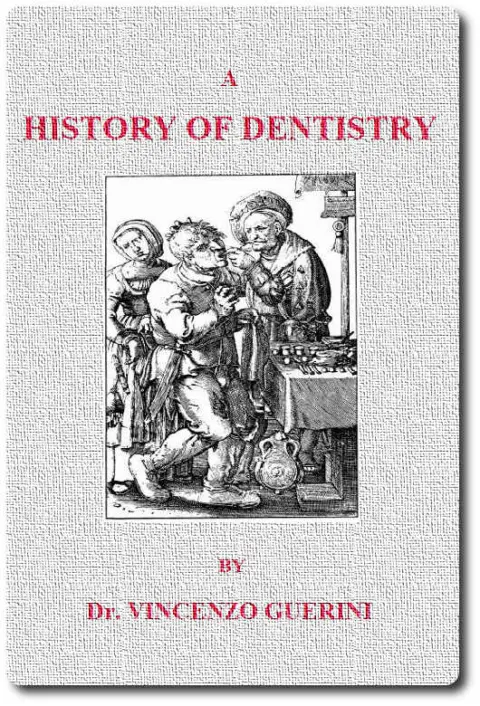
"A History of Dentistry from the Most Ancient Times until the End of the Eighteenth Century" by Dr. Vincenzo Guerini is a historical account written in the early 20th century. The work delves into the development of dental practices and knowledge across different civilizations, tracing its roots from ancient eras through to the 18th century. The book aims to compile comprehensive information on the evolution of dentistry, based on thorough research and primary sources, offering a detailed view of this specialized field. The opening of the book introduces the author's motivations for writing a complete history of dentistry and outlines the structure of the work. Dr. Guerini conveys his commitment to providing a thorough narrative that incorporates both historical data and his personal research efforts, which he began after participating in the Eleventh International Congress of Medicine. He expresses the importance of documenting the advancements in dental science, likening its historical significance to that of medicine as a whole. The initial chapters promise a rich exploration of the practices among ancient peoples, including Egyptians, Hebrews, and Chinese, setting the groundwork for understanding how dentistry was perceived and developed over thousands of years.
Introduction adapted from the source catalogue; source summaries may be automatically generated.
Free to read · English · 140,838 words · No account needed
MAKE TIME FOR A GOOD BOOK
On by default. Untick to stop anonymous reading totals. Each page counts after 10 seconds in view. How this works.
Anonymous counting is on unless you have switched it off.
[320] [For a fuller review of this author see A Dental Book of the Sixteenth Century, by Julio Endelman, Dental Cosmos, 1903, vol. xlv, p. 39.—E. C. K.]
[321] Hieronymi Fabricii ab Aquapendente opera chirurgica, Lugduni Batavorum, 1723, cap. xxxii, p. 451.
[322] Cap. xxxiii, p. 455.
[323] Cap. xxxiv, p. 456; de instrumentis extrahendis dentibus
idoneis.
[324] Cap. xxxv, p. 457.
[325] Cap. xxx, de gingivarum chirurgia, p. 450.
[326] Joannis Heurnii Ultrajectini de morbis oculorum, aurum, nasi, dentium et oris, liber Raphelengii, 1602, cap. xi, de dentium et oris passionibus, p. 79.
[327] De aureo dente maxillari pueri Silesii, Lipsiæ, 1595.
[328] Martini Rulandi, Nova et in omni memoria inaudita historia de aureo dente, Francofurti, 1595.
[329] Liddelius, Tractatus de dente aureo pueri Silesiani, Hamburg,
1626.
[330] [In the introductory portion of Liddell’s work on the “Golden Tooth” is published a number of letters bearing on the case, among others one which gives rather a circumstantial account of the imposture, and of which the following is a translation:
“Herr Balthazer Caminæus sends Greeting:
“For your letter, most kind Herr Doctor Caselius, in which you explicitly desired me to thank (my) colleagues for their good wishes, ‘wedding wishes,’ and to inform you as to the ‘Golden Tooth,’ I have long been in debt to you—not that I intended to leave your letter unanswered, but because no messengers presented themselves. Now that I have found one, I announce that I have obeyed your commands. As for the ‘Golden Tooth,’ I ought not to hide from you that we have more than once marvelled at your shrewdness, in that you are so anxious to ascribe the devices of wickedness and the tricks (fakes) of cunning to Nature. For it was no portent, only a deception and pure cheat, so that unless some Lemnian (Prometheus or Vulcan) should come to their aid, these acute authors will, nay, already are, a by-word to those who are more cautious and not so prone to believe. For the ‘Golden Toothed’ boy, according to the account brought thither by many persons, both by letter and oral report, some of whom had themselves seen this wonder, hailed from a village near Schwidnitz in Silesia, and had been so trained by his swindling father or master, that, at his will, whenever in any assembly of men, some very simple and illiterate persons desired to see the tooth and had paid the fee, for the rascals made great gains, he would open his mouth wide and allow himself to be touched. But if educated men and those who seemed likely to make more careful scrutiny and experiment on any point, presented themselves, he contorted his countenance, remained silent, and simulated a kind of madness, the idea being that he permitted himself to be examined at stated times only when the conditions allowed. Now, the tooth was covered with a plate, lamina (or layer), skilfully wrought of the best gold, and the gold was let down so deep into the gum that the cheat was not observed. However, as the plate was sometimes rubbed with a touch-stone as a test and was daily worn down by chewing, the real tooth at last began to appear. Of this fact a certain nobleman got an inkling, came to the place pretty drunk, and demanded that the tooth should be shown him, when the young fellow, at his master’s word, kept silent, the nobleman struck his dagger into the boy’s mouth, wounding him so badly that the aid of a surgeon had to be called, and so the deception was fully exposed.
Your reading position is saved on this browser. Take it to another device with a library code. Reading pages adapt to text, rather than matching a printed edition.
BEHIND THE BOOK
This eBook is for the use of anyone anywhere in the United States and most other parts of the world at no cost and with almost no restrictions whatsoever. You may copy it, give it away or re-use it under the terms of the Project Gutenberg License included with this eBook or online at www.gutenberg.org. If you are not located in the United States, you will have to check the laws of the country where you are located before using this eBook. Read the source licence.
The original source file, including credits and licence, is retained by this library. Request an original-format copy at no charge. Please include the book title and Project Gutenberg identifier #51991.
KEEP YOUR CURIOSITY GOING
Cécile Tormay

Moritz Busch
John L. Ransom
Frances Wright
Cécile Tormay

Mabel Potter Daggett