THE CLASSIC COLLECTION✦An outlaw’s diary: the CommuneCLASSIC FREE BOOKS
An outlaw’s diary: the Commune
Cécile Tormay
THE CLASSIC COLLECTION · 1909
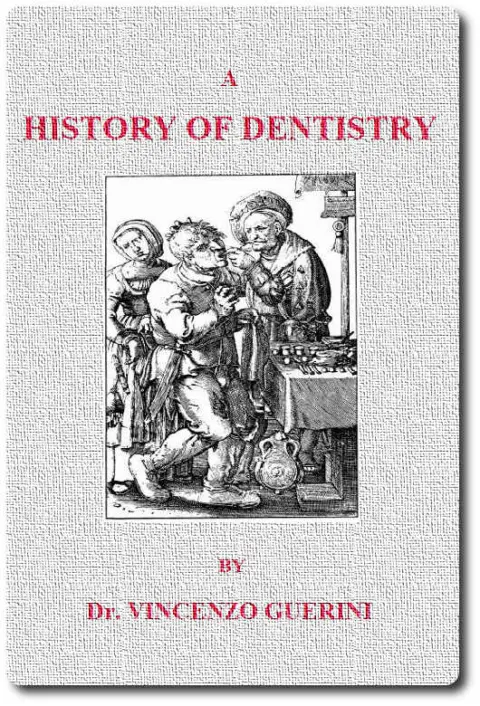
"A History of Dentistry from the Most Ancient Times until the End of the Eighteenth Century" by Dr. Vincenzo Guerini is a historical account written in the early 20th century. The work delves into the development of dental practices and knowledge across different civilizations, tracing its roots from ancient eras through to the 18th century. The book aims to compile comprehensive information on the evolution of dentistry, based on thorough research and primary sources, offering a detailed view of this specialized field. The opening of the book introduces the author's motivations for writing a complete history of dentistry and outlines the structure of the work. Dr. Guerini conveys his commitment to providing a thorough narrative that incorporates both historical data and his personal research efforts, which he began after participating in the Eleventh International Congress of Medicine. He expresses the importance of documenting the advancements in dental science, likening its historical significance to that of medicine as a whole. The initial chapters promise a rich exploration of the practices among ancient peoples, including Egyptians, Hebrews, and Chinese, setting the groundwork for understanding how dentistry was perceived and developed over thousands of years.
Introduction adapted from the source catalogue; source summaries may be automatically generated.
Free to read · English · 140,838 words · No account needed
MAKE TIME FOR A GOOD BOOK
On by default. Untick to stop anonymous reading totals. Each page counts after 10 seconds in view. How this works.
Anonymous counting is on unless you have switched it off.
Notwithstanding this, the teeth made by Fonzi, of which there are still some specimens in various dental museums, had anything but a good appearance, and there still remained much to be done before mineral teeth reached the height of perfection which they attained later on.
The credit of having introduced many new improvements in the manufacture of mineral teeth belongs especially to the Americans. Among those who particularly distinguished themselves in this department of dental art, we may note Charles W. Peale, Samuel W. Stockton, James Alcock, and Dr. Elias Wildman. But the most brilliant results, as is well known, were obtained by the celebrated Samuel S. White, who, by an intelligent and persevering activity, dedicated almost exclusively to improving mineral teeth and to bringing them into general use, contributed vastly to the progress of modern dental art. Samuel S. White undoubtedly stands forth as one of the noblest and grandest figures in the history of dentistry, and his name will ever be recorded with honor and veneration by dentists of all ages.
[1] See Introduction to the German translation of the Ebers’ papyrus, by Heinrich Joachim, Berlin, 1890.
[2] The Egyptians had three different kinds of writing: the hieroglyphic, the hieratic, and the demotic. The hieroglyphic style, which is the most ancient and is chiefly to be found on monuments and in religious texts, consists of figures representing every kind of object; the hieratic or sacerdotal style is an abbreviation of the hieroglyphic writing; the demotic or popular style, the least ancient, resulted from further abbreviations of the hieratic.
[3] See page 185 of the German translation of Dr. Joachim.
[4] See the German translation by Joachim, page 162.
[5] A fruit resembling cherries.
[6] On the Relations of the Human Teeth to those of the Lower Animals, by John R. Mummery. Trans. Odontological Society of Great Britain, May, 1860.
[7] See German translation by Joachim, p. 120.
[8] Herodoti Halicarnassei historia, 1570 fol. Euterpe, page 53.
[9] Herodoti Halicarnassei historia, lib. vi.
[10] Die Zahnheilkunde, Erlangen, 1851, p. 348.
[11] G. B. Belzoni (1778 to 1823), a celebrated Italian traveller and archeologist, visited Egypt and Nubia, and wrote, in English, a report on his discoveries, which was published in 1821. We have not been able to procure this book; we have, however, read the Italian version, published in Naples in 1831, without coming across any mention of artificial teeth found in Egyptian sarcophagi. Therefore, unless the work has undergone some mutilation in the Italian translation, we do not know whence Joseph Linderer can have taken the above notice.
[12] New England Journal of Dentistry, 1883, vol. ii, p. 162.
Your reading position is saved on this browser. Take it to another device with a library code. Reading pages adapt to text, rather than matching a printed edition.
BEHIND THE BOOK
This eBook is for the use of anyone anywhere in the United States and most other parts of the world at no cost and with almost no restrictions whatsoever. You may copy it, give it away or re-use it under the terms of the Project Gutenberg License included with this eBook or online at www.gutenberg.org. If you are not located in the United States, you will have to check the laws of the country where you are located before using this eBook. Read the source licence.
The original source file, including credits and licence, is retained by this library. Request an original-format copy at no charge. Please include the book title and Project Gutenberg identifier #51991.
KEEP YOUR CURIOSITY GOING
Cécile Tormay

Moritz Busch
John L. Ransom
Frances Wright
Cécile Tormay

Mabel Potter Daggett