THE CLASSIC COLLECTION✦My diaries, being a personal narrative of events 1888-1914, Part 2 (1900-1914)CLASSIC FREE BOOKS
My diaries, being a personal narrative of events 1888-1914, Part 2 (1900-1914)
Wilfrid Scawen Blunt
THE CLASSIC COLLECTION · 1924
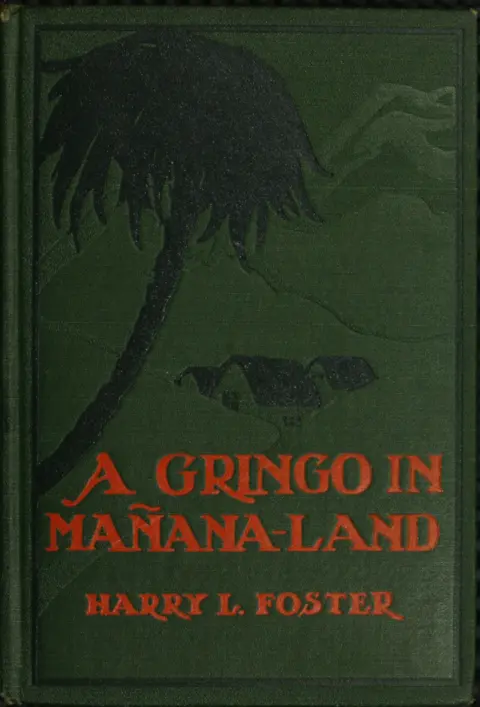
"A Gringo in Mañana-Land" by Harry L. Foster is a travel narrative written in the early 20th century. The book chronicles the author's adventures and encounters as he journeys through various countries in Central America, including Mexico, Guatemala, and Nicaragua. The narrative is imbued with humor and personal anecdotes, showcasing the author's experiences with local culture, revolutions, and the colorful characters he meets along the way. The opening of the narrative begins with the author's intention to drive from Arizona to Panama in a newly purchased automobile. However, after a humorous series of mishaps, he finds himself traveling by train into Mexico. He illustrates the challenging yet amusing encounters he faces as a foreigner, including navigating the bureaucracy at the border and experiencing the leisurely pace of life in Mexico. The author paints a vivid picture of his first days in the country, filled with both anxiety and excitement, setting the stage for a series of engaging and often comical escapades that follow in the story.
Introduction adapted from the source catalogue; source summaries may be automatically generated.
Free to read · English · 78,587 words · No account needed
MAKE TIME FOR A GOOD BOOK
On by default. Untick to stop anonymous reading totals. Each page counts after 10 seconds in view. How this works.
Anonymous counting is on unless you have switched it off.
At 8.37, the policemen formed an escort, and marched away again, still with dignity and majesty, escorting the latest captive to the police barracks.
At 9.00, the cathedral bell resumed its unhallowed racket.
At 9.08, Carmen Rosa María de la Concepción Purísima Rodríguez, who lived upstairs opposite the plaza, commenced her piano lesson, playing those rippling little Spanish melodies, with occasional pauses while she searched for the bass note.
At 9.09, I decided to stroll to the other side of the park.
At 9.10, I found Eustace sitting on a bench with a distinguished-looking middle-aged American who, I hoped, would gratify my ideas of romance by proving an absconded bank cashier. But he was introduced as a mining man by the name of Werner. He was eating oranges and tossing the peels into the shrubbery, meanwhile bowing to the celebrities who passed. “Here comes General Cómo-se-Llama, the worst cut-throat in Mexico. Hello, General, muy buenas días, how are you?”
At 9.11, a second general passed, in a uniform which he had designed himself--sky blue cap, bright red coat, and green trousers, all embellished with gold braid. He was five feet high, and four feet wide. “They use him for dress parade,” said Werner.
At 9.12, a third general passed, marching through the street, followed
by eight soldiers.
At 9.49, the first pretty señoritas, on their way to mass with a forbidding-looking mother, stopped to rest on the bench opposite. The girls wore the latest Parisian modes, but mother still clung to the old-fashioned rebozo, or shawl. Each wore a little black lace mantilla pinned to the hair. One girl noted that we were looking at her, and her eyes twinkled appreciatively. She whispered to the other girl, and both smiled.
At 9.51, after an accusing glance from mother, we decided to stroll around the plaza. “They’ll consider it an insult,” said Werner. “They expect you to stay here and talk together about how lovely they are, just loud enough for them to hear it.”
At 10.26, the musicians gathered for their Sunday morning concert. Having tuned up, they continued to blow and toot, indulging the Mexicans’ love of noise. Half of them were unshod; all were brown; none looked like accomplished artists. I dreaded the racket they’d make when all tooted at once.
At 10.30, they played the most beautiful band music I had ever heard.
At 10.52, society emerged from the cathedral. Barefoot peons withdrew from the plaza to make room for the aristocrats.
Your reading position is saved on this browser. Take it to another device with a library code. Reading pages adapt to text, rather than matching a printed edition.
BEHIND THE BOOK
This eBook is for the use of anyone anywhere in the United States and most other parts of the world at no cost and with almost no restrictions whatsoever. You may copy it, give it away or re-use it under the terms of the Project Gutenberg License included with this eBook or online at www.gutenberg.org. If you are not located in the United States, you will have to check the laws of the country where you are located before using this eBook. Read the source licence.
The original source file, including credits and licence, is retained by this library. Request an original-format copy at no charge. Please include the book title and Project Gutenberg identifier #67200.
KEEP YOUR CURIOSITY GOING
Wilfrid Scawen Blunt
Wilfrid Scawen Blunt

E. W. (Edgar Watson) Howe
Francis Greenleaf Allinson & Anne C. E. (Anne Crosby Emery) Allinson
Cyrenus Cole

John Martineau