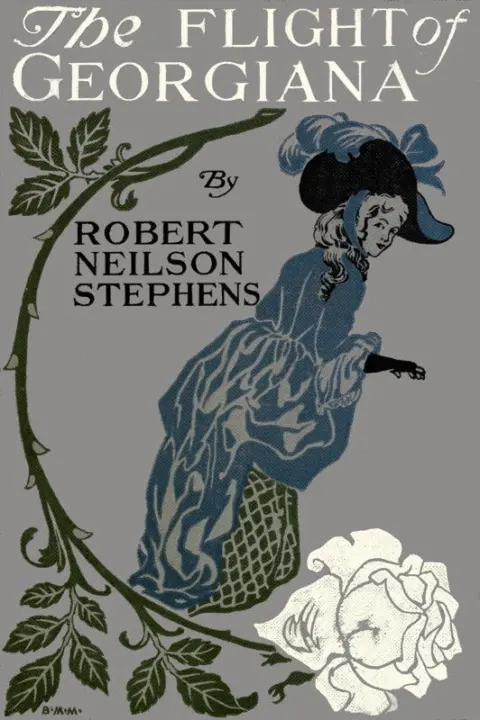
The Flight of Georgiana: A Story of Love and Peril in England in 1746
Robert Neilson Stephens
THE CLASSIC COLLECTION · 1899
"A Gentleman Player; His Adventures on a Secret Mission for Queen Elizabeth" by Robert Neilson Stephens is a historical novel likely written in the late 19th century. The story unfolds in the late 16th and early 17th centuries and centers around Hal Marryott, a struggling actor who stumbles into a secretive world of intrigue involving Queen Elizabeth I and the events surrounding the performance of Shakespeare's “Hamlet.” The narrative captures the vibrant atmosphere of the Globe Theatre, deftly blending historical context with the art of performance and personal ambition. The opening of the novel invites readers into the bustling Globe Theatre on the day of the first performance of "Hamlet." Hal Marryott, nervous about his debut in a significant role, encounters Shakespeare and other actors as they prepare for the show. Amidst the excitement and tension, audiences are introduced to the various characters and dynamics within the theatre as Hal grapples with his own insecurities. Following the play's successful premiere, Hal's fortunes take an unexpected turn when he finds himself in the Queen's garden, leading to a shocking revelation regarding a dangerous mission tasked to him by Queen Elizabeth herself. This sets the stage for an intertwining of personal aspirations and political intrigue as Hal's journey evolves.
Introduction adapted from the source catalogue; source summaries may be automatically generated.
Free to read · English · 99,752 words · No account needed
MAKE TIME FOR A GOOD BOOK
On by default. Untick to stop anonymous reading totals. Each page counts after 10 seconds in view. How this works.
Anonymous counting is on unless you have switched it off.
"And we players," said Burbage, with a kind of sigh, "who make dead men remembered, are by the very nature of our craft doomed to be forgot. Who shall know our very names, three poor hundred years hence?"
"Why," said Condell, "our names might live by the printing of them in the books of the plays we act in; a printed book will last you a long time."
"Not such books as these thievish printers make of our plays," said Sly, himself a writer of plays.
"Marry, I should not wish long life to their blundering, distorted versions of any play I had a hand in making," said Shakespeare.
"But consider," said Condell; "were a decent printing made of all thy plays, Will, all in one book, from the true manuscripts we have at the theatre, and our names put in the book, Dick's name at the head, then might not our names live for our having acted in thy plays?"
Mr. Burbage smiled amusedly, but said nothing, and Shakespeare answered:
"'Twould be a dead kind of life for them, methinks; buried in dusty, unsold volumes in the book-sellers' shops in Paul's Churchyard."
"Nay, I would venture something," said Master Heminge, thoughtfully, "that a book of thy plays were sure to be opened."
"Ay, that some shopman's 'prentice might tear out the leaves, to wrap fardels withal," said Shakespeare. "Three hundred years, Dick said. 'Tis true, books of the ancients have endured to this day; but if the world grows in learning as it hath in our own time, each age making its own books, and better and wiser ones, what readers shall there be, think you, in the year of our Lord 1900, for the rude stage-plays of Will Shakespeare, or even for his poems, that be writ with more care?"
"'Twould be strange, indeed," said Burbage, "that a player should be remembered after his death, merely for his having acted in some certain play or set of plays." He did not add, but did he think, that Will Shakespeare's plays were more like to be remembered, if at all, for Mr. Burbage's having acted in them?[13]
"Why art thou silent, lad," said Shakespeare to Hal Marryott, by way of changing the subject, "and thy gaze lost in thy clouds of smoke, as if thou sawest visions there?"
"I' faith, I do see a vision there," said Harry, now in the enraptured stage of wine, and eager to unbosom himself. "Would I were a poet, like thee, that I might describe it. Ye gods, what a face! The eyes have burned into my heart. Cupid hath made swift work of me!"
"Why, this must be since yesterday," said Sly.
Your reading position is saved on this browser. Take it to another device with a library code. Reading pages adapt to text, rather than matching a printed edition.
Robert Neilson Stephens
Robert Neilson Stephens
Robert Neilson Stephens
Robert Neilson Stephens
BEHIND THE BOOK
This eBook is for the use of anyone anywhere in the United States and most other parts of the world at no cost and with almost no restrictions whatsoever. You may copy it, give it away or re-use it under the terms of the Project Gutenberg License included with this eBook or online at www.gutenberg.org. If you are not located in the United States, you will have to check the laws of the country where you are located before using this eBook. Read the source licence.
The original source file, including credits and licence, is retained by this library. Request an original-format copy at no charge. Please include the book title and Project Gutenberg identifier #34650.
KEEP YOUR CURIOSITY GOING
Cécile Tormay

Moritz Busch
Coulson Kernahan
John L. Ransom

Maurice Baring
Frances Wright