THE CLASSIC COLLECTION✦Inhibition, symptom and anxietyCLASSIC FREE BOOKS
Inhibition, symptom and anxiety
Sigmund Freud
THE CLASSIC COLLECTION · 1920
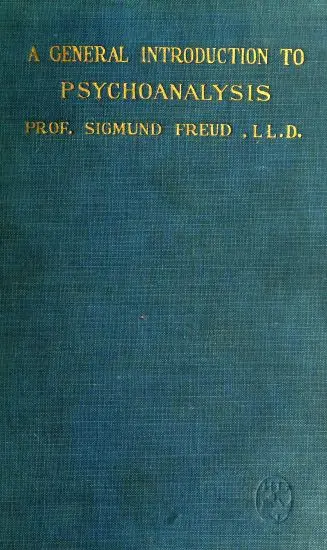
"A General Introduction to Psychoanalysis" by Sigmund Freud is a set of lectures given in 1915-1917. In twenty-eight accessible talks, Freud presents his revolutionary ideas about the unconscious mind, dreams, and neuroses to a lay audience. Beginning with everyday slips of the tongue, progressing through dream analysis, and culminating in theories of mental illness, he grounds his radical psychological theories in common experience. The lectures became his most popular and widely translated work, offering both newcomers and advanced readers insight into the foundations of psychoanalytic thought.
Introduction adapted from the source catalogue; source summaries may be automatically generated.
Free to read · English · 157,131 words · No account needed
MAKE TIME FOR A GOOD BOOK
On by default. Untick to stop anonymous reading totals. Each page counts after 10 seconds in view. How this works.
Anonymous counting is on unless you have switched it off.
It may be possible that the prejudice against psychoanalysis is already on the wane. The continual spread of psychoanalytic doctrine, the increase of the number of physicians in many lands who treat analytically, seems to vouch for it. When I was a young physician I was caught in just such a storm of outraged feeling of the medical profession toward hypnosis, treatment by suggestion, which today is contrasted with psychoanalysis by "sober" men. Hypnotism did not, however, as a therapeutic agent, live up to its promises; we psychoanalysts may call ourselves its rightful heirs, and we have not forgotten the large amount of encouragement and theoretical explanation we owe to it. The injuries blamed upon psychoanalysis are limited essentially to temporary aggravation of the conflict when the analysis is clumsily handled, or when it is broken off unfinished. You have heard our justification for our form of treatment, and you can form your own opinion as to whether or not our endeavors are likely to lead to lasting injury. Misuse of psychoanalysis is possible in various ways; above all, transference is a dangerous remedy in the hands of an unconscientious physician. But no professional method of procedure is protected from misuse; a knife that is not sharp is of no use in effecting a cure.
I have thus reached the end, ladies and gentlemen. It is more than the customary formal speech when I admit that I am myself keenly depressed over the many faults in the lectures I have just delivered. First of all, I am sorry that I have so often promised to return to a subject only slightly touched upon at the time, and then found that the context has not made it possible to keep my word. I have undertaken to inform you concerning an unfinished thing, still in the process of development, and my brief exposition itself was an incomplete thing. Often I presented the evidence and then did not myself draw the conclusion. But I could not endeavor to make you masters of the subject. I tried only to give you some explanation and stimulation.
Abel, C., 195
Abel, R., 148
Abraham, K., 284, 358
Abstinence, 299
Accidental and symptomatic acts, 42
Accumulated and combined errors, 37
Adler, A., 203, 330, 351
Agoraphobia, 227, 233
Alexander, dream of, 65
Altruism, 360
Ambivalence, 369
Amnesia, 244;
childhood, 168;
hysterical, 245;
infantile, 245;
of the neurotic, 244
Analyses of dreams, 94, 95, 96, 97, 98, 153
Analysis, experimental, dream for, 93
Analytical therapy, 372, 388
Andreas, Lou, 272
Anxiety, 340, 342;
dream, 183;
equivalents, 347;
form of neurotic fear, 346;
hysteria, 233, 259, 316, 346;
hysteria, resistance in, 250;
neurosis, 338, 344, 347
Anxious expectation, 344
Archaic remnants and infantilism in the dream, 167
Art, and the neurosis, 326
Association experiment, 86;
free, 84
Auto-eroticism, 359
Back, George, 108
Basedowi, M., 336
Beheading symbol, 231
Bernheim, 81, 240, 385, 388
Binet, 302
Binz, 66
Birth of the hero, myths, 182
Birth, the source of fear, 343;
symbols of, 132;
theories of children, 274
Bleuler, 86, 369
Bloch, Ivan, 265
Your reading position is saved on this browser. Take it to another device with a library code. Reading pages adapt to text, rather than matching a printed edition.
Sigmund Freud
Sigmund Freud
Sigmund Freud
Sigmund Freud
BEHIND THE BOOK
This eBook is for the use of anyone anywhere in the United States and most other parts of the world at no cost and with almost no restrictions whatsoever. You may copy it, give it away or re-use it under the terms of the Project Gutenberg License included with this eBook or online at www.gutenberg.org. If you are not located in the United States, you will have to check the laws of the country where you are located before using this eBook. Read the source licence.
The original source file, including credits and licence, is retained by this library. Request an original-format copy at no charge. Please include the book title and Project Gutenberg identifier #38219.
KEEP YOUR CURIOSITY GOING

Charles G. (Charles Griffith) Ross
Hannah Webster Foster

Emily Lawless
Edwin Hamlin Carr

Charles De Lano Hine
Andrew Ure