THE CLASSIC COLLECTION✦A dead man’s diaryCLASSIC FREE BOOKS
A dead man’s diary
Coulson Kernahan
THE CLASSIC COLLECTION · 1904
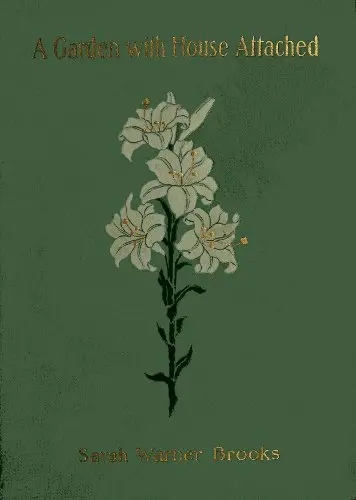
"A Garden with House Attached" by Sarah Warner Brooks is a work of fiction likely written in the early 20th century. The narrative unfolds in a picturesque garden setting, centering around a protagonist engaged in managing and cultivating an old garden alongside her son, referred to as "The Third Son." The book seems to delve into the themes of gardening, the connection between nature and personal growth, and the relationships fostered within this tranquil environment. The opening of the book introduces readers to the protagonist's newfound role as the manager of "The Garden with House Attached" and her son, who acts as her eager assistant. They embark on the task of exploring the garden's potential while reflecting on its rich history and the enduring beauty of its flora. As they start to tackle the overgrown areas and restore the garden, the environment becomes a backdrop for their familial bond and memories of the lady of the house, who was a passionate gardener. The descriptions are vivid and imbued with reverence for the natural world, promising insights into horticulture interwoven with personal stories and the significance of place in human experience.
Introduction adapted from the source catalogue; source summaries may be automatically generated.
Free to read · English · 26,651 words · No account needed
MAKE TIME FOR A GOOD BOOK
On by default. Untick to stop anonymous reading totals. Each page counts after 10 seconds in view. How this works.
Anonymous counting is on unless you have switched it off.
Since making a record of my Foxglove sport I have learned that this flower often produces at the tip of its blossom stalk an abortive radiate flower. I wonder if the Foxglove did not originally start out as a radiate, and if this freak is not a wild tendency of the plant to escape that evoluted form (which is its civilization) and lapse into its primitive barbarism?
The Foxglove comes in bloom late in June and continues flowering about
four weeks.
Though classed as a biennial, it sometimes lingers on through a third summer, and continues flowering.
It is named from its finger-shaped corolla. The dried leaf of Digitalis Purpurea is a specific for disturbance of circulation, and is used in heart disease.
Its colors are pure white, white mottled with pencil-color, purple, lavender, from the palest to the deepest shades--some almost pink--all curiously mottled on the inside of the flower, which grows in tall spikes.
Sow Foxgloves in seed bed about last of April, and, late in September, transplant to their permanent place. They will bloom the following year.
Both Foxgloves and Canterbury Bells sow themselves profusely if stalk is left to perfect its seeds.
The self-sown plants are said to be stronger than the hand-sown ones, and may be transplanted for the next year's blooming.
CANTERBURY BELLS, Campanula medium
It has been suggested that "the name of Canterbury Bells may have been given to the giant species of Campanula from its resemblance to the hand-bells which were placed on poles, and rung by pilgrims while proceeding to the shrine of Thomas à Becket."
Chaucer, in his "Canterbury Tales," has described in detail these processions to the tomb of the "blisful martir."
The Canterbury Bell is, like the Foxglove, a biennial, and may be sown in the seed bed at the same time, or the self-sown plants may be used.
It needs winter protection (not too heavy), for it is easily
winter-killed.
I have, at times, had in my garden most lovely Campanulas--both double, single, and "cup and saucers." The most beautiful variety is the single.
In color mine were white, purple, and lavender, of many shades, but the pride of my heart was a rose-pink Canterbury Bell.
"Beautiful as a dream!" said the garden visitor, moved to admiration at the sight of these pink beauties.
Lovely as they are, Canterbury Bells have not the grace to die nicely.
Their dead blossoms cling, withered and unsightly, to the parent stem, and unless one has time and patience to go among the plants daily and remove the dead bells it is, for this reason, well to cultivate them in inconspicuous beds apart by themselves.
Your reading position is saved on this browser. Take it to another device with a library code. Reading pages adapt to text, rather than matching a printed edition.
BEHIND THE BOOK
This eBook is for the use of anyone anywhere in the United States and most other parts of the world at no cost and with almost no restrictions whatsoever. You may copy it, give it away or re-use it under the terms of the Project Gutenberg License included with this eBook or online at www.gutenberg.org. If you are not located in the United States, you will have to check the laws of the country where you are located before using this eBook. Read the source licence.
The original source file, including credits and licence, is retained by this library. Request an original-format copy at no charge. Please include the book title and Project Gutenberg identifier #40183.
KEEP YOUR CURIOSITY GOING
Coulson Kernahan

Maurice Baring
Frances Wright
Cécile Tormay

Frederic Jesup Stimson

W. H. P. (William Henry Pope) Jarvis