THE CLASSIC COLLECTION✦A dead man’s diaryCLASSIC FREE BOOKS
A dead man’s diary
Coulson Kernahan
THE CLASSIC COLLECTION · 1904
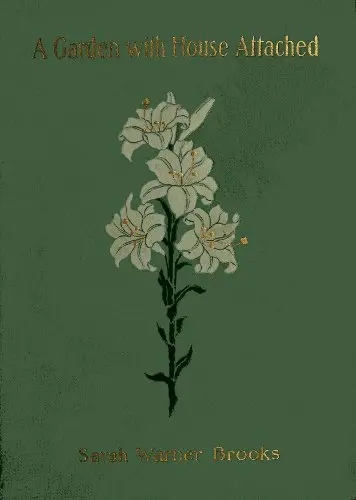
"A Garden with House Attached" by Sarah Warner Brooks is a work of fiction likely written in the early 20th century. The narrative unfolds in a picturesque garden setting, centering around a protagonist engaged in managing and cultivating an old garden alongside her son, referred to as "The Third Son." The book seems to delve into the themes of gardening, the connection between nature and personal growth, and the relationships fostered within this tranquil environment. The opening of the book introduces readers to the protagonist's newfound role as the manager of "The Garden with House Attached" and her son, who acts as her eager assistant. They embark on the task of exploring the garden's potential while reflecting on its rich history and the enduring beauty of its flora. As they start to tackle the overgrown areas and restore the garden, the environment becomes a backdrop for their familial bond and memories of the lady of the house, who was a passionate gardener. The descriptions are vivid and imbued with reverence for the natural world, promising insights into horticulture interwoven with personal stories and the significance of place in human experience.
Introduction adapted from the source catalogue; source summaries may be automatically generated.
Free to read · English · 26,651 words · No account needed
MAKE TIME FOR A GOOD BOOK
On by default. Untick to stop anonymous reading totals. Each page counts after 10 seconds in view. How this works.
Anonymous counting is on unless you have switched it off.
For a hanging-basket use the oxalis, of which there are many beautiful varieties. It flowers abundantly, but as the season advances, must be stimulated with repeated applications of liquid manure and soot tea, that its foliage may not lose its vigor and become straggly. Wandering Jew, though structurally coarse, is a good hanging plant, and will accommodate itself to any exposure, really doing its very best in a north window. Ivy geranium is another hanging plant, beautiful in structure, and with its double rose-pink blossoms, as in the improved varieties, most fair to see. It demands strong food, much moisture, and oceans of sunlight. Madeira vine and German ivy both make effective hanging-baskets. The latter is too alluring to the green fly to make its house-culture easy or satisfactory. Smilax, if trained on strings, in a sunny window, is exquisitely delicate, and its blossom is odorous. The English ivy, as in-door greenery, is delightful. I have attempted its culture, but my experience being but a series of ignoble defeats, is not commendable. I wish it were! The odious scale has at last compelled me to abandon the field. I must also confess to repeated failure with in-door geraniums. Mine have not bloomed well, and a geranium without its blossoms is a poor affair (not including the scented varieties). Last autumn, after having tried many methods with many kinds, I turned over a new leaf in geranium culture. All my best geraniums were consigned to an upper room, where no furnace heat could reach them, and where, in cold nights, the temperature falls perilously near to freezing point. The plants have a southern window, and through the day the room is moderately warmed from the ascending heat of the kitchen. Geraniums (and fuchsias and nasturtiums as well) have taken kindly to this low temperature, the geraniums blooming as finely as in the open during summer. Many of us have, no doubt, seen floating about in print, the little story of that pot of geranium which was the sole bequest of a dying man to his family, who carefully tended this precious, though not pecuniarily valuable legacy. When spring came the pot was reverently committed to the cemetery lot to summer close beside the grave of the buried husband and father. On removing it in autumn, the plant was found to have outgrown its quarters, and was tenderly dislodged for repotting. To the great surprise of these good people a hollow false bottom was found in the original pot, and on its removal a little fortune in bank notes was disclosed, which, as the story ran, had obligingly kept themselves intact for the heirs in this odd storing-place. This tale has been cited of late by a scientific floriculturist, as evidence of the deplorable ignorance of the common mind in regard to absolutely necessary conditions for growth demanded by a plant. "A geranium," he authoritatively tells us, "cannot exist without drainage, hence an account which asserts that one has for months survived the ordeal of a tight-bottom pot can have no foundation in fact." So we have been taught, but, alas for the infallibility of time-honored theories! In the material world new discoveries are continually upsetting old conclusions; and we are now told that our geraniums and fuchsias have a natural affinity for tight-bottomed tomato cans! The finest geranium in my present collection has the proud distinction of growing in a water-tight lard kettle. Though a young and blooming plant, it was held in light esteem by its owner because of a vicious tendency to magenta, and in the autumn, no pot being at hand, was given this apparently thin chance of survival. Not only has it carried its buds and blossoms straight on through the entire winter, but it has graciously overcome its perversity in the matter of color, changing from a glaring magenta to a deep and lovely rose. In the same group is a large white geranium three years old, which, after blooming all summer in the garden, has never once, throughout the winter, been out of bud and blossom. This well-behaved plant grows in an old butter tub which stands squarely on its "own" sound "bottom," unmutilated by gimlet or auger. The plant had, in late winter, ten clusters of bud and bloom, while its small neighbor of the lard kettle had six. A nasturtium, in the same window, flowers abundantly, and a fuchsia beside it is a paragon among plants. All these have had weekly applications of manure water and soot tea, and have not been kept over-wet. Especially is this true of the geraniums--which may, perhaps, partly explain their dispensing with drainage. The finest hyacinth I have ever grown in the house perfected in a handleless fancy pitcher which had no outlet at the bottom. Having no pot of the right size, some lumps of charcoal were thrown into this make-shift affair, the soil tossed in, and the bulb, not without serious misgivings, carefully planted. It flowered late, but its foliage was abundant and its bloom exquisite. It gave me five perfect rose-colored spikes. These all, in common with my other plants (excepting ferns and aspidistras) were well fed with liquid manure and soot tea, and, in potting, a little wood ashes was added to the soil.
Your reading position is saved on this browser. Take it to another device with a library code. Reading pages adapt to text, rather than matching a printed edition.
BEHIND THE BOOK
This eBook is for the use of anyone anywhere in the United States and most other parts of the world at no cost and with almost no restrictions whatsoever. You may copy it, give it away or re-use it under the terms of the Project Gutenberg License included with this eBook or online at www.gutenberg.org. If you are not located in the United States, you will have to check the laws of the country where you are located before using this eBook. Read the source licence.
The original source file, including credits and licence, is retained by this library. Request an original-format copy at no charge. Please include the book title and Project Gutenberg identifier #40183.
KEEP YOUR CURIOSITY GOING
Coulson Kernahan

Maurice Baring
Frances Wright
Cécile Tormay

Frederic Jesup Stimson

W. H. P. (William Henry Pope) Jarvis