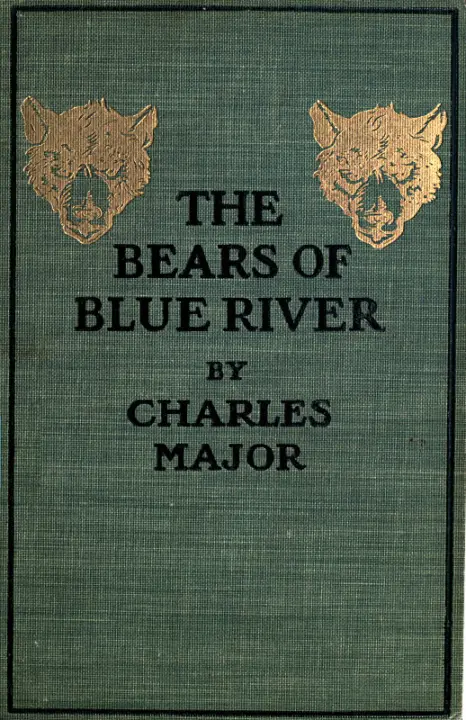
The Bears of Blue River
Charles Major
THE CLASSIC COLLECTION · 1903
"A Forest Hearth: A Romance of Indiana in the Thirties" by Charles Major is a historical romance novel written in the early 20th century. The story is set in the 1830s in Indiana and centers around the life of a young girl named Rita Bays, her family dynamics, and the budding relationships within the close-knit community. The book explores themes of love, personal growth, and the contrasting influences of justice and tenderness in human relationships. At the start of the novel, we are introduced to Rita Bays and her complex family, particularly her domineering mother, Mrs. Margarita Bays, and her gentle, affectionate father. Notably, the narrative hints at a close friendship between Rita and Diccon Bright, a boy from the area, which suggests the beginnings of a romantic relationship. The opening provides a vivid depiction of pioneer life and the challenges faced by settlers, emphasizing Rita's innocence and the internal struggles tied to her emerging feelings for Diccon, setting the stage for her coming-of-age journey amidst the trials of early American life.
Introduction adapted from the source catalogue; source summaries may be automatically generated.
Free to read · English · 94,610 words · No account needed
MAKE TIME FOR A GOOD BOOK
On by default. Untick to stop anonymous reading totals. Each page counts after 10 seconds in view. How this works.
Anonymous counting is on unless you have switched it off.
After her story was finished--and she found great relief in the
telling--Billy said:--
"Of course I'll trust you. I'd trust you for the whole store if you wanted to buy it. I'd trust you with my soul," he added after a pause. "There's not a false drop of blood in your veins."
"Ah, Billy Little," she answered, as she took his hand caressingly for an instant, and her eyes, with their wonderful capacity for expression, said the rest.
"So, you see, I do want to write a letter to Dic," she said, dropping his hand; "but it is not to be a love-letter. I could not write one if I wished. I was very wicked. Oh, Billy Little, I honestly think, at times, I'm the worst girl that ever lived. Something terrible will happen to me for my wickedness, I'm sure. Mother says it will."
"Yes, something terrible--terrible, I'm sure," returned Billy, musingly.
"And I want to apologize to him," she continued, "and tell him I didn't mean it. Isn't it right that I should?"
"Oh, yes--yes," answered Billy, starting out of his revery. "Of course, yes--Maxwelton's braes are bonny--um--um--um--um--um--yes, oh yes."
When vexed, pleased, or puzzled, Billy was apt to hum the opening line of "Annie Laurie," though the first four words were all that received the honor of distinct articulation. The remainder of the stanza he allowed to die away under his breath. Rita was of course familiar with the habit, but this time she could not tell which motive had prompted the musical outburst. Billy himself couldn't have told, but perhaps the bachelor heart was at the bottom of it.
"Thank you, Billy Little, for the paper," said Rita. "I'll pay you with the first money I get." Billy silently helped her to mount her horse. She smiled, "Good-by," and he walked slowly back to the store muttering to himself: "Billy Little, Billy Little, your breastworks are weak, and you are a--Maxwelton's braes--um--um--um--um.--Ah, good evening, Mrs. Carson. Something I can do for you this evening? Sugar? Ah, yes, plenty. Best in town. Best shipment I ever had," and Billy was once more a merchant.
When Rita reached home supper was ready, and after the supper work was finished it was too dark to write; so the letter was postponed a day, and she took her place on the porch, hoping that Dic would come and that the letter might be postponed indefinitely. But he did not come. Next morning churning had again become loathsome, sweeping was hard work, and dinner was a barbarous institution. Rita had no appetite, and to sympathize with those who are hungry one must be hungry.
Your reading position is saved on this browser. Take it to another device with a library code. Reading pages adapt to text, rather than matching a printed edition.
Charles Major
Charles Major
Charles Major
Charles Major
BEHIND THE BOOK
This eBook is for the use of anyone anywhere in the United States and most other parts of the world at no cost and with almost no restrictions whatsoever. You may copy it, give it away or re-use it under the terms of the Project Gutenberg License included with this eBook or online at www.gutenberg.org. If you are not located in the United States, you will have to check the laws of the country where you are located before using this eBook. Read the source licence.
The original source file, including credits and licence, is retained by this library. Request an original-format copy at no charge. Please include the book title and Project Gutenberg identifier #29486.
KEEP YOUR CURIOSITY GOING
Cécile Tormay

Moritz Busch
Coulson Kernahan
John L. Ransom

Maurice Baring
Frances Wright