THE CLASSIC COLLECTION✦Those about TrenchCLASSIC FREE BOOKS
Those about Trench
Edwin Herbert Lewis
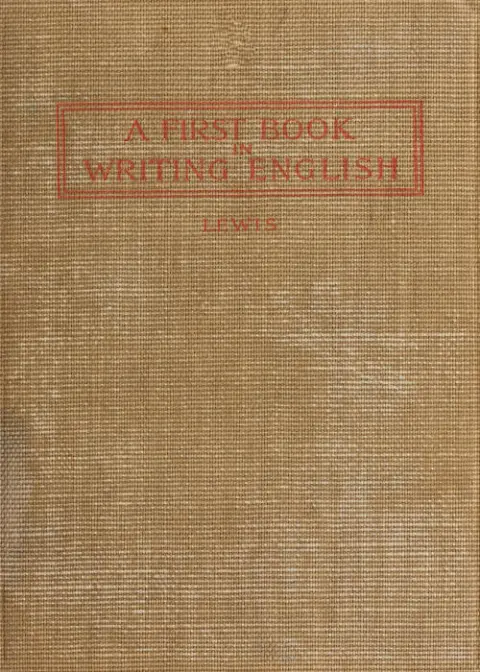
THE CLASSIC COLLECTION · 1897
"A First Book in Writing English" by Edwin Herbert Lewis is an educational guide focused on teaching principles of English composition, written in the late 19th century. The book is designed primarily for students in their early years of secondary education, aiming to provide them with foundational skills in writing, grammar, and rhetoric. Its content emphasizes the importance of clear communication through writing, offering practical advice on organizing thoughts, creating effective sentences, and mastering punctuation. The opening of the text outlines the rationale behind introducing writing composition to students at an earlier stage in their education, rather than waiting until their final high school year. Lewis argues for the value of allowing students to engage in framing generalizations about writing as they navigate new experiences and develop their thoughts. He emphasizes the need for clear rules and principles to guide students in their writing process, aiming to cultivate not only practical writing skills but also an appreciation for the beauty and artistry of language. Overall, the beginning sets the stage for a comprehensive exploration of writing techniques, promoting the idea that effective communication is essential for personal expression and understanding among individuals.
Introduction adapted from the source catalogue; source summaries may be automatically generated.
Free to read · English · 66,092 words · No account needed
MAKE TIME FOR A GOOD BOOK
On by default. Untick to stop anonymous reading totals. Each page counts after 10 seconds in view. How this works.
Anonymous counting is on unless you have switched it off.
Theme:
errors in, 1, 3;
title, 2;
endorsement, 2;
revision and rewriting, 2, 13;
signs in correcting, 3-4;
organizing of, 114-146;
different ways of planning, 114;
growth of thought, 114-116;
unity, 116-117;
planning paragraph, 117;
topic sentence, 117-120, 123-124;
kinds of paragraphs, 120-123, 126, 127-128;
expansion, 128-133;
proportioning, 133-136;
choice of subject, 136-138, 141-143;
outline, 130, 138-139;
specimen theme, 139-141;
transitions between paragraphs, 143-144;
transitions between sentences, 144-146;
exercises, oral, 123-126, 133-135, 141-142, 145-146;
exercises written, 131, 135, 141, 142-143, 144;
themes, 126-128, 141-142.
Theme, subjects for, 34, 81-82, 88, 126-128, 129, 131-133, 135-136, 141-143, 263-266, 267-270, 277-278, 281-282.
those kind, 48.
Thought, growth of, 114.
Threads of narrative, 275.
Topic sentence, 117.
Transitions, between paragraphs, 143-144;
between sentences, 144-145.
Translation, 211.
transpire, happen, 166.
Trope, 247.
Uniformity of sentence structure, 101-102.
Unity of form, in sentence, 79, 96-102.
Unity of substance:
in sentence, 74-95;
in theme, 116.
unless, without, 172.
Usage:
national, 147-148;
reputable, 148;
present, 148;
good, 150.
Variety:
of words, 226;
as an element of beauty, 229.
verbal, oral, 170.
Verbosity, 233.
Vocabulary, mastery of a writing, 194-226:
ideas without words, 194;
words without ideas, 194-195;
ideas and words, 195-197;
the two vocabularies, 197-199;
vocabulary book, 199;
figurative use of common words, 199-203;
value of careful reading, 203-211;
contributions from other studies, 211;
translation, 211;
memorizing of literature, 212-213;
English proverbs, 213-215;
synonyms for adjectives of praise, 216;
danger of bookish words, 216-217;
a method of study, 217-220;
groups of synonyms, 220-225;
variety, 226;
exercises, oral, 216, 218-219, 220;
written, 202-203, 218, 219-220, 225-226.
Vocabulary note-book, 4, 199, 262.
Vocabulary, sources of the English, 181-193:
historical sketch, 181-186;
Anglo-Saxon prefixes and suffixes, 186-187;
Latin element, 188;
Latin words transferred to English, 188-189;
Latin prefixes and suffixes, 189;
Latin roots in English, 189-191;
Greek roots in English, 191;
curious words, 191-192;
written exercise, 192-193.
Vocative words, punctuation of, 25.
Vulgarisms, 149.
walkist, 152.
want, wish, desire, 167.
well (adjective or adverb), 57.
West India words, 186.
wheatena, 153.
will and shall. See Shall and will.
wish, want, desire, 167.
with, introducing parenthetical clause, 47.
without, unless, 172.
Word-breaking, 17.
Words, correctness in choice of, 147-180:
authority, 147-150;
provincialisms or localisms, 147;
national usage, 147-148;
present usage, 148;
reputable usage, 148-149;
vulgarisms, 149;
good usage, 150;
dictionary, 150;
barbarisms, 151-153;
alienisms, 152-153;
improprieties, 154;
choice of nouns, 154-160;
verbs, 160-167;
adjectives and adverbs, 167-172;
exercises, oral, 172-174, 175-177, 178-180.
Words, figurative use of common. See Vocabulary.
Words, lists of:
incorrectly spelled, 16-17;
compound, 14-15;
mispronounced, 18-19;
Latin, 181-182, 188-189, 190-191;
Celtic, 182;
Anglo-Saxon, 182-183;
Norse, 183;
Italian, 184;
Spanish, 185;
Dutch, 185;
African, 185;
Arabian, 185;
Chinese, 185;
India, words from, 185-186;
Malayan, 186;
Persian, 186;
North American Indian, 186;
Mexican, 186;
West Indian, 186;
South American, 186;
Greek, 191;
curious, 191-192;
adjectives, 203;
synonyms, 220-225.
Words, omission of, 55, 92, 234-235.
Words, right number and skilful choice of, 227-253:
as affecting clearness, 227-228;
force, 228-229;
beauty, 229;
prolixity, 229-231;
surplus of, 231-232;
deficiency of, 233-235;
specific words, 235-238;
general words, 238-245;
ambiguous words, 243-244;
simple words, 244-246;
literal and figurative words, 246-253;
exercises, 232-233, 235, 237-238, 241-243, 243-244, 245-246, 253-254.
Words without ideas, 194-195.
Writing vocabulary. See Vocabulary.
Aiken, C., 18.
Your reading position is saved on this browser. Take it to another device with a library code. Reading pages adapt to text, rather than matching a printed edition.
Edwin Herbert Lewis
Edwin Herbert Lewis
BEHIND THE BOOK
This eBook is for the use of anyone anywhere in the United States and most other parts of the world at no cost and with almost no restrictions whatsoever. You may copy it, give it away or re-use it under the terms of the Project Gutenberg License included with this eBook or online at www.gutenberg.org. If you are not located in the United States, you will have to check the laws of the country where you are located before using this eBook. Read the source licence.
The original source file, including credits and licence, is retained by this library. Request an original-format copy at no charge. Please include the book title and Project Gutenberg identifier #62265.
KEEP YOUR CURIOSITY GOING

Charles G. (Charles Griffith) Ross
Hannah Webster Foster

Emily Lawless
Edwin Hamlin Carr

Charles De Lano Hine
Andrew Ure