THE CLASSIC COLLECTION✦In a winter cityCLASSIC FREE BOOKS
In a winter city
Ouida
THE CLASSIC COLLECTION · 1909
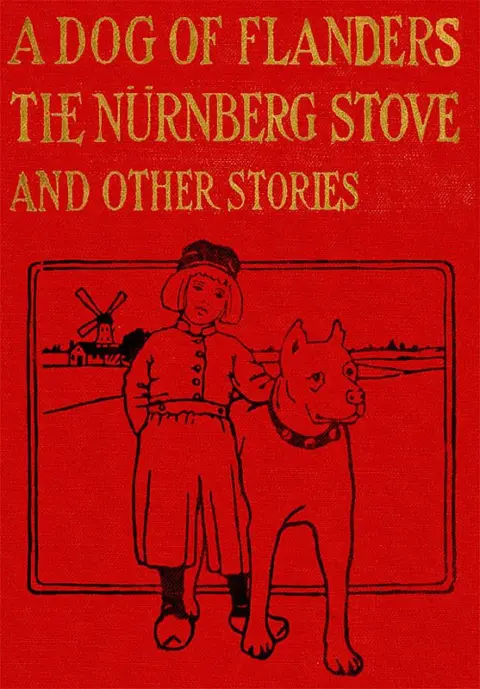
"A Dog of Flanders, The Nürnberg Stove, and Other Stories" by Ouida is a collection of short stories written in the late 19th century. The collection features themes of friendship, love, and the struggles of the impoverished, particularly through the main characters of Nello and his loyal dog Patrasche, set against the backdrop of Flanders' landscapes and artistic aspirations. The opening of "A Dog of Flanders" introduces us to Nello, a young boy, and Patrasche, a large dog, who share a deep bond of friendship. Orphaned and living in a humble hut on the outskirts of a small Flemish village, they rely on one another for companionship and support amidst their struggles with poverty. Nello, taken in by his grandfather Jehan, is portrayed as a kind-hearted and sensitive child, while Patrasche is depicted as a hard-working dog, previously mistreated, who longs for love and companionship—qualities they both find in each other. As the story unfolds, their connection is tested by hardships of life, creating a poignant narrative of loyalty and sorrow that captures the reader's heart.
Introduction adapted from the source catalogue; source summaries may be automatically generated.
Free to read · English · 60,680 words · No account needed
MAKE TIME FOR A GOOD BOOK
On by default. Untick to stop anonymous reading totals. Each page counts after 10 seconds in view. How this works.
Anonymous counting is on unless you have switched it off.
Nonno looked up smiling, and stood up and bowed with grace and ease. The English tongue he had never been able to master: he glanced at Gemma to bid her answer.
“We were only resting, Excellenza,” said she, boldly. “It is a public
road.”
“It is not a public road,” said the owner of it. “And if it were, you would have no right to cumber it. Are you strollers?”
“Strollers?” repeated Gemma: she did not understand the word.
“Tramps? Are you tramps?”
“We are artists,” said Gemma.
“What do you do for your living?” asked her judge.
“We dance,” she answered, “and Nonno yonder he does conjuring tricks, and sometimes has a little lotto, but that is only when we have got a little money: we have none now.”
“A lottery!” exclaimed Mr. Carey, whose face grew very stern. “You are mere idle vagabonds, then, when you are not worse. Do you live by your wits?”
“We dance,” said Gemma, again.
“Dance! Can you read and write?”
“Oh, no.”
“How old are you?”
“I am thirteen, Bindo is ten, Nonno is—is—is, oh, as old as the world.”
“Is he your grandfather?”
“That is what you say in English. We say Nonno.”
“Cannot he speak English?”
“No: he has lost his teeth, and it is so hard, is your English.”
“You are an impudent girl.”
Gemma smiled her beautiful shining smile, as if he had paid her an
admirable compliment.
She knew the rider by sight very well, though he did not know her. His housekeeper had whipped Bindo for getting into her poultry-house and putting two eggs in his pocket, and his gardener one day had turned them both out of his orchards as trespassers, so that he and his residence of Carey’s Honor were already scored with black in the tablets of the children’s memories.
That he was a handsome young man, with a grave and pensive face and a very sweet smile, when he did smile, which was rarely, did not affect Gemma’s dislike to him: she was too young to be impressed by good looks. Philip Carey was not touched by the beauty of her either: he scarcely saw that she was pretty, he was so angry with her for what seemed to him her saucy answers.
“Why are you not dressed like a Christian?” he said, somewhat
irrelevantly.
“I am a Christian,” said Gemma, angry in her turn,—“a better Christian than you are. And what is my dress to you? You do not buy it.”
“It is immodest.”
Your reading position is saved on this browser. Take it to another device with a library code. Reading pages adapt to text, rather than matching a printed edition.
BEHIND THE BOOK
This eBook is for the use of anyone anywhere in the United States and most other parts of the world at no cost and with almost no restrictions whatsoever. You may copy it, give it away or re-use it under the terms of the Project Gutenberg License included with this eBook or online at www.gutenberg.org. If you are not located in the United States, you will have to check the laws of the country where you are located before using this eBook. Read the source licence.
The original source file, including credits and licence, is retained by this library. Request an original-format copy at no charge. Please include the book title and Project Gutenberg identifier #50032.
KEEP YOUR CURIOSITY GOING
Coulson Kernahan

Maurice Baring
Frances Wright
Cécile Tormay

Frederic Jesup Stimson

W. H. P. (William Henry Pope) Jarvis

