THE CLASSIC COLLECTION✦In a winter cityCLASSIC FREE BOOKS
In a winter city
Ouida
THE CLASSIC COLLECTION · 1909
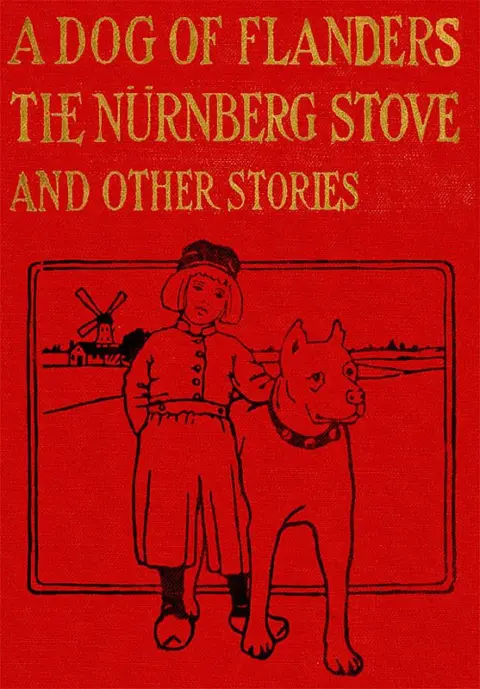
"A Dog of Flanders, The Nürnberg Stove, and Other Stories" by Ouida is a collection of short stories written in the late 19th century. The collection features themes of friendship, love, and the struggles of the impoverished, particularly through the main characters of Nello and his loyal dog Patrasche, set against the backdrop of Flanders' landscapes and artistic aspirations. The opening of "A Dog of Flanders" introduces us to Nello, a young boy, and Patrasche, a large dog, who share a deep bond of friendship. Orphaned and living in a humble hut on the outskirts of a small Flemish village, they rely on one another for companionship and support amidst their struggles with poverty. Nello, taken in by his grandfather Jehan, is portrayed as a kind-hearted and sensitive child, while Patrasche is depicted as a hard-working dog, previously mistreated, who longs for love and companionship—qualities they both find in each other. As the story unfolds, their connection is tested by hardships of life, creating a poignant narrative of loyalty and sorrow that captures the reader's heart.
Introduction adapted from the source catalogue; source summaries may be automatically generated.
Free to read · English · 60,680 words · No account needed
MAKE TIME FOR A GOOD BOOK
On by default. Untick to stop anonymous reading totals. Each page counts after 10 seconds in view. How this works.
Anonymous counting is on unless you have switched it off.
And then his breath failed him, and, as he lifted his little, eager, pale face to the young king’s, great tears were falling down his cheeks.
Now, the king likes all poetic and uncommon things, and there was that in the child’s face which pleased and touched him. He motioned to his gentlemen to leave the little boy alone.
“What is your name?” he asked him.
“I am August Strehla. My father is Hans Strehla. We live in Hall in the Innthal; and Hirschvogel has been ours so long,—so long!”
His lips quivered with a broken sob.
“And have you truly travelled inside this stove all the way from Tyrol?”
“Yes,” said August; “no one thought to look inside till you did.”
The king laughed; then another view of the matter occurred to him.
“Who bought the stove of your father?” he inquired.
“Traders of Munich,” said August, who did not know that he ought not to have spoken to the king as to a simple citizen, and whose little brain was whirling and spinning dizzily round its one central idea.
“What sum did they pay your father, do you know?” asked the sovereign.
“Two hundred florins,” said August, with a great sigh of shame. “It was so much money, and he is so poor, and there are so many of us.”
The king turned to his gentlemen-in-waiting. “Did these dealers of Munich come with the stove.”
He was answered in the affirmative. He desired them to be sought for and brought before him. As one of his chamberlains hastened on the errand, the monarch looked at August with compassion.
“You are very pale, little fellow: when did you eat last?”
“I had some bread and sausage with me; yesterday afternoon I finished
it.”
“You would like to eat now?”
“If I might have a little water I would be glad; my throat is very dry.”
The king had water and wine brought for him, and cake also; but August, though he drank eagerly, could not swallow anything. His mind was in too great a tumult.
“May I stay with Hirschvogel?—may I stay?” he said, with feverish
agitation.
“Wait a little,” said the king, and asked, abruptly, “What do you wish to be when you are a man?”
“A painter. I wish to be what Hirschvogel was,—I mean the master that made my Hirschvogel.”
“I understand,” said the king.
Your reading position is saved on this browser. Take it to another device with a library code. Reading pages adapt to text, rather than matching a printed edition.
BEHIND THE BOOK
This eBook is for the use of anyone anywhere in the United States and most other parts of the world at no cost and with almost no restrictions whatsoever. You may copy it, give it away or re-use it under the terms of the Project Gutenberg License included with this eBook or online at www.gutenberg.org. If you are not located in the United States, you will have to check the laws of the country where you are located before using this eBook. Read the source licence.
The original source file, including credits and licence, is retained by this library. Request an original-format copy at no charge. Please include the book title and Project Gutenberg identifier #50032.
KEEP YOUR CURIOSITY GOING
Coulson Kernahan

Maurice Baring
Frances Wright
Cécile Tormay

Frederic Jesup Stimson

W. H. P. (William Henry Pope) Jarvis

