THE CLASSIC COLLECTION✦In a winter cityCLASSIC FREE BOOKS
In a winter city
Ouida
THE CLASSIC COLLECTION · 1909
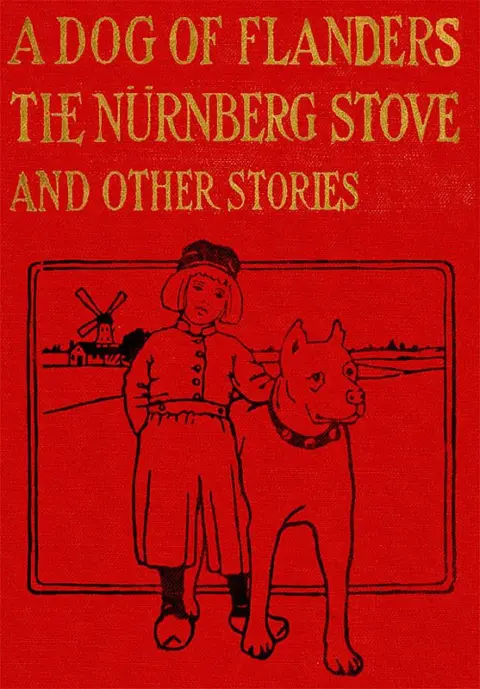
"A Dog of Flanders, The Nürnberg Stove, and Other Stories" by Ouida is a collection of short stories written in the late 19th century. The collection features themes of friendship, love, and the struggles of the impoverished, particularly through the main characters of Nello and his loyal dog Patrasche, set against the backdrop of Flanders' landscapes and artistic aspirations. The opening of "A Dog of Flanders" introduces us to Nello, a young boy, and Patrasche, a large dog, who share a deep bond of friendship. Orphaned and living in a humble hut on the outskirts of a small Flemish village, they rely on one another for companionship and support amidst their struggles with poverty. Nello, taken in by his grandfather Jehan, is portrayed as a kind-hearted and sensitive child, while Patrasche is depicted as a hard-working dog, previously mistreated, who longs for love and companionship—qualities they both find in each other. As the story unfolds, their connection is tested by hardships of life, creating a poignant narrative of loyalty and sorrow that captures the reader's heart.
Introduction adapted from the source catalogue; source summaries may be automatically generated.
Free to read · English · 60,680 words · No account needed
MAKE TIME FOR A GOOD BOOK
On by default. Untick to stop anonymous reading totals. Each page counts after 10 seconds in view. How this works.
Anonymous counting is on unless you have switched it off.
Of course Sir Henry would not allow the little Earl to wander any farther afield, and of course a horseman was sent over in hot haste to apprise his people, misled by the boat-lad, who, frightened at his own share in the little gentleman’s escape, had sworn till he was hoarse that he had seen Lord Avillion take a boat for Rye.
So Bertie’s liberty was nipped in the bud, and very sorrowfully and wistfully he strayed out on to the rose-terrace of Sir Henry’s house, awaiting the coming of his friends. The puppy had been fetched, and was tumbling and waddling solemnly beside him; yet he was very sad at heart.
“What are you thinking of, my child?” said Sir Henry, who was a gentle
and learned man.
Bertie’s mouth quivered.
“I see,” he said, hesitatingly,—“I see I am nothing. It is the title they give me, and the money I have got, that make the people so good to me. When I am only me, you see how it is.”
And the tears rolled down his face, which he had heard called “wizen” and “puny” and likened to tallow.
“My dear little fellow,” said his grown-up companion, tenderly, “there comes a day when even kings are stripped of all their pomp, and lie naked and stark; it is then that which they have done, not that which they have been, that will find them grace and let them rise again.”
“But I am nothing!” said Bertie, piteously. “You see, when the people do not know who I am, they think me nothing at all.”
“I don’t fancy Peggy and Dan will think so when we tell them everything,” said the host. “We are all of us nothing in ourselves, my child; only, here and there we pluck a bit of lavender,—that is, we do some good thing or say some kind word,—and then we get a sweet savor from it. You will gather a great deal of lavender in your life, or I am mistaken.”
“I will try,” said Bertie, who understood.
So, off the downs that day, and in the pleasant hawthorn woods of the friendly little Isle, he plucked two heads of lavender,—humility and sympathy. Believe me, they are worth as much as was the moly of Ulysses.
Transcriber’s Notes:
Obvious punctuation errors repaired.
Page 22, “thei” changed to “their” (even in their dulness)
Page 51, “draw” changed to “drew” (drew out with his teeth)
Page 70, “gir” changed to “girl” (girl whom he afterwards)
Page 119, “drins” changed to “drink” (drink your reward at)
Page 133, “al” changed to “all” (were all bad trades)
Your reading position is saved on this browser. Take it to another device with a library code. Reading pages adapt to text, rather than matching a printed edition.
BEHIND THE BOOK
This eBook is for the use of anyone anywhere in the United States and most other parts of the world at no cost and with almost no restrictions whatsoever. You may copy it, give it away or re-use it under the terms of the Project Gutenberg License included with this eBook or online at www.gutenberg.org. If you are not located in the United States, you will have to check the laws of the country where you are located before using this eBook. Read the source licence.
The original source file, including credits and licence, is retained by this library. Request an original-format copy at no charge. Please include the book title and Project Gutenberg identifier #50032.
KEEP YOUR CURIOSITY GOING
Coulson Kernahan

Maurice Baring
Frances Wright
Cécile Tormay

Frederic Jesup Stimson

W. H. P. (William Henry Pope) Jarvis

