THE CLASSIC COLLECTION✦In a winter cityCLASSIC FREE BOOKS
In a winter city
Ouida
THE CLASSIC COLLECTION · 1909
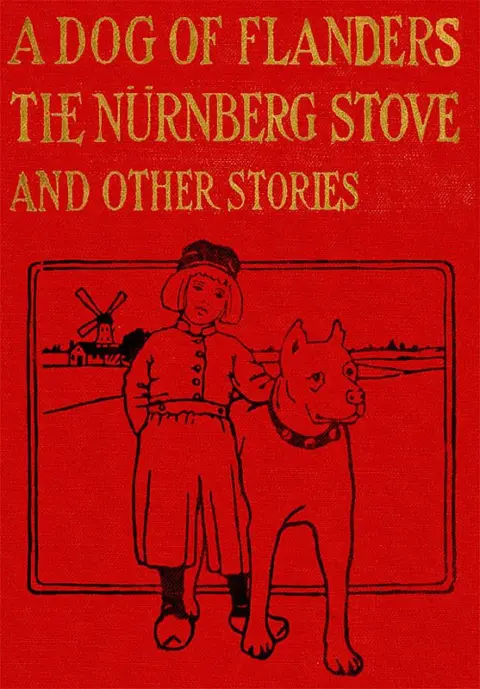
"A Dog of Flanders, The Nürnberg Stove, and Other Stories" by Ouida is a collection of short stories written in the late 19th century. The collection features themes of friendship, love, and the struggles of the impoverished, particularly through the main characters of Nello and his loyal dog Patrasche, set against the backdrop of Flanders' landscapes and artistic aspirations. The opening of "A Dog of Flanders" introduces us to Nello, a young boy, and Patrasche, a large dog, who share a deep bond of friendship. Orphaned and living in a humble hut on the outskirts of a small Flemish village, they rely on one another for companionship and support amidst their struggles with poverty. Nello, taken in by his grandfather Jehan, is portrayed as a kind-hearted and sensitive child, while Patrasche is depicted as a hard-working dog, previously mistreated, who longs for love and companionship—qualities they both find in each other. As the story unfolds, their connection is tested by hardships of life, creating a poignant narrative of loyalty and sorrow that captures the reader's heart.
Introduction adapted from the source catalogue; source summaries may be automatically generated.
Free to read · English · 60,680 words · No account needed
MAKE TIME FOR A GOOD BOOK
On by default. Untick to stop anonymous reading totals. Each page counts after 10 seconds in view. How this works.
Anonymous counting is on unless you have switched it off.
“We’ll gie her some broth,” he said, manfully, while he and Dick, munching bread and raw bacon, tumbled the beef in a lump into the saucepan, drowned in water with some whole onions, in the common fashion of cottage-cooking. The baby, meanwhile, was placidly swallowing the milk that the little Earl held for it very carefully, and, when that was done, accepted a crust that he offered it to suck.
The two boys were crouching before the crackling fire, munching voraciously, and watching the boiling of the old black pot. They had quite forgotten their benefactor.
“My! What’ll Peg say when she’s to home?” chuckled Tam.
“She’ll say that she’d ha’ cooked better,” growled Dick. “Golly! ain’t the fat good?”
Bertie stood aloof, pleased, and yet sorrowful because they did not
notice him.
Even the baby had so completely centred its mind in the crust that it had abandoned all memory of the red scarf.
Bertie looked on a little while, but no one seemed to remember him. The boys’ eyes were glowing on the saucepan, and their cheeks were filled out with food as the cherubs in his chapel at home were puffed out with air as they blew celestial trumpets.
He went to the door slowly, looked back, and then retreated into the
sunshine.
“It would be mean to put them in mind of me,” he thought, as he
withdrew.
Suddenly a sharp pain shot through him: a stone had cut his unshod foot.
“Oh, dear me! how ever shall I walk without any shoes or boots!” he thought, miserably; and he was very nearly bursting out crying.
On the edge of these fields was a wood,—a low, dark, rolling wood,—which looked to the little Earl, who missed his own forests, inviting and cool and sweet. By this time it was getting towards noon, and the sun was hot, and he felt thirsty and very tired. He was sad, too: he was glad to have satisfied those poor hungry children, but their indifference to him when they were satisfied was chilling and melancholy.
“But then we ought not to do a kindness that we may be thanked,” he said to himself. “It is a proper punishment to me, because I wished to be thanked, which was mean.”
So he settled, as he usually did, that it was all his own fault.
Happily for him, the ground was soft with summer dust, and so he managed to get along the little path that ran from the cottage through the lucern-fields, and from there the path became grass, which was still less trying to his little red stockings.
Your reading position is saved on this browser. Take it to another device with a library code. Reading pages adapt to text, rather than matching a printed edition.
BEHIND THE BOOK
This eBook is for the use of anyone anywhere in the United States and most other parts of the world at no cost and with almost no restrictions whatsoever. You may copy it, give it away or re-use it under the terms of the Project Gutenberg License included with this eBook or online at www.gutenberg.org. If you are not located in the United States, you will have to check the laws of the country where you are located before using this eBook. Read the source licence.
The original source file, including credits and licence, is retained by this library. Request an original-format copy at no charge. Please include the book title and Project Gutenberg identifier #50032.
KEEP YOUR CURIOSITY GOING
Coulson Kernahan

Maurice Baring
Frances Wright
Cécile Tormay

Frederic Jesup Stimson

W. H. P. (William Henry Pope) Jarvis

