THE CLASSIC COLLECTION✦An outlaw’s diary: the CommuneCLASSIC FREE BOOKS
An outlaw’s diary: the Commune
Cécile Tormay
THE CLASSIC COLLECTION · 1862
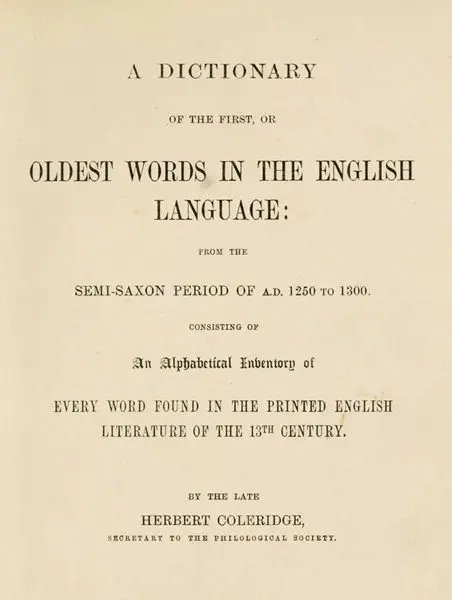
"A Dictionary of the First or Oldest Words in the English Language" by Herbert Coleridge is a scholarly dictionary written in the mid-19th century. This work serves as a comprehensive inventory of every word found in the printed English literature of the 13th century, aiming to establish a historical perspective on the evolution of the English language. The book is likely to attract linguists, philologists, and those interested in the historical development of English vocabulary. The opening of the dictionary begins with a preface where Coleridge outlines the purpose and significance of the work. He emphasizes that the dictionary aims to provide a foundational resource for the Philological Society's larger project of compiling an English dictionary. In this section, he notes how the words are organized, detailing the approach taken to illustrate both older forms and modern equivalents, along with the systematic referencing of etymological roots. The introduction also acknowledges contributions from various scholars, highlighting a collaborative effort toward documenting the lexicon of early English literature and its historical context.
Introduction adapted from the source catalogue; source summaries may be automatically generated.
Free to read · English · 55,821 words · No account needed
MAKE TIME FOR A GOOD BOOK
On by default. Untick to stop anonymous reading totals. Each page counts after 10 seconds in view. How this works.
Anonymous counting is on unless you have switched it off.
Evil, sb. == sickness. HD. 114; misfortune. Ps. lxxxix. 15; [uvel], RG.
472
---- adj. [uvele]. 413 B.
---- adv. O. and N. 1204. 404 B.
Evilness, sb. Ps. xxxv. 5; li. 5
Ewt, sb. See Eft
Executor, sb. Fragm. on Seven Sins, 42
Ey, sb. == egg. RG. 404. pl. ‘eiren.’ St Swithin, 57. Germ. ei. AS. æg.
ON. egg
Eye, sb. == awe. RG. 469, 507. AS. ége
Eye, sb. == organ of sight. RG. 376. AS. eáge
Eyebrow. Pol. S. 239
Eyful, adj. == proud. [heyvol]. RG. 377
Eyre, sb. == journey, circuit. RG. 517. Lat. iter
Fabling, sb. == fable, story. Ps. cxviii. 85
Face, sb. RG. 476
Fadme, v. a. == embrace. HD. 1295. AS. fæðmian
Fagen, adj. == glad, fain. Fragment in Warton, H. E. P. vol. i. p. 31.
AS. fægen
Fail, v. n. == wither (of fruit). RG. 414. 3s. pres. ‘falt.’ O. and N. 37; part. ‘ifailled.’ Pol. S. 202
Fail, sb. RG. 369
Fain, v. a. == be glad, rejoice. Ps. xix. 6
Fain, adj. RG. 349; [vawe]. RG. 218
Fainness, sb. == gladness. Ps. iv. 7
Faint, adj. Wright’s L. P. p. 25
Faintise, sb. == cowardice. RG. 39
Faintly, adv. RG. 515
Fair, adj. == beautiful. RG. 383
---- == light, pale (of colour). RG. 429. ‘fairer.’ RG. 395; ‘fairest.’
133 β
---- v. n. == become fair. Alys. 2903
Fairhede, sb. == fairness. RG. 118
Fairly, adv. == pleasantly, easily. RG. 446
Fairy, sb. == enchantment. Alys. 6924. Fr. faérie, faé
Faith, sb. [fei]. 2074 B.
Falcon, sb. Wright’s L. P. p. 26
Fale, adj. == many. RG. 416, 146. AS. feala
Falewe, v. a. == become yellow. Wright’s L. P. p. 50. AS. fealo.
Falewi, sb. == yellowness. O. and N. 456
Fall, v. n. RG. 6. pret. ‘fell.’ RG. 401. part. ‘ifallen.’ O. and N. 514. ‘it falleth not to thee,’ == it is not thy duty or lot. Leg. of St Cuthbert, cited in Warton, H. E. P. vol. i. p. 14, n.
---- v. a. == make to fall. part. ‘yfalle.’ Alys. 7183
Fallows, sb. == fields. HD. 2509. AS. fealh
False, adj. RG. 385
Falsehood, sb. RG. 454
Falseleke, sb. == falsehood. Wright’s L. P. p. 32
Falsely, adv. Wright’s L. P. p. 31
Falseness. Pol. S. 150
Falseship. Pol. S. 212
Fame, sb. RG. 367
Fanding, sb. == temptation. Ps. xvii. 30
Fanger, sb. == taker, lifter up. Ps. ii. 4
Far, adv. [ver]. RG. 502; [feor]. O. and N. 921
Farant, adj. == walking. Alys. 3460
Fare, v. n. == go, journey. 657 β. pret. ‘fore.’ Ps. civ. 13
---- == succeed, turn out. 918 B. part. ‘ifare.’ O. and N. 400
---- == behave. 2076 B.
---- == fare, live. 20 B.
---- sb. == journey. RG. 52
---- == custom, proceeding. Alys. 7072. Ritson’s AS. viii. 158, 188
Farforth, adv. == far. RG. 448
---- == entirely [ferforth]. RG. 242
Farm, v. a. RG. 378
Farthing, sb. == the coin so called. RG. 507
Fast, adj. == firm, sure. Wright’s L. P. p. 37
---- adv. == quickly. RG. 490; strongly. Id. ibid.
Fast, v. n. == abstain from food. 2512 B. part, ‘fasting.’ RG. 545. AS.
fæstan
---- sb. 2511 B.
Fasten, v. a. Pol. S. 214. Ps. xcii. 1
Fasting, sb. RG. 405
Fastlic, adv. == firmly. Creed of St Athan. 101
Your reading position is saved on this browser. Take it to another device with a library code. Reading pages adapt to text, rather than matching a printed edition.
BEHIND THE BOOK
This eBook is for the use of anyone anywhere in the United States and most other parts of the world at no cost and with almost no restrictions whatsoever. You may copy it, give it away or re-use it under the terms of the Project Gutenberg License included with this eBook or online at www.gutenberg.org. If you are not located in the United States, you will have to check the laws of the country where you are located before using this eBook. Read the source licence.
The original source file, including credits and licence, is retained by this library. Request an original-format copy at no charge. Please include the book title and Project Gutenberg identifier #41975.
KEEP YOUR CURIOSITY GOING
Cécile Tormay

Moritz Busch
John L. Ransom
Frances Wright
Cécile Tormay

Mabel Potter Daggett