THE CLASSIC COLLECTION✦An outlaw’s diary: the CommuneCLASSIC FREE BOOKS
An outlaw’s diary: the Commune
Cécile Tormay
THE CLASSIC COLLECTION · 1862
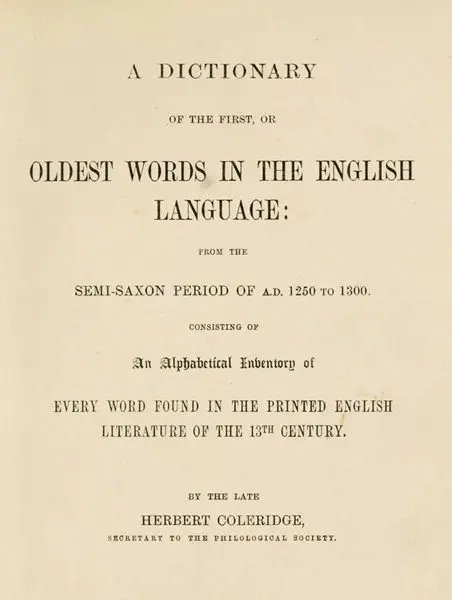
"A Dictionary of the First or Oldest Words in the English Language" by Herbert Coleridge is a scholarly dictionary written in the mid-19th century. This work serves as a comprehensive inventory of every word found in the printed English literature of the 13th century, aiming to establish a historical perspective on the evolution of the English language. The book is likely to attract linguists, philologists, and those interested in the historical development of English vocabulary. The opening of the dictionary begins with a preface where Coleridge outlines the purpose and significance of the work. He emphasizes that the dictionary aims to provide a foundational resource for the Philological Society's larger project of compiling an English dictionary. In this section, he notes how the words are organized, detailing the approach taken to illustrate both older forms and modern equivalents, along with the systematic referencing of etymological roots. The introduction also acknowledges contributions from various scholars, highlighting a collaborative effort toward documenting the lexicon of early English literature and its historical context.
Introduction adapted from the source catalogue; source summaries may be automatically generated.
Free to read · English · 55,821 words · No account needed
MAKE TIME FOR A GOOD BOOK
On by default. Untick to stop anonymous reading totals. Each page counts after 10 seconds in view. How this works.
Anonymous counting is on unless you have switched it off.
Druery, Drury, sb. == gallantry, courtship. RG. 191
---- == love, delight. Alys. 2999. Fr. drue, a mistress
Drunke, sb. == drinking. M. Ode, 128
Drunken, v. a. == make drunk. Ps. lxiv. 10
Drunness, sb. == drunkenness? O. and N. 1397
Drury, adj. == dreary, q. v.
Dry, adj. RG. 531
---- v. a. part. ‘idriid.’ Rel. Ant. ii. p. 193
---- v. n. == become dry. Ps. xxxvi. 2; 3 s. pres. ‘druith.’ Rel. Ant.
ii. p. 210
Dryhed, sb. == dryness. Ps. lxv. 6
Dub, v. a. HD. 2038. AS. dubban
Dubbing, sb. K. Horn, 499
Duelsing, sb. == deceit. St Swithin, 105
Duke, sb. RG. 367
Dumb, adj. RG. 131
---- v. n. == become dumb. Ps. xxxviii. 3
Dung, sb. RG. 310; [ding]. Rel. Ant. ii. p. 191. Serm. 7
Dunge, sb. == dungeon. Body and Soul, 236
Dungheap, sb. Wright’s L. P. p. 103
Dure, v. n. == endure. RG. 403; [duyre]. Alys. 3258
Durwe, sb. == dwarf. Alys. 6266. AS. dweorg
Dusi, adj. == foolish. O. and N. 1464. AS. dýsig
Dust, sb. RG. 137
Dute, sb. == pleasure. Cok. 9. Fr. deduit
Dutten, v. a. == close, dite. Wright’s L. P. p. 110. AS. dyttan
Duty, sb. [devyte]. RG. 316
Duȝethe, sb. == manhood. O. and N. 634. AS. duguð
Dwel, sb. == space of time. Rel. Ant, ii. p. 191
Dwele, v. a. == deceive. Ps. lvii. 4. AS. dwelian
Dwell, v. n. HD. 4. ON. dvelja
---- == delay. HD. 1351
Dwelle, sb. == folly. Serm. 13
Dwelling, sb. delay. Alys. 5208. HD. 1352
Dwole, sb. == error, trick. O. and N. 823, AS. dwola
---- adj. == false, deceitful. O and N. 924
Each, adj. RG. 369
Eachone. RG. 374
Eager, adj. RG. 80
Ear, sb. (of corn). RG. 490. AS. eár
Ear, sb. (of the body). RG. 492. AS. eáre
Eardingstowe, sb. == dwelling-place. O. and N. 28. AS. eardungstow
Earl, sb. RG. 370
Earldom, sb. RG. 523
Early, adj. 905 B.
Earn, v. a. == gain, realize. O. and N. 1202. AS. earnian
Earnest, sb. == earnestness. RG. 121, 401
Earth, sb. == the world. Wright’s L. P. p. 68.
---- == the ground. HD. 2657
---- == mould. HD. 740
---- v. n. == to dwell. HD. 739. AS. eardian
Earthgrine, == earthquake. RG. 530. AS. grynd, an abyss
Earthgrythe, sb. == earthquake. RG. 414. ON. gríð == vehemence, violent
motion
Earthly, adj. 440 B.
Ease, sb. 1473 B.
Easily, adv. 395 B.
East, sb. 35 β
Easter, sb. 546 B.
Eastward, adv. RG. 41
Easy, adj. == slack. Body and Soul, 115
Eat, v. a. 143 β. pret. ‘at.’ 274 B. ‘ete.’ RG 408. part. ‘y-ete.’ 311 β
Ebb, v. n. Fragm. Sci. 253
Ech, adj. == eternal. O. and N. 742. AS. éce.
Eche, v. a. == increase. Rel. S. v. 126. AS. eácan
Eche, sb. == aches. M. Ode, st. 100
Ederlyng, sb. == ancestor? Alys. 1711
Edged, adj. [i-egged] (of a sword). RG. 274
Edict, sb. RG. 568
Edissehen, sb. == quail. Ps. civ. 40. AS. edisc-hen, from ‘edisc,’ a
park
Edmod, adj. == mild, humble. Fragm. in Warton, H. E. P. vol. i. p. 21.
AS. eádmod
Edneth. Rel. Ant. i. 114; possibly a mistake for ‘endeth,’ i.e. comes to
an end
Edwyt, sb. == scorn. RG. 379. AS. edwíte
Your reading position is saved on this browser. Take it to another device with a library code. Reading pages adapt to text, rather than matching a printed edition.
BEHIND THE BOOK
This eBook is for the use of anyone anywhere in the United States and most other parts of the world at no cost and with almost no restrictions whatsoever. You may copy it, give it away or re-use it under the terms of the Project Gutenberg License included with this eBook or online at www.gutenberg.org. If you are not located in the United States, you will have to check the laws of the country where you are located before using this eBook. Read the source licence.
The original source file, including credits and licence, is retained by this library. Request an original-format copy at no charge. Please include the book title and Project Gutenberg identifier #41975.
KEEP YOUR CURIOSITY GOING
Cécile Tormay

Moritz Busch
John L. Ransom
Frances Wright
Cécile Tormay

Mabel Potter Daggett