THE CLASSIC COLLECTION✦An outlaw’s diary: the CommuneCLASSIC FREE BOOKS
An outlaw’s diary: the Commune
Cécile Tormay
THE CLASSIC COLLECTION · 1862
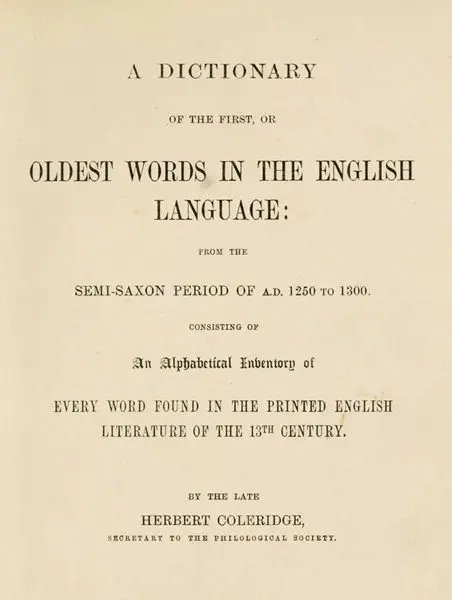
"A Dictionary of the First or Oldest Words in the English Language" by Herbert Coleridge is a scholarly dictionary written in the mid-19th century. This work serves as a comprehensive inventory of every word found in the printed English literature of the 13th century, aiming to establish a historical perspective on the evolution of the English language. The book is likely to attract linguists, philologists, and those interested in the historical development of English vocabulary. The opening of the dictionary begins with a preface where Coleridge outlines the purpose and significance of the work. He emphasizes that the dictionary aims to provide a foundational resource for the Philological Society's larger project of compiling an English dictionary. In this section, he notes how the words are organized, detailing the approach taken to illustrate both older forms and modern equivalents, along with the systematic referencing of etymological roots. The introduction also acknowledges contributions from various scholars, highlighting a collaborative effort toward documenting the lexicon of early English literature and its historical context.
Introduction adapted from the source catalogue; source summaries may be automatically generated.
Free to read · English · 55,821 words · No account needed
MAKE TIME FOR A GOOD BOOK
On by default. Untick to stop anonymous reading totals. Each page counts after 10 seconds in view. How this works.
Anonymous counting is on unless you have switched it off.
Chide, v. a. 2 s. pres. ‘chist.’ O. and N. 1329. AS. cídan
---- v. n. RG. 390
---- == dispute. O. and N. 287
Chief, sb. == chieftain. 1003 B.
Chief, adj. == ‘to hold in chief,’ a law term, applied to those tenants who held their fiefs direct from the king; ‘tenants in capite.’ RG. 472
---- == principal. St Swithin, 22
Chieftain, sb. [cheventeyn]. RG. 386, 400
Chilce, sb. == childishness? M. Ode, 4. Formed from ‘child,’ as ‘milce’ from ‘mild’
Child, sb. RG. 392, 441; [chil]. O. and N. 1438
Child, v. n. == bring forth a child. Alys. 604
Childbed, sb. RG. 379
Childering, sb. == bringing forth a child. Rel. S. ii. 7
Chill, sb. RG. 7
Chimbe, sb. == cymbal. Ps. cl. 5
Chime, sb. (of bells). Alys. 1852. Dan. kime
Chin, sb. 522 β
Chinche, adj. == niggardly. HD. 1763. Fr. chice == avarice
Chirchegong, == churchgoing. RG. 380. Cf. ‘idelgong’
Chirm, sb. == chirping and screaming of birds. O. and N. 305. AS. cyrm
Chirurgeon, sb. RG. 566
Chivalry, sb. == prowess. RG. 413
Chivauché, sb. == an expedition, a body of men. Ritson’s AS. viii. 141. Fr. chevauchée, from cheval.
Choice, sb. RG. 111
Chokering, sb. == a low chattering. O. and N. 504
Cholle, == shall. RG. 379, in the compound form ‘ycholle’
Choose, v. a. RG. 400. pret. ‘ches.’ Marg. 2. part, ‘chis.’ Alys. 3294. ‘ichose.’ RG. 472
---- v. n. == have a choice. RG. 384
Christ, sb. == anointed person. Ps. civ. 15
Christen, v. a. part, ‘icristened.’ St Kath. 136
Christendom, sb. == sacraments belonging to Christianity. RG. 496
Christian, adj. 7 B.
Christmas, sb. 1932 B
Chrysolite, sb. Alys. 5682
Churl, sb. HD. 682. AS. ceorl
Church, sb. RG. 369, 381
Churchyard, sb. 2234 B.
Ciclaton, sb. == a rich stuff from India. Alys. 1964. Fr. ciglaton. Lat.
cyclas
Cinqueports, sb. == the five havens of Dover, Sandwich, Romney, Hyde,
Hastings. RG. 515
Citation, sb. == a summoning into court. RG. 473
City, sb. RG. 380; used adjectively as ‘a city town.’ Alys. 7543
Clack, v. n. == make a noise. O. and N. 81. AS. cloccan
Clad, part. == clothed. HD. 1354. AS. gecladed
Claht, == adhered, cleaved? Wright’s L. P. p. 37
Clap, v. a. == strike. HD. 1821
Clarré, sb. == a kind of wine (claret?). HD. 1728
Clasp, sb. Pol. S. 222
Clastre, v. n. == to clatter. Pol. S. 157
Claw, sb. Body and Soul, 186. pl. ‘clen,’ Marg. 46. ‘clees,’ Ps. lxviii.
32. AS. clea
Clawed, adj. == having claws. Alys. 4969
Clay, sb. Wright’s L. P. p. 85
Clay, adj. Rel. S. v. 73
Clean, adj. RG. 374
Cleanly, adv. RG. 434
Cleanness, sb. RG. 411, 434
Cleanse, v. a. [clansi]. O. and N. 610. Ps. l. 4. part, ‘ycleansed.’ RG.
43.
Cleansing, sb. Ps. lxxxviii. 45
Clear, adj. 1097 B.
Clearly, adv. 442 β
Cleave, v. a. == split. HD. 917. pret. ‘clewyd’ == cleft. Alys. 3790. 3 pl. ‘clowen,’ ib. 2765. AS. clúfan
---- v. n. == adhere to. HD. 1300. AS. clífan
Clench, v. a. == pinch, wither up. O. and N. 1204; the modern ‘cling.’ Compare Shakspere’s ‘Till famine cling thee.’ Macb. v. 5 AS. clingan
Clench, v. a. == strike (as a harp). K. Horn, 1532
Clenyen. See Cling
Your reading position is saved on this browser. Take it to another device with a library code. Reading pages adapt to text, rather than matching a printed edition.
BEHIND THE BOOK
This eBook is for the use of anyone anywhere in the United States and most other parts of the world at no cost and with almost no restrictions whatsoever. You may copy it, give it away or re-use it under the terms of the Project Gutenberg License included with this eBook or online at www.gutenberg.org. If you are not located in the United States, you will have to check the laws of the country where you are located before using this eBook. Read the source licence.
The original source file, including credits and licence, is retained by this library. Request an original-format copy at no charge. Please include the book title and Project Gutenberg identifier #41975.
KEEP YOUR CURIOSITY GOING
Cécile Tormay

Moritz Busch
John L. Ransom
Frances Wright
Cécile Tormay

Mabel Potter Daggett