THE CLASSIC COLLECTION✦An outlaw’s diary: the CommuneCLASSIC FREE BOOKS
An outlaw’s diary: the Commune
Cécile Tormay
THE CLASSIC COLLECTION · 1862
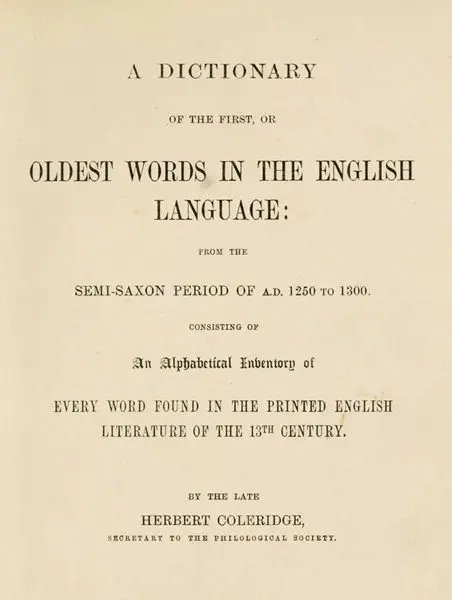
"A Dictionary of the First or Oldest Words in the English Language" by Herbert Coleridge is a scholarly dictionary written in the mid-19th century. This work serves as a comprehensive inventory of every word found in the printed English literature of the 13th century, aiming to establish a historical perspective on the evolution of the English language. The book is likely to attract linguists, philologists, and those interested in the historical development of English vocabulary. The opening of the dictionary begins with a preface where Coleridge outlines the purpose and significance of the work. He emphasizes that the dictionary aims to provide a foundational resource for the Philological Society's larger project of compiling an English dictionary. In this section, he notes how the words are organized, detailing the approach taken to illustrate both older forms and modern equivalents, along with the systematic referencing of etymological roots. The introduction also acknowledges contributions from various scholars, highlighting a collaborative effort toward documenting the lexicon of early English literature and its historical context.
Introduction adapted from the source catalogue; source summaries may be automatically generated.
Free to read · English · 55,821 words · No account needed
MAKE TIME FOR A GOOD BOOK
On by default. Untick to stop anonymous reading totals. Each page counts after 10 seconds in view. How this works.
Anonymous counting is on unless you have switched it off.
Trobles. Rel. Ant. ii. p. 176; probably a corruption of Fr. ‘troblés,’ waste, spoilt leather; from Fr. ‘trobler’ == corrompre, gâter, Roq. See Treisuses
Trod, sb. == tread, or track. Body and Soul, 212. AS. trod
Tromcheri, sb. == trumpery? Rel. Ant. ii. p. 176. Fr. troncer, to break into small pieces. Cf. Gawin Douglas’s ‘trumpis,’ fragments, which is probably the origin of the modern form
Trome, sb. == a company. HD. 8. AS. truma
Trone. See Throne
Tronn (sic in MS.), sb. == a steelyard. Rel. Ant. ii. p. 176
Trotevale, sb. == trifling, joke. Body and Soul, 146. Lat. titivillitia
Troth, sb. == betrothal. K. Horn, 694
Trouble, adj. == troubled, murky. Alys. 4709
Troué, sb. == hole. Alys. 7465. Fr. trou
Trough. See Tree
Trow, v. a. == believe. RG. 110
Trowe, sb. == trust, belief. Wright’s L. P. p. 100. AS. treów
Trowe. See Tree
Truage, sb. == fealty. RG. 39, 372
Truce, sb. RG. 529. AS. trúwa. Fr. tréve, truwe
True, adj. RG. 377
Trueness, sb. RG. 391
Truly, adv. RG. 93
Trump, sb. == trumpet. RG. 396
Trumper, sb. == trumpeter. Alys. 3426
Trumping, sb. Alys. 925
Truncheon [tronchon], sb. == part of a broken spear. Alys. 3745
Trundle [trendli], v. n. == roll. O. and N. 135. AS. trendel
Truss, sb. Wright’s L. P. pp. 110, 111. Fr. torser, trusser
---- v. a. == pack up. HD. 2017. Alys. 990
---- == fasten. Alys. 5477
---- v. n. == prepare oneself. RG. 487. Alys. 7160
Trust, v. a. RG. 468, 469
---- v. n. [triste]. O. and N. 760; [traiste]. Ps. cxxiv. 1
Trusty, adj. Wright’s L. P. p. 47
Truth, sb. RG. 388, 457; [trauthe]. Creed of St Athan. 4; [trauht].
Ibid. 87
Try, v. a. == refine, as gold; part. ‘ytried.’ Alys. 828
Trysthor, sb. == traitor. RG. 302
Trywede, sb. == truth, good faith. RG. 358
Tubrugge, sb. == townbridge. RG. 543. Pol. S. 222
Tuenge, v. n. == pinch. See Twinge
Tuesday. RG. 552
Tug, v. n. Body and Soul, 226; part. ‘ytuht.’ Pol. S. 220. AS. tcohhian
Tuke, v. n. == harass, punish. O. and N. 63. AS. tucian
Tumble, v. n. Alys. 2465. AS. tumbian
Tumbrel, sb. == a porpoise. HD. 757. Swed. tumlare
Turd, sb. == excrement [tort]. O. and N. 1684. AS. tord
Turf, sb. HD. 939. O. and N. 1165 AS. turf
Turn, v. n. == return; ‘turnde again.’ RG. 387. 53 B.
---- with ‘to’ == become; ‘turn to ill.’ RG. 375
---- == turn against a person. RG. 367
---- v. a. == turn one’s back on a person. RG. 525; part. ‘yturned.’ RG.
28
---- == convert. St Swithin, 10
Turnay, sb. == tournament. Alys. 141
Turneying, sb. Alys. 1045
Turtle, sb. == dove. Ps. lxxxiii. 11. Wright’s L. P. p. 26
Tusk, sb. Ps. lvii. 7. AS. tux
Twege, sb. == doubt. M. Ode, st. 177. AS. tweogan
Twelfth, adj. RG. 416, 446
Twelfthnight. Alys. 6403
Twelve. RG. 18, 492
Twelvemonth, sb. == year. Pol. S. 71
Twentieth, adj. RG. 439
Twenty. RG. 440
Twere, sb. == doubt, subject of doubt, O. and N. 989. AS. tweo. S. Goth.
twe
Twibil, sb. == axe. Wright’s L. P. p. 110. AS. twý-bill
Twice, adv. [tuye]. RG. 222
Your reading position is saved on this browser. Take it to another device with a library code. Reading pages adapt to text, rather than matching a printed edition.
BEHIND THE BOOK
This eBook is for the use of anyone anywhere in the United States and most other parts of the world at no cost and with almost no restrictions whatsoever. You may copy it, give it away or re-use it under the terms of the Project Gutenberg License included with this eBook or online at www.gutenberg.org. If you are not located in the United States, you will have to check the laws of the country where you are located before using this eBook. Read the source licence.
The original source file, including credits and licence, is retained by this library. Request an original-format copy at no charge. Please include the book title and Project Gutenberg identifier #41975.
KEEP YOUR CURIOSITY GOING
Cécile Tormay

Moritz Busch
John L. Ransom
Frances Wright
Cécile Tormay

Mabel Potter Daggett