THE CLASSIC COLLECTION✦A dead man’s diaryCLASSIC FREE BOOKS
A dead man’s diary
Coulson Kernahan
THE CLASSIC COLLECTION · 1910
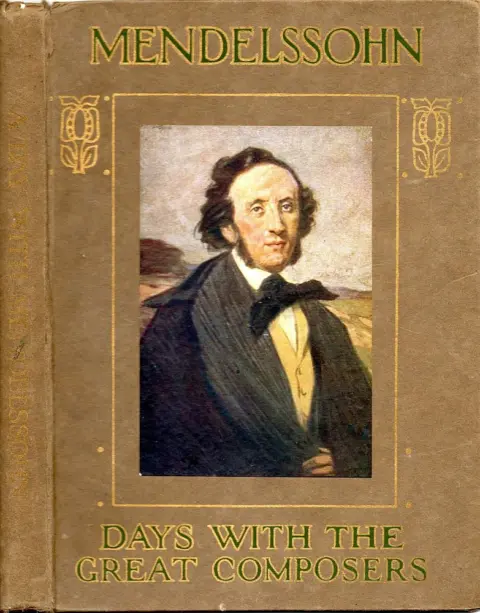
"A Day with Felix Mendelssohn Bartholdy" by George Sampson is a biographical account written in the early 20th century. This engaging book captures a personal encounter with the renowned composer Felix Mendelssohn, portraying not just his musical genius but also his charming personality and thoughts on music. It delves into the life and works of Mendelssohn, framed by the author’s experiences during a visit to Leipzig. The narrative unfolds as Sampson, a young singer visiting Leipzig in 1840, meets Mendelssohn in his immaculate workroom. The composer engages in delightful conversation, reflecting on his love for England and his significant musical contributions, including discussions about his Hebrides Overture and the piece he is composing, a Violin Concerto. Through the dialogue among Mendelssohn, fellow composers, and musicians like Robert Schumann and Ferdinand David, readers gain insight into Mendelssohn's creative process, his philosophical musings on music, and his relationships with other prominent figures in the musical world. This snapshot of Mendelssohn's life offers a rich understanding of his legacy and the artistic environment of his time.
Introduction adapted from the source catalogue; source summaries may be automatically generated.
Free to read · English · 5,619 words · No account needed
MAKE TIME FOR A GOOD BOOK
On by default. Untick to stop anonymous reading totals. Each page counts after 10 seconds in view. How this works.
Anonymous counting is on unless you have switched it off.
"What do you think of it, Bennett?" asked the violinist.
"I was thinking that we are in the garden of Eden," said Bennett,
oracularly.
"What do you mean?" asked Mendelssohn.
"This," explained Bennett: "there seems to me something essentially and exquisitely feminine about this movement, just as in Beethoven's Concerto there is something essentially and heroically masculine. In other words, he has made the Adam of Concertos, and you have mated it with the Eve. Henceforth," he continued, waving his hands in benediction, "the tribe of Violin Concertos shall increase and multiply and become as the stars of heaven in multitude."
"The more the merrier," cried David, "at least for fiddlers--I don't know what the audiences will think."
"Audiences don't think--at least, not in England," said Bennett.
"Come, come!" interposed Mendelssohn; and turning to me with a smile he said, "Will you allow Mr. Bennett to slander your countrymen like this?"
"But Mr. Bennett doesn't mean it," I replied; "he knows that English audiences love, and are always faithful to, what stirs them deeply."
"Yes; but what does stir them deeply?" he asked; "look at the enormous popularity of senseless sentimental songs."
"On the other hand," I retorted, "look at our old affection for Handel and our new affection for Mr. Mendelssohn himself."
"Thank you," said Mendelssohn, with a smile; "Handel is certainly yours by adoption. You English love the Bible, and Handel knew well how to wed its beautiful words to noble music. He was happy in having at his command the magnificent prose of the Bible and the magnificent verses of Milton. I, too, am fascinated by the noble language of the Scriptures, and I have used it both in the vernacular and in the sounding Latin of the Vulgate. And I am haunted even now by the words of one of the Psalms which seem to call for an appropriate setting. You recall the verses?
"Hear my prayer; O God;
and hide not thyself from my petition.
Take heed unto me, and hear me,
how I mourn in my prayer and am vexed.
The enemy crieth so,
and the ungodly cometh on so fast;
for they are minded to do me some mischief,
so maliciously are they set against me.
My heart is disquieted within me;
and the fear of death is fallen upon me.
Fearfulness and trembling are come upon me;
and a horrible dread hath overwhelmed me.
And I said, O that I had wings like a dove;
for then would I flee away, and be at rest.
Lo, then would I get me away far off;
and remain in the wilderness.
I would make haste to escape;
because of the stormy wind and tempest."
Your reading position is saved on this browser. Take it to another device with a library code. Reading pages adapt to text, rather than matching a printed edition.
BEHIND THE BOOK
This eBook is for the use of anyone anywhere in the United States and most other parts of the world at no cost and with almost no restrictions whatsoever. You may copy it, give it away or re-use it under the terms of the Project Gutenberg License included with this eBook or online at www.gutenberg.org. If you are not located in the United States, you will have to check the laws of the country where you are located before using this eBook. Read the source licence.
The original source file, including credits and licence, is retained by this library. Request an original-format copy at no charge. Please include the book title and Project Gutenberg identifier #29361.
KEEP YOUR CURIOSITY GOING
Coulson Kernahan

Maurice Baring
Frances Wright
Cécile Tormay

Frederic Jesup Stimson

W. H. P. (William Henry Pope) Jarvis