THE CLASSIC COLLECTION✦A dead man’s diaryCLASSIC FREE BOOKS
A dead man’s diary
Coulson Kernahan
THE CLASSIC COLLECTION · 1910
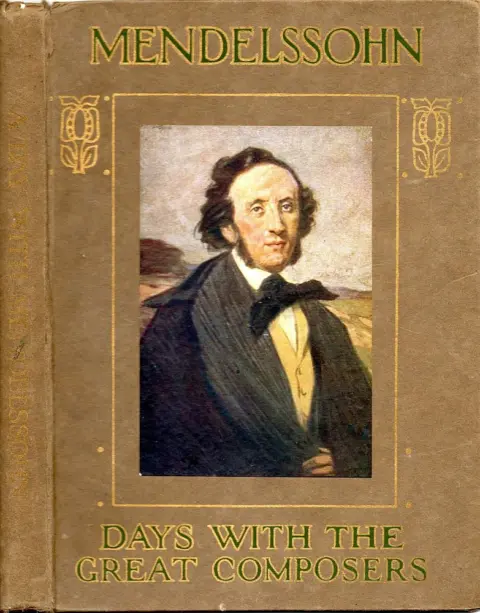
"A Day with Felix Mendelssohn Bartholdy" by George Sampson is a biographical account written in the early 20th century. This engaging book captures a personal encounter with the renowned composer Felix Mendelssohn, portraying not just his musical genius but also his charming personality and thoughts on music. It delves into the life and works of Mendelssohn, framed by the author’s experiences during a visit to Leipzig. The narrative unfolds as Sampson, a young singer visiting Leipzig in 1840, meets Mendelssohn in his immaculate workroom. The composer engages in delightful conversation, reflecting on his love for England and his significant musical contributions, including discussions about his Hebrides Overture and the piece he is composing, a Violin Concerto. Through the dialogue among Mendelssohn, fellow composers, and musicians like Robert Schumann and Ferdinand David, readers gain insight into Mendelssohn's creative process, his philosophical musings on music, and his relationships with other prominent figures in the musical world. This snapshot of Mendelssohn's life offers a rich understanding of his legacy and the artistic environment of his time.
Introduction adapted from the source catalogue; source summaries may be automatically generated.
Free to read · English · 5,619 words · No account needed
MAKE TIME FOR A GOOD BOOK
On by default. Untick to stop anonymous reading totals. Each page counts after 10 seconds in view. How this works.
Anonymous counting is on unless you have switched it off.
I was relieved of the necessity of replying by a diversion without the door. Two male voices were heard declaiming in a sort of mock-melodramatic duet, "Are you at home, are you at home? May we enter, may we enter?"
"Come in, you noisy fellows," exclaimed Mendelssohn gaily; and two men entered. The elder, who was of Mendelssohn's age, carried a violin case, and saluted the composer with a flourish of the music held in his other hand. "Hail you second Beethoven!" he exclaimed. Suddenly he observed my presence and hushed his demonstrations, giving me a courteous, and humorously penitent salutation. Mendelssohn introduced us.
"This," he said to me "is Mr. Ferdinand David, the great violinist and leader of our orchestra; and this," indicating the younger visitor, "is a countryman of yours, Mr. Sterndale Bennett. We think a great deal of Mr. Bennett in Leipzig."
"Ah, ha!" said David to me; "you've come to the right house in Leipzig if you're an Englishman. Mendelssohn dotes on you all, doesn't he, Bennett?"
"Yes," said Bennett, "and we dote on him. I left all the young ladies in England singing 'Ist es wahr.'"
"Ist es wahr? ist es wahr?" carolled David, in lady-like falsetto, with comic exaggeration of anguish sentiment.
Bennett put his hands to his ears with an expression of anguish, saying, "Spare us, David; you play like an angel, but you sing like--well, I leave it to you?"
"And I forgot to mention," said Mendelssohn with a gay laugh, "that our young English visitor is a singer bringing ecstatic recommendations from Klingemann."
"Ah! a rival!" said David, with a dramatic gesture; "but since we're all of a trade, perhaps our friend will show he doesn't mind my nonsense by singing this song to us."
"Yes," said Mendelssohn, with a graceful gesture, "I shall be greatly
pleased if you will."
I could not refuse. Mendelssohn sat down at the piano and I began the simple song that has helped so many English people to appreciate the beauties of the German lied.
"Can it be? Can it be?
Dost thou wander through the bower,
Wishing I was there with thee?
Lonely, midst the moonlight's splendour,
Dost thou seek for me?
Can it be? Say!
But the secret rapturous feeling
Ne'er in words must be betrayed;
True eyes will tell what love conceals!"
"Thank you very much," said Mendelssohn with a smile.
"Bravo!" exclaimed David; "but our Mendelssohn can do more than make pretty songs. This," he continued, indicating the music he had brought, "is going to be something great!"
"Do you think so?" asked Mendelssohn quietly, yet with eyes that gleamed
intensely.
Your reading position is saved on this browser. Take it to another device with a library code. Reading pages adapt to text, rather than matching a printed edition.
BEHIND THE BOOK
This eBook is for the use of anyone anywhere in the United States and most other parts of the world at no cost and with almost no restrictions whatsoever. You may copy it, give it away or re-use it under the terms of the Project Gutenberg License included with this eBook or online at www.gutenberg.org. If you are not located in the United States, you will have to check the laws of the country where you are located before using this eBook. Read the source licence.
The original source file, including credits and licence, is retained by this library. Request an original-format copy at no charge. Please include the book title and Project Gutenberg identifier #29361.
KEEP YOUR CURIOSITY GOING
Coulson Kernahan

Maurice Baring
Frances Wright
Cécile Tormay

Frederic Jesup Stimson

W. H. P. (William Henry Pope) Jarvis