THE CLASSIC COLLECTION✦A dead man’s diaryCLASSIC FREE BOOKS
A dead man’s diary
Coulson Kernahan
THE CLASSIC COLLECTION · 1910
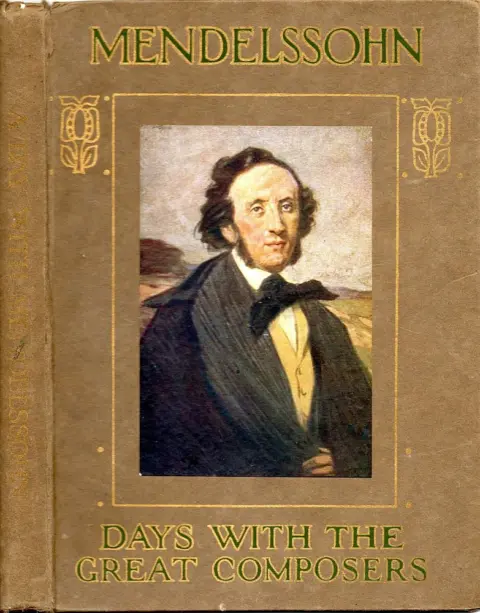
"A Day with Felix Mendelssohn Bartholdy" by George Sampson is a biographical account written in the early 20th century. This engaging book captures a personal encounter with the renowned composer Felix Mendelssohn, portraying not just his musical genius but also his charming personality and thoughts on music. It delves into the life and works of Mendelssohn, framed by the author’s experiences during a visit to Leipzig. The narrative unfolds as Sampson, a young singer visiting Leipzig in 1840, meets Mendelssohn in his immaculate workroom. The composer engages in delightful conversation, reflecting on his love for England and his significant musical contributions, including discussions about his Hebrides Overture and the piece he is composing, a Violin Concerto. Through the dialogue among Mendelssohn, fellow composers, and musicians like Robert Schumann and Ferdinand David, readers gain insight into Mendelssohn's creative process, his philosophical musings on music, and his relationships with other prominent figures in the musical world. This snapshot of Mendelssohn's life offers a rich understanding of his legacy and the artistic environment of his time.
Introduction adapted from the source catalogue; source summaries may be automatically generated.
Free to read · English · 5,619 words · No account needed
MAKE TIME FOR A GOOD BOOK
On by default. Untick to stop anonymous reading totals. Each page counts after 10 seconds in view. How this works.
Anonymous counting is on unless you have switched it off.
"Perhaps I have been more fortunate than most artists," said Mendelssohn softly. "When I think of all that my dear father and mother did for us, I can scarcely restrain tears of gratitude. Almost more valuable than their careful encouragement was their noble, serious common-sense. My mother, whom Heaven long preserve to me, was not the woman to let me, or any of us, live in a fool's paradise, and my dear dead father was too good a man of business to set me walking in a blind alley. Ah!" he continued, with glistening eyes, "the great musical times we had in the dear old Berlin house!"
"Yes," said David; "Your house was on the Leipzig Road. You see, even then, the finger of fate pointed the way to this place."
"Indeed," said Schumann, with a sigh, "You certainly had extraordinary opportunities. Not that I've been badly used, though."
"Your father was genuinely proud of you," said David. "I remember his epigram: 'Once I was the son of my father; now I am the father of my son.'"
Mendelssohn nodded with a smile, and, turning to me, said in
explanation, "You must know that my father's father was a famous
philosopher."
"Well!" said Schumann, rising, "I must be going."
Bennett and David also prepared to leave, and I rose with them.
"Wait a moment," said Mendelssohn; and going to the door he called softly, "Cecile, are you there?"
He went out for a moment, and returned with a beautiful and charming girl, who greeted the three visitors warmly.
Mendelssohn then presented me, saying, gently and almost proudly, "This
is my wife."
I bowed deeply.
"You are from England?" said the lady, with the sweetest of smiles; "I
declare I am quite jealous of your country, my husband loves it so
much."
"We are very proud of his affection," I replied.
She turned to Schumann and said softly, "And how is Clara?"
"Oh, she is well;" he replied with a glad smile.
"And the father?" she added.
"We have been much worried," he said gravely; "but we shall marry this year in spite of all he may do."
"She is worth all your struggles," said Mendelssohn warmly; "she is a charming lady, and an excellent musician. You will be very happy."
"Thanks, thanks," replied Schumann, with evident pleasure.
Mendelssohn turned to me and shook my hand warmly. "I have been glad to meet you, and to hear you; for you sing like a musician. I shall not say good-bye. You will call again, I hope, before you leave Leipzig. Perhaps we may meet, too, in England. I am now writing something that I hope my English friends will like."
Your reading position is saved on this browser. Take it to another device with a library code. Reading pages adapt to text, rather than matching a printed edition.
BEHIND THE BOOK
This eBook is for the use of anyone anywhere in the United States and most other parts of the world at no cost and with almost no restrictions whatsoever. You may copy it, give it away or re-use it under the terms of the Project Gutenberg License included with this eBook or online at www.gutenberg.org. If you are not located in the United States, you will have to check the laws of the country where you are located before using this eBook. Read the source licence.
The original source file, including credits and licence, is retained by this library. Request an original-format copy at no charge. Please include the book title and Project Gutenberg identifier #29361.
KEEP YOUR CURIOSITY GOING
Coulson Kernahan

Maurice Baring
Frances Wright
Cécile Tormay

Frederic Jesup Stimson

W. H. P. (William Henry Pope) Jarvis