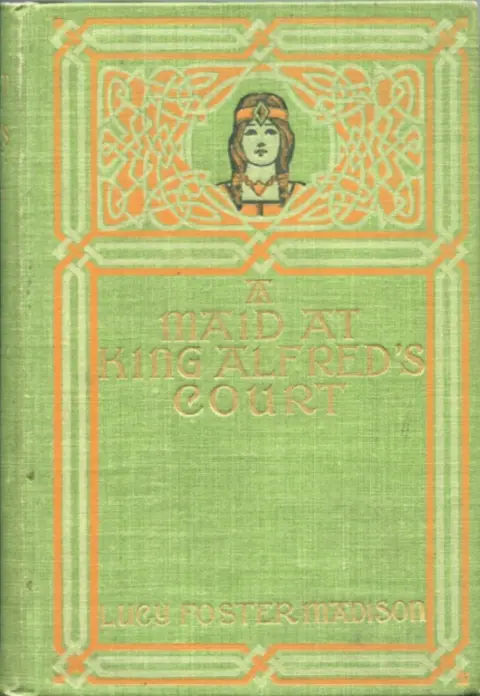
A Maid at King Alfred’s Court: A Story for Girls
Lucy Foster Madison
THE CLASSIC COLLECTION · 1903
"A Daughter of the Union" by Lucy Foster Madison is a historical novel written in the early 20th century. Set during the Civil War era, it follows the story of a young girl named Jeanne Vance, who embodies the patriotic spirit of her time and is seeking to make a meaningful contribution to the war effort, despite the limitations placed upon her because of her gender. The narrative explores themes of bravery, sacrifice, and the role of women in wartime America. The opening of the novel introduces Jeanne and her friends, who express their frustration over their perceived impotence in assisting the war efforts. They decide to organize a fundraising fair to support Union soldiers, highlighting Jeanne's leadership and determined spirit. As they successfully sell their handmade items, they encounter a young boy who inscribes a touching gesture by donating his crutches, which further ignites Jeanne's sense of duty. This sets the stage for Jeanne's own journey of empowerment as she becomes determined to undertake a mission that could significantly aid the Union, amplifying her heroic and selfless character as the story unfolds.
Introduction adapted from the source catalogue; source summaries may be automatically generated.
Free to read · English · 62,033 words · No account needed
MAKE TIME FOR A GOOD BOOK
On by default. Untick to stop anonymous reading totals. Each page counts after 10 seconds in view. How this works.
Anonymous counting is on unless you have switched it off.
"Dad," cried the cheery voice of Bob as she came toward him. "They say that you have caught a spy. Where is he? Why----" Her gaze fell upon the prisoner and she stopped short. "Frank," she cried, shrilly, "it's Frank! Oh, dad, what does it mean?"
"It means," said the Colonel, trying to draw her away, "that you have no brother, Bob. This man is nothing to you. He is a spy and as such dies at sunrise."
"At sunrise!" shrieked Bob. "No, no!"
"Away with that fellow," ordered the Colonel, harshly. "And mind! I shall hold each one of you personally responsible for his safety. Bob," as the soldiers bore his son away, "you are under arrest. Go to your quarters and stay there until I release you. And you also," to Jeanne.
"You have no right to arrest me, Colonel Peyton," said Jeanne coldly. "I refuse to obey any man who sentences his own son to death."
"You refuse to obey me?" cried the Colonel, loth to believe his ears. "Me?"
"Yes, sir, you. I do not consider myself under arrest. You have no right to put me there. I am neither your daughter nor your slave," and Jeanne put her arm around Bob and faced him defiantly.
"There are ways of enforcing obedience, young lady," said the Colonel.
"Bob, to your quarters."
"But, dad,----"
"To your quarters," commanded her father sternly. "Johnson," to a soldier, "see that these girls are well-guarded until I give other orders."
And so it came about that a guard was placed about their tent and the girls found themselves as closely watched as if they were indeed prisoners. In the afternoon as they sat disconsolately together a confusion without told that something unusual was going on. Jeanne went to the aperture in the front of the tent and looked out.
"What is it?" she asked of the sentry.
"Our men coming back," was the answer. "They have a number of prisoners and have captured some fine horses."
Jeanne reported the news to Bob, but she received it apathetically. So overcome by grief was she that she appeared to no longer care for anything.
"Bob," said Jeanne suddenly, "can't we do something to help your brother?"
"I am afraid not," answered Bob in heartbroken accents. "What can we do? We are only girls. What can we do?"
"Well, we can make an effort. I will never forgive myself if I don't do
something for him."
"Why should you care?" asked Bob listlessly. "He is not your brother."
Your reading position is saved on this browser. Take it to another device with a library code. Reading pages adapt to text, rather than matching a printed edition.
BEHIND THE BOOK
This eBook is for the use of anyone anywhere in the United States and most other parts of the world at no cost and with almost no restrictions whatsoever. You may copy it, give it away or re-use it under the terms of the Project Gutenberg License included with this eBook or online at www.gutenberg.org. If you are not located in the United States, you will have to check the laws of the country where you are located before using this eBook. Read the source licence.
The original source file, including credits and licence, is retained by this library. Request an original-format copy at no charge. Please include the book title and Project Gutenberg identifier #32993.
KEEP YOUR CURIOSITY GOING
Cécile Tormay

Moritz Busch
Coulson Kernahan
John L. Ransom

Maurice Baring
Frances Wright