THE CLASSIC COLLECTION✦My diaries, being a personal narrative of events 1888-1914, Part 2 (1900-1914)CLASSIC FREE BOOKS
My diaries, being a personal narrative of events 1888-1914, Part 2 (1900-1914)
Wilfrid Scawen Blunt
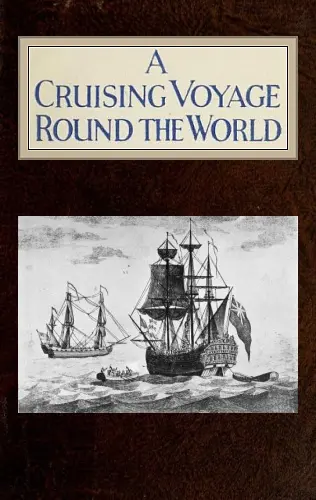
THE CLASSIC COLLECTION · 1712
"A Cruising Voyage Round the World" by Woodes Rogers is a historical account written in the early 18th century. The book chronicles Rogers's remarkable voyage on two ships, the "Duke" and "Dutchess", as they set out to explore the South Seas and engage in privateering during a time of intense maritime competition and conflict. The narrative not only details the expedition's adventures and challenges but also provides insight into the life and character of Rogers, a significant figure in British maritime history. The opening of "A Cruising Voyage Round the World" introduces Captain Woodes Rogers as he prepares for a notable expedition in 1708, aiming to disrupt the lucrative South Sea trade dominated by France and Spain. His foresight leads him to gather a skilled crew, including the experienced Captain William Dampier, and organize two ships to sail from Bristol. The narrative unfolds with the preparations for the journey, the initial challenges faced by the crew—including mutiny and illness—and their eventual encounters with treasure ships and capture of prizes, setting the stage for a dramatic tale of adventure, resilience, and naval exploits that highlights the spirit of the age.
Introduction adapted from the source catalogue; source summaries may be automatically generated.
Free to read · English · 160,581 words · No account needed
MAKE TIME FOR A GOOD BOOK
On by default. Untick to stop anonymous reading totals. Each page counts after 10 seconds in view. How this works.
Anonymous counting is on unless you have switched it off.
Father Sepp,[111] who was here in 1691. tells us in his Voyage from Spain to Paraquaria or Paraguay, that Buenos-Ayres has only two Streets built crosswise; that there are four Convents, one of which belongs to the Jesuits; that their Houses and Churches are built of Clay, and not above one Story high; that the Jesuits have taught them of late to burn Lime, and make Tiles and Bricks, with which they now begin to build. The Castle is likewise of Clay, encompass’d with an earthen Wall and a deep Trench, and defended by 900 Spaniards; tho in case of necessity above 30000 Indian Horse might be arm’d out of the several Cantons, where they have been train’d by the Jesuits: But this boasting Account I can’t believe. They have in the Neighbourhood whole Woods of Peach, Almond, and Fig-Trees, which they propagate by putting the Kernels in the Ground: they grow so fast as to produce Fruit the first Year, and their Timber is us’d for Fewel. The adjacent Pastures are so fat and large, that many thousands of Beeves feed together; so that any one when he pleases goes into the Field, throws a Rope about their Horns, brings ’em home and kills ’em. They are very large, generally white, and being so numerous, are valu’d only for their Hides, Tallow, and Tongues; the rest being expos’d to the Birds and Beasts of Prey, which are very numerous, and frequently destroy the Calves. The Natives feed most on Beef half-raw without Bread or Salt, and in such quantities that they throw
[Sidenote: Account of the River La Plata.]
themselves naked into cold Water, that they may retain the natural Heat within their Entrails to help Digestion; and sometimes they lie down with their Stomachs in hot Sand: but their Gluttony in devouring so much raw Flesh fills them so with Worms, that they seldom live till 50 Years old. There are such numbers of Partridges here, and so tame, that they knock them down with sticks as they walk in the fields. The Missionaries, who are absolute Masters of the Natives in the neighbouring Cantons of Paraguay, &c. suffer none of ’em to come nearer Buenos-Ayres than two or three Leagues, on pretence that they would be corrupted by the ill Example of the Spaniards; and under that same pretence they won’t suffer the Spaniards to settle in their Missions, which extend above 200 Leagues up the River; nor do they allow Merchants who trade thither to stay above a few days; the true cause of which is, they are not willing that the Laity should be privy to the Wealth they heap up there, in a Country which abounds with Gold, nor be Witnesses to their splendid, or rather luxurious way of living. Sometimes Complaints of this Procedure of the Jesuits have been made to the Spanish Governours, but they find a way to bribe them to silence. This I was inform’d of by those who have been among them, and am confirm’d in it by Father Sepp: He does not dissemble that the Missionaries have a Despotical Power over the Natives, tho he gives it another Turn, and pretends that ’tis necessary in order to convert and force them to work. He says the Jesuits are Captains, teach them the Use of Arms, and how to draw up into Squadrons and Battallions; which he boasts they can do as well as the Europeans. The Jesuits obtain’d this Power, on the specious Pretence of reducing those Indians to the Obedience of the Spaniards, which they would not submit to till within these few Years. This Management is so much the more easily carry’d on, because the Ecclesiastical Government there is lodg’d in the hands of one Bishop only and three Canons; and the Missionaries being compos’d of all Nations, few of them have any natural Affection to the Spanish Government. This is the more to be observ’d, because the Jesuits being an intriguing Society, and generally in the French Interest, it would seem to be the Concern of the Allies to recover the Trade of those Countries from the House of Bourbon with all possible speed, left by making themselves Masters of the vast Treasures of Peru and Chili, they be enabled at last to compleat their Design of an Universal Monarchy. Father Sepp says, that Silver in 1691. was cheaper here than Iron; that for a Twopenny Knife one may have a Crown, for a Hat of two Shillings 10 or 12 Crowns, and for a Gun of ten or twelve Shillings 30 Crowns; that Provisions are so plenty here, that a fat Cow may be bought for the Value of 10 d. or 12 d. a good Ox for a few Needles, a stout Horse for about 2 s. that he has seen two given for a Knife not worth 6 d. and that he and his Company had 20 Horses for a few Trifles that did not cost them a Crown; being only a few Needles, Fish-Hooks, sorry Knives, Tobacco, and a little Bread. He mentions a Cataract in the River Uruquay, which he says Providence has plac’d here for the advantage of the poor Indians against the Avarice of the Spaniards; who not being able to go further with their Vessels, have been hitherto confin’d to Buenos-Ayres, and could not settle in those Cantons, tho very inviting, because of the vast Profit they might draw from them. This he reckons a great Happiness to the Natives, who being a simple People, would not only be soon infected with the Vices of the Spaniards, but enslav’d by ’em: for, says he, they make no difference betwixt Pagan and Christian Natives, but treat them promiscuously like Dogs. He adds, that this Province of Paraquaria or Paraguay exceeds in bigness Germany, France, Italy, and the Netherlands put together; (wherein I doubt he exceeds:) That they have no Cities, and are govern’d by 80 Colleges of Jesuits, in which there are no more than 160 Persons; and that these Colleges are from 100 to 600 Miles distant from one another. There’s one Plain of 200 Leagues long betwixt Buenos-Ayres and Corduba in Tucuman, without so much as a Tree or Cottage, and yet it contains the best Pastures in the World, fill’d with Cattel of all sorts which have no Owners.
Your reading position is saved on this browser. Take it to another device with a library code. Reading pages adapt to text, rather than matching a printed edition.
BEHIND THE BOOK
This eBook is for the use of anyone anywhere in the United States and most other parts of the world at no cost and with almost no restrictions whatsoever. You may copy it, give it away or re-use it under the terms of the Project Gutenberg License included with this eBook or online at www.gutenberg.org. If you are not located in the United States, you will have to check the laws of the country where you are located before using this eBook. Read the source licence.
The original source file, including credits and licence, is retained by this library. Request an original-format copy at no charge. Please include the book title and Project Gutenberg identifier #55538.
KEEP YOUR CURIOSITY GOING
Wilfrid Scawen Blunt
Wilfrid Scawen Blunt

E. W. (Edgar Watson) Howe
Cécile Tormay

Moritz Busch
John L. Ransom