THE CLASSIC COLLECTION✦My diaries, being a personal narrative of events 1888-1914, Part 2 (1900-1914)CLASSIC FREE BOOKS
My diaries, being a personal narrative of events 1888-1914, Part 2 (1900-1914)
Wilfrid Scawen Blunt
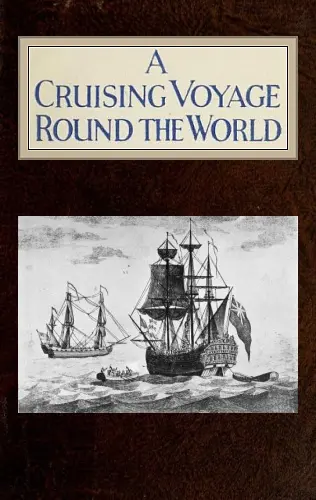
THE CLASSIC COLLECTION · 1712
"A Cruising Voyage Round the World" by Woodes Rogers is a historical account written in the early 18th century. The book chronicles Rogers's remarkable voyage on two ships, the "Duke" and "Dutchess", as they set out to explore the South Seas and engage in privateering during a time of intense maritime competition and conflict. The narrative not only details the expedition's adventures and challenges but also provides insight into the life and character of Rogers, a significant figure in British maritime history. The opening of "A Cruising Voyage Round the World" introduces Captain Woodes Rogers as he prepares for a notable expedition in 1708, aiming to disrupt the lucrative South Sea trade dominated by France and Spain. His foresight leads him to gather a skilled crew, including the experienced Captain William Dampier, and organize two ships to sail from Bristol. The narrative unfolds with the preparations for the journey, the initial challenges faced by the crew—including mutiny and illness—and their eventual encounters with treasure ships and capture of prizes, setting the stage for a dramatic tale of adventure, resilience, and naval exploits that highlights the spirit of the age.
Introduction adapted from the source catalogue; source summaries may be automatically generated.
Free to read · English · 160,581 words · No account needed
MAKE TIME FOR A GOOD BOOK
On by default. Untick to stop anonymous reading totals. Each page counts after 10 seconds in view. How this works.
Anonymous counting is on unless you have switched it off.
Newhoff, who gave the best Account of Brazile at that time, assigns the following Causes for so easy a Reconquest of it by the Portuguese: 1. The Dutch took no care to have sufficient Colonies of their own Natives, nor to keep strong Garisons in the Country. 2. They left the Portuguese in possession of all their Sugar-Mills and Plantations, which hinder’d the Dutch from getting any considerable Footing in the open Country. 3. The Plantations and Sugar-Mills that fell into their hands by Forfeiture or otherwise, they sold at such excessive Rates, and laid such Taxes on the Product, that the Dutch did not care to purchase them. 4. The States of Holland, instead of reinforcing the Garisons of Brazile, according to Prince Maurice’s Advice, reduc’d them lower, notwithstanding all the Remonstrances of the Company to the contrary; for they were so intent upon their Conquests in the East-Indies, that they seem’d willing to be rid of Brazile, which is now a vast and populous Country, and employs a great number of large Ships yearly from Portugal, who carry home an immense Treasure of Gold, besides all other Commodities of that Country.
Whilst Prince Maurice was in Brazile, the Dutch fitted Ships thence for Chili, which arriv’d there: but wanted a sufficient Force to withstand the Spaniard, while they could be recruited, or gain an Interest amongst the Natives, which they might have easily done, could they have settled, because at that time the Spaniards had not conquer’d the Indians of Chili; so the Dutch being too weak, were forc’d to return without effecting any thing. I shall conclude this Head with a brief Account of the Natives of Brazile from Newhoff, whose Authority, as I have said already, I found upon Inquiry to be very good. They are divided into several Nations, and speak different Languages. They are generally of a middling Size, well-limb’d, and their Women not ill-featur’d. They are not born black, but become so by the Heat of the Sun. They have black Eyes, black curl’d Hair, and have their Noses made flat when young. They come soon to Maturity, yet generally live to a great Age, without much Sickness; and many Europeans live here to above a hundred Years old, which is ascrib’d to the Goodness of the Climate. The Portuguese cut off such multitudes of ’em, that they perfectly hate that Nation, but were civil enough to the Dutch because they treated them kindly. Such as live next the Europeans, wear Shirts of Linen or Callico, and the chief of ’em affect our Apparel; but those within Land go for the most part naked, covering their Privities slightly with Leaves or Grass fasten’d about them with a string, and the Men exceed the Women in Modesty. Their Hutts are built of Stakes, and cover’d with Palm-tree Leaves. Their Dishes and Cups are made of Calabasses, being the Shells of a sort of Pompions. Their chief Furniture is Hammocks of Cotton made like Network, and these they fasten to sticks, and use them for Beds; and when they travel, tie them to Trees. The Wives follow their Husbands to War and elsewhere, and carry their Luggage in a Basket, with a Child hung about them in a piece of Callico, a Parrot or an Ape in one hand, and leading a Dog by a string in the other; while the idle Lubber carries nothing but his Arms, which are Bows and Arrows, Darts or Wooden Clubs. They know nothing of Arithmetick, but count their Years by laying by a Chesnut in the Season. Those who inhabit the inland Parts know scarce any thing of Religion; yet they have a sort of Priests, or rather Conjurers, who pretend to foretel what’s to come. They have a Notion of a Supreme Being more excellent than the rest; some reckon this to be Thunder, and others Ursa Minor, or some Constellation. They fancy that after Death their Souls are transplanted into Devils, or enjoy all sorts of Pleasures in lovely Fields beyond the Mountains, if they have kill’d and eat many of their Enemies; but those that never did any thing of moment, they say are to be tormented by Devils. These People are much afraid of Apparitions and Spirits, and make Offerings to pacify ’em. Some of ’em are mightily addicted to Sorcery, to revenge themselves upon their Enemies; and they have others who pretend to cure those that are so bewitch’d. The Castilians converted some of ’em, but the Dutch Ministers were more successful, till they were hinder’d by the Revolt of the Portuguese. The Brazilian Women are very fruitful, have easy Labour, retire to the Woods where they bring forth alone, and return after washing themselves and their Child; the Husbands lying a bed the first 24 hours, and being treated as if they had endur’d the Pains.[101]
Your reading position is saved on this browser. Take it to another device with a library code. Reading pages adapt to text, rather than matching a printed edition.
BEHIND THE BOOK
This eBook is for the use of anyone anywhere in the United States and most other parts of the world at no cost and with almost no restrictions whatsoever. You may copy it, give it away or re-use it under the terms of the Project Gutenberg License included with this eBook or online at www.gutenberg.org. If you are not located in the United States, you will have to check the laws of the country where you are located before using this eBook. Read the source licence.
The original source file, including credits and licence, is retained by this library. Request an original-format copy at no charge. Please include the book title and Project Gutenberg identifier #55538.
KEEP YOUR CURIOSITY GOING
Wilfrid Scawen Blunt
Wilfrid Scawen Blunt

E. W. (Edgar Watson) Howe
Cécile Tormay

Moritz Busch
John L. Ransom