THE CLASSIC COLLECTION✦My diaries, being a personal narrative of events 1888-1914, Part 2 (1900-1914)CLASSIC FREE BOOKS
My diaries, being a personal narrative of events 1888-1914, Part 2 (1900-1914)
Wilfrid Scawen Blunt
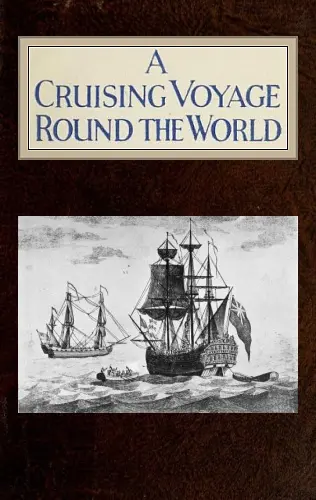
THE CLASSIC COLLECTION · 1712
"A Cruising Voyage Round the World" by Woodes Rogers is a historical account written in the early 18th century. The book chronicles Rogers's remarkable voyage on two ships, the "Duke" and "Dutchess", as they set out to explore the South Seas and engage in privateering during a time of intense maritime competition and conflict. The narrative not only details the expedition's adventures and challenges but also provides insight into the life and character of Rogers, a significant figure in British maritime history. The opening of "A Cruising Voyage Round the World" introduces Captain Woodes Rogers as he prepares for a notable expedition in 1708, aiming to disrupt the lucrative South Sea trade dominated by France and Spain. His foresight leads him to gather a skilled crew, including the experienced Captain William Dampier, and organize two ships to sail from Bristol. The narrative unfolds with the preparations for the journey, the initial challenges faced by the crew—including mutiny and illness—and their eventual encounters with treasure ships and capture of prizes, setting the stage for a dramatic tale of adventure, resilience, and naval exploits that highlights the spirit of the age.
Introduction adapted from the source catalogue; source summaries may be automatically generated.
Free to read · English · 160,581 words · No account needed
MAKE TIME FOR A GOOD BOOK
On by default. Untick to stop anonymous reading totals. Each page counts after 10 seconds in view. How this works.
Anonymous counting is on unless you have switched it off.
Your Honour’s most Obedient
Humble Servants,
Woodes Rogers,
Stephen Courtney.
Octob. 4. Our Boat return’d this Morning; but the Landing-place being far from the inhabitable part of St. Antonio, they brought nothing but a few Limes and Fowls, and left our Linguist behind to get what we wanted. We struck two of our Gun-room Guns into the Hold, being useless in their place, and the Ship having too much top-weight, and not very stiff. We had plenty of Fish here, but not very good. Wind at N N E.
Octob. 5. Our Boat went to St. Antonio to see for our Linguist, according to appointment. We heel’d and clean’d our Ships, and got a great deal of Wood and Water aboard. Wind at N E. fine Weather.
Octob. 6. Our Boat return’d with nothing but Limes and Tobacco, and no News of our Linguist. But soon after there came another Boat belonging to that part of the Island where the Governour lives, with his Deputy-Governour, a Negro, who brought Limes, Tobacco, Oranges, Fowls, Potatoes, Hogs, Bonanoes, Musk and Water-Melons, and Brandy, which we bought of him, and paid in such Prize-Goods as we had left of the Bark’s Cargo cheap enough. They are poor People, and will truck at any Price for what they want, in such Payments as they can make.
[Sidenote: In the Bay of St. Vincent.]
Octob. 7. We sent our Boat at Three this Morning to see if our Linguist was return’d. The Deputy-Governour told us he promis’d him to wait at the Water-side all that night where we put him ashore, and that there were Cattel for us if we would fetch ’em. We were ready to sail: A good Wind at N E. and a fresh Gale.
Octob. 8. Our Boat return’d yesterday in the Afternoon with two good black Cattel, one for each Ship, but no News of our Linguist; upon which we consulted with the Officers of both Ships, and all unanimously agreed, that we had better leave him behind, than to wait with two Ships for one Man that had not follow’d his Orders. We held a Committee on board the Dutchess to prevent Embezlements in Prizes, and to hinder Feuds and Disorders amongst our Officers and Men for the future, because the small Prize had shew’d us, that without a Method to be strictly observ’d in Plunder, it might occasion the worst of Consequences to both Ships, and such Quarrels as would not easily be laid. So with the Consent and Approbation of the Officers appointed for a Committee, we unanimously agreed on it, to prevent those Mutinies and Disorders amongst the Men of both Ships, who were not yet reconcil’d since the taking the small Canary-Prize. They all insisted there was never any Privateer’s Crew hinder’d from Plunder, so that we were forc’d to agree on the following Instrument of a Dividend, when we should meet with any Prize. And that the things we deem’d to be Plunder, according to custom in Privateering, should tend as little as possible to the disadvantage of the Owners, we did for that end take care by the second Article in the said Instrument and Agreement with the Men, to reserve the Power of adjudging what should be deem’d Plunder, unto the superior Officers and Agents exclusive of the Crew, &c. For we found it would be next to a miracle to keep the Men in both Ships under Command, and willing to fight resolutely on occasion, if we held ’em to the Letter of Agreement with the Owners, which was not duly consider’d of at home. We had a particular Regard however to the Sentiments of the Owners, deliver’d on this head in Discourses at several times with divers of the Committee, as my self, Capt. Dover, Capt. Courtney, Mr. Robert Frye, and Mr. Carleton Vanbrugh; and particularly in Kingroad to the Men, at the time of signing of their Instrument. By all which we judg’d that the Owners could not but approve of the Measures that we took on this occasion, and that the good effects of ’em would abundantly answer our Intentions. Altho the Officers and Men did voluntarily allow Capt. Courtney and me 5 per Cent. each, out of the Value of all Plunder, it was much less than our Due; and we would have been glad to have let all alone, provided we could with the Advice of our chief Officers in both Ships have contriv’d any other Method to be safe in the Prosecution of our Designs with our Men, and have kept them to their Duty on all occasions, at so great a distance from home: without their being easy, we must unavoidably have run into such continual Scenes of Mischief and Disorder, as have not only tended to the great Hindrance, but generally to the total Disappointment of all Voyages of this nature, that have been attempted so far abroad in the Memory of Man. The Agreement we made was as follows.
Your reading position is saved on this browser. Take it to another device with a library code. Reading pages adapt to text, rather than matching a printed edition.
BEHIND THE BOOK
This eBook is for the use of anyone anywhere in the United States and most other parts of the world at no cost and with almost no restrictions whatsoever. You may copy it, give it away or re-use it under the terms of the Project Gutenberg License included with this eBook or online at www.gutenberg.org. If you are not located in the United States, you will have to check the laws of the country where you are located before using this eBook. Read the source licence.
The original source file, including credits and licence, is retained by this library. Request an original-format copy at no charge. Please include the book title and Project Gutenberg identifier #55538.
KEEP YOUR CURIOSITY GOING
Wilfrid Scawen Blunt
Wilfrid Scawen Blunt

E. W. (Edgar Watson) Howe
Cécile Tormay

Moritz Busch
John L. Ransom