THE CLASSIC COLLECTION✦My diaries, being a personal narrative of events 1888-1914, Part 2 (1900-1914)CLASSIC FREE BOOKS
My diaries, being a personal narrative of events 1888-1914, Part 2 (1900-1914)
Wilfrid Scawen Blunt
THE CLASSIC COLLECTION · 1712
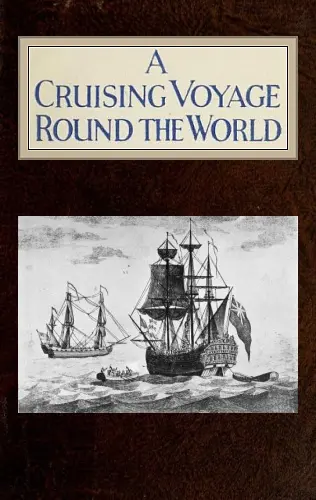
"A Cruising Voyage Round the World" by Woodes Rogers is a historical account written in the early 18th century. The book chronicles Rogers's remarkable voyage on two ships, the "Duke" and "Dutchess", as they set out to explore the South Seas and engage in privateering during a time of intense maritime competition and conflict. The narrative not only details the expedition's adventures and challenges but also provides insight into the life and character of Rogers, a significant figure in British maritime history. The opening of "A Cruising Voyage Round the World" introduces Captain Woodes Rogers as he prepares for a notable expedition in 1708, aiming to disrupt the lucrative South Sea trade dominated by France and Spain. His foresight leads him to gather a skilled crew, including the experienced Captain William Dampier, and organize two ships to sail from Bristol. The narrative unfolds with the preparations for the journey, the initial challenges faced by the crew—including mutiny and illness—and their eventual encounters with treasure ships and capture of prizes, setting the stage for a dramatic tale of adventure, resilience, and naval exploits that highlights the spirit of the age.
Introduction adapted from the source catalogue; source summaries may be automatically generated.
Free to read · English · 160,581 words · No account needed
MAKE TIME FOR A GOOD BOOK
On by default. Untick to stop anonymous reading totals. Each page counts after 10 seconds in view. How this works.
Anonymous counting is on unless you have switched it off.
Octob. 7. This Week we made all Preparation for sailing, having got most of our Stores aboard, and discharged the Marquiss, which was so leaky that we sold her to Capt. John Opey, Commander of the Oley Frigate, lately arriv’d from London, for 575 Dutch Dollars, being an extraordinary Bargain; we had been offer’d much more before by another Person, but then I could not prevail with the Majority of our Council to consent to the Sale.
Octob. 12. At Day-break this Morning, we, our Consort and Prize, weigh’d out of the Road, taking the first of the Land Breeze: About Noon came too again, in 11 Fathom Water, about a Mile to the Northward of Horn Island. We had several English Gentlemen a-board our Ships, who favour’d us with their Company out of the Road, there being several that arriv’d during our Stay here.
English Ships that arriv’d and sail’d hence during our Stay.
Frederick, Capt. Phrip, arriv’d June 23. sail’d July 29. from Bencouli, bound to ditto.
Rochester, Capt. Stains, arriv’d July 6. sail’d the 21st, from England, bound to China.
Nathanael, Capt. Neagers, arriv’d July 27. sail’d Aug. 27. from Bencouli, bound to England.
Stringer, Capt. Pike, arriv’d Aug. 30. from England, bound to China. We left her there, she having lost her Passage for China.
Oley, Capt. Opie, arriv’d Sept. 9. from England, left there
behind us.
Here follows,
A Description of Batavia.
[Sidenote: A Description of Batavia.]
[Sidenote: A Description of Batavia.]
[Sidenote: Sailing from Batavia.]
Altho’ this Place is well known, and has been so frequently describ’d, yet being such a noble Settlement, and a Proof of the Industry of the Dutch in these Parts; I can’t omit giving the following Account of it. The Town lies on the N. W. side of the Island of Java, Lat. 5°. 50´´. S. The Time we were here it was not very healthy. The East and West Winds blow all the Year along the Shore, besides the ordinary Land and Sea Winds, which qualifie the Air, and makes it pleasant, otherwise it would be excessive hot. Their Summer begins in May, with continual Breezes from the East, and a very clear Sky till the latter End of October, or Beginning of November, when the Winter begins with hard Rains, which holds sometimes 3 or 4 Days without Intermission. In December the West Winds blow very violently, so that then there’s little Trade on the Coast of Java. In February ’tis changeable Weather, with sudden Thunderstorms. In March they begin to sow: June is their pleasantest Month; in September they gather in their Sugar and Rice; and in October they have Plenty of Fruit and Flowers, Plants and Herbs of most Sorts: There’s a large fenny plain Country before the City, but it’s well improv’d by the Dutch, and to the Eastward, ’tis very full of Woods and Morasses. The City is four square, with a River running through it, and fortified by a Stone Wall and 22 Bastions. About 10 Years past there was an Earthquake, which broke down part of the Mountains, in the Country, and alter’d the Course of the River, so that the Canals in and about Batavia, are not near so commodious as they have been, nor the Entrance into the River so deep, and for want of a strong Current of Water, to keep it open, they are forced to employ a large Engine work’d with Horses, to preserve the Entrance of the River navigable for small Vessels to come into the Canals of the City. It lies on a Bay in and about which there are 17 or 18 Islands, which so break off the Sea, that tho’ the Road is very large, yet it is safe. The Banks of the Canals through the City are fac’d with Stone on both Sides, as far as the Boom, which is shut up every Night, at 9 a Clock, and guarded by Soldiers; there’s Channels cut out of the main River for smaller Vessels, and every one that passes the Boom pays Custom. All the Streets run in a streight Line, most of them being above 30 Foot broad, on each side clear of the Canals, and pav’d next the Houses with Bricks. All the Streets are very well built and inhabited, 15 of which have Canals, and they reckon 56 Bridges on them, most of them made of Stone. The Country Seats and Buildings round the City, are generally neat and well contriv’d with handsom Gardens for Fruit and Flowers, and adorn’d with Springs, Fountains, Statues, &c. The vast Quantity of Coco nut Trees, every where afford delightful and profitable Groves. They have fine Structures here, particularly the Cross Church, built of Stone, and the inside very neat. There are 2 other Churches for the Dutch, and 2 for the Portugueze Protestants; who are a mixed Breed of People. There is one Church also for the Protestant Malayans. The Town-house is built of Brick, in a Square, about the Center of the City; ’tis two lofty Stories high, and very finely built, where all Courts of Advice are held, and all Matters relating to the Civil Government of the City are determin’d, and the Senators and Directors of military Affairs meet. There’s an inner Court inclos’d with a high Wall, and a double Row of Stone Pillars, where the Officers of Justice live. Here are Hospitals, Spin-houses, and Rasp-houses, the same as in Amsterdam, with all other publick Buildings, equal to most Cities in Europe. The Chinese have also a large Hospital in this City for their Aged and Sick Persons, and manage their Charity so well, that you never see a Chinese look despicable in the street. The Dutch Women have greater Privileges in India than in Holland, or any where else; for on slight Occasions they are often divorc’d from their Husbands, and share the Estate betwixt them. A Lawyer told me at Batavia, he has known out of 58 Causes, all depending in the Council-Chamber, 52 of them were Divorces. Great Numbers of the Natives, who are Criminals, and not executed after Condemnation, are chain’d by Pairs, and kept at hard Labour under a Guard, perpetually clearing the Canals and Moats round the City, or any other Labour for the publick. Three Leagues West from the Town, is the Island Unrest, where all the Company’s Ships are refitted. There are great Magazines of Naval Stores, defended by Platforms of Guns; and the Castle at Batavia is Quadrangular, lies in a Level, and has 4 Bastions and Courtins, fac’d with white Stones, and provided with Watch-houses. In this Castle, or rather Citadel, the Dutch Governour-General, and most of the Members of the Council of India, with the other Officers of Batavia, have their Residence. The Governour’s Pallace is of Brick, large and well built. In this Pallace is the Council-Chamber, the Secretary’s Office and Chamber of Accounts. The great Hall is hung with bright Armour, Ensigns, Flags, &c. taken by the Dutch here. The Governour gives Audience to Strangers who are introduc’d to him by the Sabandar, who is chief Custom-master. Here is also a Church within the Castle, and an Armory with Apartments for all the Artificers belonging to the Castle, which has 4 Gates, and all the Avenues well defended, the whole being surrounded with Ditches and the Works well mounted with Brass Cannon, as are the Bastions of the Town with Block-houses within the Walls, so that they can fire upon Mutineers within, as well as upon an Enemy without. The Out-works of the Town, of which there are several every way at 4 Leagues Distance, are made of Earth, surrounded with Ditches and Quick-set Hedges, which render them Arbours for Beauty, and some of them fac’d with Brick. The Garrison on Duty is generally about 1000 strong, and all the Out-works are said to be furnish’d with a good Stock of Provisions as well as the Castle; but the Soldiers are kept much under, except the Governour’s Guards, who have large Privileges, and make a fine Appearance. The Governour-General lives in as great Splendor as a King; he has a Train and Guards, having a Troop of Horse, and a Company of Foot, with Halberds, in Liveries of yellow Satin, richly adorn’d with Silver Laces and Fringes, to attend his Coach when he goes abroad. The Guards are as well equipp’d as most Princes in Europe: His Lady has also her Guards and Train. He is chosen but for 3 Years, out of the 24 Counsellors call’d Rads of India, 12 of whom must always reside in the City. The Chinese have the greatest Trade here, farm most of the Excise and Customs, live according to their own Laws and idolatrous Worship, and have a Chief that manages their Affairs with the Company, who allow them great Privileges, and particularly a Representative in Council, who has a Vote when any Chinese is tried for Life: But these Privileges are allow’d only to such Chinese as inhabit here, for others are not admitted to stay above 6 Months in the Town, or on the Island Java. The other Strangers, who inhabit here, besides Europeans, are Malayans, with some People from most part of India. The Javanese, or ancient Natives are numerous, and said to be barbarous and proud, of a dark Colour, with flat Faces, thin short black Hair, large Eye-brows and Cheeks. The Men are strong limb’d, but the Women small; the former have a Wrapper of Callicoe, 3 or 4 times round their Bodies, and the latter from their Arm-pits to their Knees. The Men have 2 or 3 Wives besides Concubines, and the Dutch say, they are much addicted to lying and stealing: Those on the Coast are generally Mahometans, but the others Pagans. The Women are not so tawny as the Men, and many of them handsom, but in general amorous, and unfaithful to their Husbands or others, being very apt to give Poison, which they do very cunningly. It would be too tedious for me to describe all the remarkable Things I saw at Batavia. In short, I was perfectly surpriz’d, when I came hither, to see such a noble City, and Europeans so well settled in the Indies. The Town is very populous, but not one Sixth of them Dutch. The Chineze here go all bare-headed, with their Hair roul’d up, and long Gowns, carrying Fans in their Hands. The Dutch say they are more industrious and acute in Trade than themselves. The Discipline and Order of the Dutch here, both in Civil and Military Affairs, is admirable. They have all Necessaries for Building and Careening Ships, as well as in Europe, and their Officers as regular as in her Majesty’s Yards; whereas we have nothing like it in India. They keep the Natives very much in Awe, being perfectly despotical in their Government over them, because they say the Natives are naturally so treacherous that they are obliged to punish them severely, for small Faults; but they are favourable to the Chineze, because of the great Trade they have by their Means, and that they pay great Rents for their Shops, besides large Taxes, and from 16 to 30 per Cent. for Money, which they frequently borrow of the Dutch. I was told, there are about 80000 on the Island, who pay the Dutch a Dollar a head, each Month, for Liberty to wear their Hair, which they are not allow’d to do at home, since they were conquer’d by the Tartars. There comes hither from China 14 or 16 large Junks yearly, being flat bottom’d Vessels, from 3 to 500 Tuns a-piece. The Merchants come along with their Goods, which are lodg’d in different Partitions in the Vessel, like Ware-houses, for which they pay a certain Price, and not for the Weight or Measure of their Cargo, as we do; so that they fill them with what they please. They come in with an Easterly Monsoon, and generally arrive in November or December, and return the Beginning of June, so that the Dutch have all Chineze Commodities brought to them cheaper than they can fetch them; and being conveniently situated for the Spice Trade, they have all in their own Hands. Batavia wants no Commodities that India affords. ’Tis Pity our East India Company has no Settlement to which the Chineze might resort; which I presume would turn to a much better Account than our going to China does, where our Traders are but indifferently us’d. ’Tis about 5 Years since we quitted Benjar, in the Island of Borneo, which, by all the Accounts I had here, might, if well improv’d, have been as serviceable to our East India Company as Batavia is to the Dutch, who have seldom less than 20 Sail of Ships at the Isle of Java, from 30 to 50 and 60 Guns each, with Men enough for them on all Occasions, so that they might easily drive us out of most Parts, if not all India, should we ever have an unfortunate War with them. Their Soldiers are very well train’d, and there’s a Company always on Duty at every Gate of the City and Citadel; and they have 7 or 8000 disciplin’d Europeans in and about the City, who can be ready for Action, at a very short Warning: ’Tis the Metropolis of their Indian Settlements, and sends Governours and Officers to all the rest: The late General, before we came hither, had War with the Indians, which, I was inform’d, had like to have spoil’d their Settlements; but at last, they divided the Natives amongst themselves, brought them to a Peace on advantageous Conditions, and are now pretty secure of the Sea-Coasts. There are many pleasant Seats about the City, and the adjacent Country abounds with Rice, Sugar-Cane-fields, Gardens and Orchards, Mills for Sugar, Corn, and Gun-powder; so that this City is one of the pleasantest in the World. I don’t think it so large as Bristol, but ’tis more populous: They have Schools for Latin, Greek, &c. and a Printing House. They have lately begun to plant Coffee here, which thrives very well, so that in a little time they may be able to load a Ship or two; but I am told it is not so good as that of Arabia.
Your reading position is saved on this browser. Take it to another device with a library code. Reading pages adapt to text, rather than matching a printed edition.
BEHIND THE BOOK
This eBook is for the use of anyone anywhere in the United States and most other parts of the world at no cost and with almost no restrictions whatsoever. You may copy it, give it away or re-use it under the terms of the Project Gutenberg License included with this eBook or online at www.gutenberg.org. If you are not located in the United States, you will have to check the laws of the country where you are located before using this eBook. Read the source licence.
The original source file, including credits and licence, is retained by this library. Request an original-format copy at no charge. Please include the book title and Project Gutenberg identifier #55538.
KEEP YOUR CURIOSITY GOING
Wilfrid Scawen Blunt
Wilfrid Scawen Blunt

E. W. (Edgar Watson) Howe
Cécile Tormay

Moritz Busch
John L. Ransom