THE CLASSIC COLLECTION✦My diaries, being a personal narrative of events 1888-1914, Part 2 (1900-1914)CLASSIC FREE BOOKS
My diaries, being a personal narrative of events 1888-1914, Part 2 (1900-1914)
Wilfrid Scawen Blunt
THE CLASSIC COLLECTION · 1712
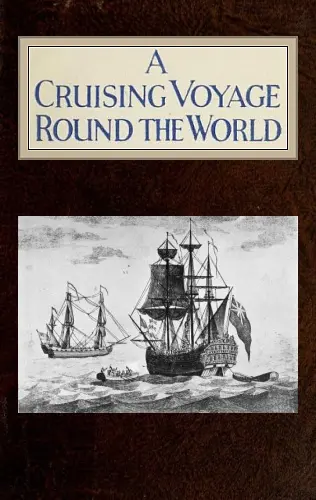
"A Cruising Voyage Round the World" by Woodes Rogers is a historical account written in the early 18th century. The book chronicles Rogers's remarkable voyage on two ships, the "Duke" and "Dutchess", as they set out to explore the South Seas and engage in privateering during a time of intense maritime competition and conflict. The narrative not only details the expedition's adventures and challenges but also provides insight into the life and character of Rogers, a significant figure in British maritime history. The opening of "A Cruising Voyage Round the World" introduces Captain Woodes Rogers as he prepares for a notable expedition in 1708, aiming to disrupt the lucrative South Sea trade dominated by France and Spain. His foresight leads him to gather a skilled crew, including the experienced Captain William Dampier, and organize two ships to sail from Bristol. The narrative unfolds with the preparations for the journey, the initial challenges faced by the crew—including mutiny and illness—and their eventual encounters with treasure ships and capture of prizes, setting the stage for a dramatic tale of adventure, resilience, and naval exploits that highlights the spirit of the age.
Introduction adapted from the source catalogue; source summaries may be automatically generated.
Free to read · English · 160,581 words · No account needed
MAKE TIME FOR A GOOD BOOK
On by default. Untick to stop anonymous reading totals. Each page counts after 10 seconds in view. How this works.
Anonymous counting is on unless you have switched it off.
He comes next to describe the particular Rivers which run from these Mountains; but I shall only mention the chief of them; and tho’ most of them don’t run above 30 Leagues, yet some of them, towards their Mouths, are navigable by Ships of the greatest Burthen. The first is that which rises in the Confines of Peru, about S. Lat. 25. ’tis call’d the River of Salt, because ’tis so salt that it can’t be drank, and petrifies what’s thrown into it. 2. Copiapo, which rises in Lat. 26. runs 20 Leagues from E. to W. and forms a Bay and a Harbour, at its Entrance into the Sea. 3. Guasco rises in Lat. 28. and forms likewise a Bay and Harbour. 4. The River of Coquimbo, which rises in Lat. 30, forms a noble Bay and a Port, with beautiful Myrtles, and other Trees on the Bank, that make a noble and a pleasant Grove. 5. Aconcagua, a large deep River that rises about Lat. 33. runs thro’ several fruitful Valleys. 6. Maypo rises about Lat. 33 and a half. It is so rapid, that it admits no Bridge but one made of Cables; it enters the Sea with so much Force, that its Waters form a Circle, and are distinguished a great Way. It is brackish, noted for excellent Trouts, and the Sheep which feed on its Banks, afford Mutton of a curious Relish. There are several other Rivers which fall into it; the first is, that of St. Jago, alias Mapocho; ’tis divided into several Streams, to water the District of St. Jago, which sometimes it over-flows: Not far from the City it sinks under Ground, and rises again in a Grove, about 2 or 3 Leagues distant. 2. The River Poangue, its Water is extraordinary clear and sweet, and flowing thro’ Veins of Metal, very much helps Digestion. It runs for several Leagues under Ground, fructifies the Valley which lies over it, and produces excellent Corn and Melons. The Banks of this River are adorn’d with beautiful Trees. 3. The Rivers Decollina and Lampa, which unite together within 10 or 12 Leagues off their Rise, and form the noted Lake of Cudagues. It is so deep, that great Vessels may sail in it, is about 2 Leagues long, and its Banks cover’d with Trees that are verdant all the Year. It abounds with excellent Trouts and Smelts, which are a great Conveniency to the City of St. Jago. 7. Rapel is nothing inferior to Maypo, enters the Sea about Lat. 34. and a half, and receives several other rapid Streams. The adjacent Country has excellent Pastures for fattening of Cattle. 8. Delora rises in Lat. 34 three quarters, and is exactly like the former. 9. Maul, a great River, which rises in Lat. 35. and bounds the Jurisdiction of St. Jago. The Natives call all the Country betwixt those Rivers, Promocaes, i.e. a Place of Dancing and Delight, which our Author says is very just, for he never saw a more pleasant Country, nor one better furnish’d with Provisions of all sorts. The Spaniards have many noble Farms in these Parts. Near the Mouth of this River, there’s a Dock for building of Ships, and a Ferry belonging to the King for the Conveniency of Passengers. 10. Itata; ’tis 3 times as large and deep as the Maul, and enters the Sea about Lat. 36. In most Places they pass it on Rafts, and in some it is fordable. 11. Andalien, a River which runs slow, and enters the spacious and pleasant Bay of Conception, at Lat. 36 three quarters. There’s another small River, which runs through the middle of the City of Conception, a little above which it falls from a high Rock, and gives the Inhabitants an Opportunity to form all sorts of Water-works from it, among pleasant Groves of Lawrels, Myrtles, and other odoriferous Plants. 12. Biobio, a famous River, which enters the Sea, in Lat. 37. ’tis the largest in Chili, and is from 2 to 3 Mile broad at its Mouth. Our Author says its Waters run thro’ Veins of Gold, and Fields of Sarsaparilla, which make them very wholesom, and good against several Distempers. This River is the Boundary betwixt the Indians who are Friends to the Spaniards, and those who are their Enemies, and make frequent Incursions upon them. This obliges the Spaniards to keep many Garrisons in those Parts, but the Natives trust to their Mountains. This River swells so much in the Winter, that it becomes unpassable, and occasions a Cessation of Arms on both sides. These People, says Ovalle, have given the Spaniards more trouble than all the other Natives of America; so that they are forced to maintain 12 Forts, well provided with Men and Cannon, besides the City of Conception and Chillam, to over-aw the Natives. 13. Imperial, a pleasant River, which falls into the Sea, about Lat. 39. after having receiv’d many other Rivers, and among ’em two which run into the famous Lake of Buren, where the Indians have an impregnable Fortress. 24. Tolten, about 30 Miles from the River Imperial, is deep enough for great Ships, where it enters the Sea. 15. About 8 Leagues farther, the River Quenale enters the Sea, and is capable of small Barks. 16. Valdivia, so called from Pedro de Valdivia, one of the Conquerors and Governors of Chili, who built a Port and City, near the Mouth of it, where great Ships may come up about 3 Leagues from the Sea. This River opens to the North, and over-against the City lies the pleasant Island of Constantine, with two others; the River is navigable on both sides of the Island, but deepest on the South side. 17. Chilo, which rises from a Lake at the Foot of the Cordillera, where there are Baths good against the Leprosy and other Distempers. Our Author says so little of the Rivers on the East side of the Cordillera, that we pass them over.
Your reading position is saved on this browser. Take it to another device with a library code. Reading pages adapt to text, rather than matching a printed edition.
BEHIND THE BOOK
This eBook is for the use of anyone anywhere in the United States and most other parts of the world at no cost and with almost no restrictions whatsoever. You may copy it, give it away or re-use it under the terms of the Project Gutenberg License included with this eBook or online at www.gutenberg.org. If you are not located in the United States, you will have to check the laws of the country where you are located before using this eBook. Read the source licence.
The original source file, including credits and licence, is retained by this library. Request an original-format copy at no charge. Please include the book title and Project Gutenberg identifier #55538.
KEEP YOUR CURIOSITY GOING
Wilfrid Scawen Blunt
Wilfrid Scawen Blunt

E. W. (Edgar Watson) Howe
Cécile Tormay

Moritz Busch
John L. Ransom