THE CLASSIC COLLECTION✦My diaries, being a personal narrative of events 1888-1914, Part 2 (1900-1914)CLASSIC FREE BOOKS
My diaries, being a personal narrative of events 1888-1914, Part 2 (1900-1914)
Wilfrid Scawen Blunt
THE CLASSIC COLLECTION · 1712
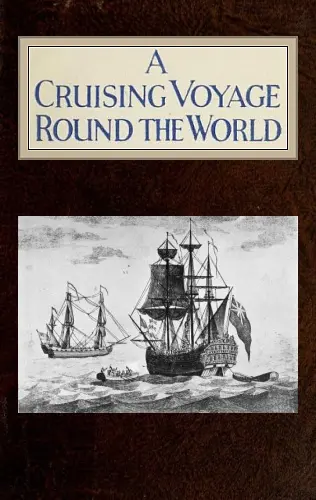
"A Cruising Voyage Round the World" by Woodes Rogers is a historical account written in the early 18th century. The book chronicles Rogers's remarkable voyage on two ships, the "Duke" and "Dutchess", as they set out to explore the South Seas and engage in privateering during a time of intense maritime competition and conflict. The narrative not only details the expedition's adventures and challenges but also provides insight into the life and character of Rogers, a significant figure in British maritime history. The opening of "A Cruising Voyage Round the World" introduces Captain Woodes Rogers as he prepares for a notable expedition in 1708, aiming to disrupt the lucrative South Sea trade dominated by France and Spain. His foresight leads him to gather a skilled crew, including the experienced Captain William Dampier, and organize two ships to sail from Bristol. The narrative unfolds with the preparations for the journey, the initial challenges faced by the crew—including mutiny and illness—and their eventual encounters with treasure ships and capture of prizes, setting the stage for a dramatic tale of adventure, resilience, and naval exploits that highlights the spirit of the age.
Introduction adapted from the source catalogue; source summaries may be automatically generated.
Free to read · English · 160,581 words · No account needed
MAKE TIME FOR A GOOD BOOK
On by default. Untick to stop anonymous reading totals. Each page counts after 10 seconds in view. How this works.
Anonymous counting is on unless you have switched it off.
[Sidenote: Chili Described.]
The Spring begins about the Middle of our August, and lasts till the Middle of November; then the Summer holds to the Middle of February, the Autumn continues to the Middle of May, and the Winter from thence to the Middle of August. During this Season the Trees are depriv’d of their Leaves, and the Ground is cover’d with white Frosts, which are dissolved about 2 hours after the Sun rises. The Snow falls seldom in the Vallies, but in great Quantity in the Mountains, from whence it is melted in the Summer, and fructifies the Vallies and Plains with Rivulets. In the Spring the Fields are adorn’d with beautiful Flowers of all Colours and sorts, and of an admirable Scent, from whence they distil a fine Liquid called Angels Water, which makes a noble Perfume. The choicest Flowers and Plants that we cultivate grow wild there; they have Groves of Mustard Trees higher than a Man on Horseback, and the Birds build their Nests in them. They have many Physical Plants and Herbs, with which their Indian Physicians perform wonderful Cures, when the Patients are despair’d of by our European Doctors, but they are very shy of communicating those Secrets. Fruits and Seeds brought hither from Europe thrive very well, but those of Mexico and Peru don’t. They have all our sorts of Fruit in such abundance, that every one may take what they please; so that none is sold, except a sort of extraordinary large Strawberries, which they cultivate. They have Oats, Wheat and Maiz in such plenty, that they are seldom troubled with Want of Grain. Their Pastures are so rich, and their Cattle of all sorts so numerous, that they don’t value the Flesh, but salt the Tongues and Loins, and send ’em to Peru with the Hides and Tallow, which is a great Branch of their Trade. They have Store of noble and generous Wines, both white and red; their Vines are larger, and their Clusters of Grapes much bigger than any in Europe. They have also plenty of Olives, Groves of Cocoa Trees of several Leagues long. Almond-trees, and such Store of Silk grass, which they use instead of Hemp, that they furnish all the Coasts of the South Sea with Cordage for their Ships; they have also great Quantities of Annise and Cummin-seed, Salt, Flax, Wool, Leather, Timber, Pitch, Amber, &c. So that according to Ovalle, Merchants may trade from hence to other Parts in the South Sea, and especially to Lima, from 100 to 300 per Cent. Profit, of which I have also been informed by our Prisoners. Though they have abundance of Mulberry-trees, they breed no Silk-worms; so that the Ladies, who are extravagant in their Apparel, impoverish the Country by purchasing the richest Silks, tho’ they might easily have enough of their own. They have plenty of Bees, yet have their Wax from Europe, for want of Industry to improve their own, and they have Pepper and other Spice from the East Indies, tho’ they have a kind of Spice of their own, which might very well supply them. He adds, that the Herbage, Fishing, Hunting, Wood for Fuel and Timber, and Salt Mines, are here in common, so that every one may take what they please. They make little use of their Mines of Lead and Quicksilver; for Peru has enough of the latter to purify their Silver. Ovalle says the Gold Mines are so many, that from the Confines of Peru to the Straits of Magellan there is no part of the Country without ’em; but they are not so much follow’d as in Peru, and they don’t so much apply themselves to the Silver Mines, because those of Gold are wrought with less charge; their Silver is dug from hard Rocks, ground to Powder in their Mills, and then refin’d with Quicksilver, which is laborious as well as expensive; whereas they have no other trouble with the Gold than to wash the Earth from it; yet sometimes they follow the Veins of Gold through Rocks, when they have hopes that they will grow larger, as they frequently do, and one of these Veins is often enough to enrich the Discoverers. Gold is not dug here in such Plenty, since the War betwixt the Spaniards and Araucanos; but the Natives wait for the Winter Rains, which wash it down from the Mountains, into Rivers, Ponds, &c. when the Women go into the Water, feel out the Grains with their Toes, and make up as much as supplys their present Necessities, as our Author says, but to me this appears a very odd Way to get Gold. He tells us that he sent one of those Grains to Seville, where being touch’d, it was found to be 23 Carats fine, without any manner of Purification. Most of the Bells and great Guns us’d in Peru, are made of the Copper of this Country.
Your reading position is saved on this browser. Take it to another device with a library code. Reading pages adapt to text, rather than matching a printed edition.
BEHIND THE BOOK
This eBook is for the use of anyone anywhere in the United States and most other parts of the world at no cost and with almost no restrictions whatsoever. You may copy it, give it away or re-use it under the terms of the Project Gutenberg License included with this eBook or online at www.gutenberg.org. If you are not located in the United States, you will have to check the laws of the country where you are located before using this eBook. Read the source licence.
The original source file, including credits and licence, is retained by this library. Request an original-format copy at no charge. Please include the book title and Project Gutenberg identifier #55538.
KEEP YOUR CURIOSITY GOING
Wilfrid Scawen Blunt
Wilfrid Scawen Blunt

E. W. (Edgar Watson) Howe
Cécile Tormay

Moritz Busch
John L. Ransom