THE CLASSIC COLLECTION✦My diaries, being a personal narrative of events 1888-1914, Part 2 (1900-1914)CLASSIC FREE BOOKS
My diaries, being a personal narrative of events 1888-1914, Part 2 (1900-1914)
Wilfrid Scawen Blunt
THE CLASSIC COLLECTION · 1712
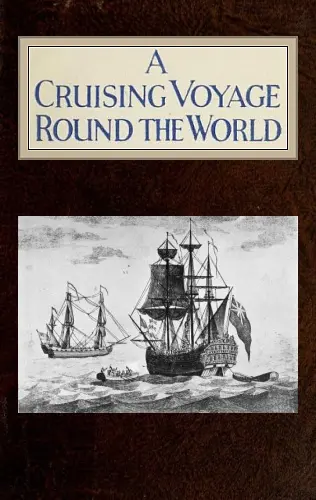
"A Cruising Voyage Round the World" by Woodes Rogers is a historical account written in the early 18th century. The book chronicles Rogers's remarkable voyage on two ships, the "Duke" and "Dutchess", as they set out to explore the South Seas and engage in privateering during a time of intense maritime competition and conflict. The narrative not only details the expedition's adventures and challenges but also provides insight into the life and character of Rogers, a significant figure in British maritime history. The opening of "A Cruising Voyage Round the World" introduces Captain Woodes Rogers as he prepares for a notable expedition in 1708, aiming to disrupt the lucrative South Sea trade dominated by France and Spain. His foresight leads him to gather a skilled crew, including the experienced Captain William Dampier, and organize two ships to sail from Bristol. The narrative unfolds with the preparations for the journey, the initial challenges faced by the crew—including mutiny and illness—and their eventual encounters with treasure ships and capture of prizes, setting the stage for a dramatic tale of adventure, resilience, and naval exploits that highlights the spirit of the age.
Introduction adapted from the source catalogue; source summaries may be automatically generated.
Free to read · English · 160,581 words · No account needed
MAKE TIME FOR A GOOD BOOK
On by default. Untick to stop anonymous reading totals. Each page counts after 10 seconds in view. How this works.
Anonymous counting is on unless you have switched it off.
The Entrance into the Harbour may be known by four high Rocks, which look like the Needles at the Isle of Wight, as you come from the Westward; the two Westermost in form of Sugar-loves. The innermost has an Arch like a Bridge, through which the Sea makes its way. You must leave the outermost Rock about a Cable’s Length on the Larboard side, and steer into the deepest part of the Bay, being all bold, where you may anchor from 10 Fathom to 20 or 25 Fathom Water. Here you ride land-lockt from E. by N. back to the S. E. by S. yet it is but an ordinary Road, if the Wind should come strong out of the Sea, which it never did while we lay there.
Mexico describ’d
I Shall next give a brief Account of Mexico from the best Information and Authors. This Country lies betwixt Lat. 8. and 50 or 55 North, but it is little known or inhabited by the Spaniards to the Northward of 35. ’Tis divided into Old and New, and the former is also called New Spain, The Country in general includes all the West Side of Northern America, as far as ’tis known. ’Tis divided into the Audiences, or Jurisdictions of St. Domingo, Mexico properly so call’d, Guadalajara or New Gallicia, and Guatimala; and these again are subdivided into several Provinces, with which I shall not trouble the Reader, since that is the Business of a Geographer, and not of a Sailor. That part of it call’d New Spain is the best and most famous Part of all North America, and the Name is sometimes extended by the Spaniards to the whole.
[Sidenote: Mexico Described.]
The Air in general is mild, temperate and healthful, and the Soil so fertile, that in some places it produces 100 for one of Corn, and of Maiz 200; but the great Rains in Summer hinder their having good Oil and Wine. Their most remarkable Plant is that call’d Maguey, which abounds in this Country, and some of it we found in the Maria Islands; of the Juice the Spaniards and Natives make a small Wine, Vinegar, and Honey; and of the Leaves and other Parts they make Cordage, Thread, and Cloth for Sacks and Shirts. They have great and small Cattle, and Fowl in such plenty, that they frequently kill them only for the Skins and Feathers. They have also excellent Horses of the best Spanish Breed. There are few Gold Mines in this Country, but abundance of Silver, and tho’ not so rich as those of Peru, are much easier to be work’d, with less Expence of Money, and far less Danger of Mens Lives. Their other chief Commodities are Iron, Steel, Copper, but none of ’em much wrought, Hides, Wool, Cotton, Sugar, Silk, Cochineal, Scarlet-Dy, Feathers, Honey, Wax, Balm, Amber, Ambergrise, Salt, abundance of Medicinal Drugs, Cocoa, Cassia, Gold in the Sands of their Rivers, Figs, Oranges, Citrons, and other Fruit peculiar to the Climate, besides all those common in Europe; wild Beasts, and Fowl of all sorts, Chrystal, Turquoises, Emeralds, Marcasites, Bezoar Stones, and Pepper. This must be understood of Mexico in general; for all those Commodities are not in one Province, but some have one sort and some another. Nor is the Temper of the Climate every where the same, for those Places towards the South Sea are warm, but in and about the Mountains ’tis cold; and in some places they have continu’d Rains almost for 8 or 9 months in a Year, and are much infected with Serpents, Moskitto’s, and other Insects, especially near the Torrid Zone.
Your reading position is saved on this browser. Take it to another device with a library code. Reading pages adapt to text, rather than matching a printed edition.
BEHIND THE BOOK
This eBook is for the use of anyone anywhere in the United States and most other parts of the world at no cost and with almost no restrictions whatsoever. You may copy it, give it away or re-use it under the terms of the Project Gutenberg License included with this eBook or online at www.gutenberg.org. If you are not located in the United States, you will have to check the laws of the country where you are located before using this eBook. Read the source licence.
The original source file, including credits and licence, is retained by this library. Request an original-format copy at no charge. Please include the book title and Project Gutenberg identifier #55538.
KEEP YOUR CURIOSITY GOING
Wilfrid Scawen Blunt
Wilfrid Scawen Blunt

E. W. (Edgar Watson) Howe
Cécile Tormay

Moritz Busch
John L. Ransom