THE CLASSIC COLLECTION✦My diaries, being a personal narrative of events 1888-1914, Part 2 (1900-1914)CLASSIC FREE BOOKS
My diaries, being a personal narrative of events 1888-1914, Part 2 (1900-1914)
Wilfrid Scawen Blunt
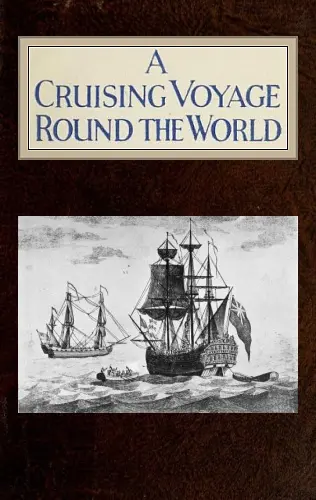
THE CLASSIC COLLECTION · 1712
"A Cruising Voyage Round the World" by Woodes Rogers is a historical account written in the early 18th century. The book chronicles Rogers's remarkable voyage on two ships, the "Duke" and "Dutchess", as they set out to explore the South Seas and engage in privateering during a time of intense maritime competition and conflict. The narrative not only details the expedition's adventures and challenges but also provides insight into the life and character of Rogers, a significant figure in British maritime history. The opening of "A Cruising Voyage Round the World" introduces Captain Woodes Rogers as he prepares for a notable expedition in 1708, aiming to disrupt the lucrative South Sea trade dominated by France and Spain. His foresight leads him to gather a skilled crew, including the experienced Captain William Dampier, and organize two ships to sail from Bristol. The narrative unfolds with the preparations for the journey, the initial challenges faced by the crew—including mutiny and illness—and their eventual encounters with treasure ships and capture of prizes, setting the stage for a dramatic tale of adventure, resilience, and naval exploits that highlights the spirit of the age.
Introduction adapted from the source catalogue; source summaries may be automatically generated.
Free to read · English · 160,581 words · No account needed
MAKE TIME FOR A GOOD BOOK
On by default. Untick to stop anonymous reading totals. Each page counts after 10 seconds in view. How this works.
Anonymous counting is on unless you have switched it off.
After a voyage of three and a half months Rogers arrived at his destination, and on the 25th of July the Delicia, with the Governor and his retinue on board, escorted by H.M. ships Rose and Milford, anchored off Nassau, the principal town of New Providence, and the seat of government of the Bahamas. Owing to the lateness of the evening the pilot of the Delicia decided that it was unsafe to venture over the bar that night, and in consequence it was resolved to wait till the morning.[33] From information received it was learnt that nearly all the pirates are anxious to avail themselves of the royal clemency. Two notable exceptions, however, were Teach, the famous “Blackbeard,” and Charles Vane. The latter swore that “he would suffer no other governor than himself” except on his own terms, and these he embodied in the following letter to Rogers:--“Your excellency may please to understand that we are willing to accept His Majesty’s most gracious pardon on the following terms, viz.--That you will suffer us to dispose of all our goods now in our possesion. Likewise, to act as we think fit with everything belonging to us.... If your Excellency shall please to comply with this, we shall, with all readiness, accept of His Majesty’s Act of Grace. If not, we are obliged to stand on our defence. We wait a speedy answer.”[34]
Rogers promptly replied by sending in the Rose and the Shark sloop, and after a desultory cannonade--Vane set fire to a French prize of 22 guns--and during the confusion and danger which followed he and about 90 of his crew succeeded in escaping to sea.[35]
The morning following Vane’s escape Rogers went on shore and was enthusiastically received by the principal inhabitants. The pirates who had availed themselves of the royal pardon, were not to be eclipsed in their desire to show their loyalty to the new governor, and on the way from the beach to the Fort, Rogers passed between two lines of reformed pirates, who fired their muskets in his honour. On arriving at the Fort the royal commission was opened and read, and Rogers was solemnly sworn in as Governor of the Bahamas. The next procedure was to form a Council, and for this purpose Rogers nominated six of the principal persons he had brought with him from England, and six of the inhabitants “who had not been pirates, and were of good repute.”[36] Within a week of landing Rogers assembled this Council, and among other business the following appointments were made:--Judge of the Admiralty Court, Collector of Customs, Chief Justice, Provost Marshal, Secretary to the Governor, and Chief Naval Officer.[37] Having appointed his Council and administrative officers, Rogers next turned his attention to the inhabitants and the condition of the islands generally. It was a task which required a man of strong and fearless disposition, and Rogers did not shrink from the responsibility. The secret of his success was that he found and made work for all. The fort of Nassau, in ruins and dismantled, was repaired and garrisoned. A number of guns were also mounted, and a strong pallisade constructed round it. All about the town the roads were overgrown with brushwood and shrubs and rendered almost impassable. A proportion of the inhabitants were therefore mustered and employed in clearing the ground and cleansing the streets, while overseers and constables were employed to see the work carried out in an efficient manner. Those not employed on cleansing and scouring were formed into three companies of Militia whose duty it was to keep guard in the town every night, to prevent surprise attacks. The neighbouring islands were not forgotten, and various members of the Council were appointed Deputy Governors of them. A militia company was also formed in each of the principal ones, and a fort constructed and provided with powder and shot. As an extra method of precaution the Delicia was retained as the Governor’s guardship and stationed off the harbour of Nassau. A scheme of settlement was also devised, and in order to attract settlers to New Providence and the other islands, a plot of ground 120 foot square was offered to each settler, provided he would clear the ground and build a house within a certain time. As there was abundance of timber on the island which was free to be taken, this stipulation was not difficult to fulfil.[38]
Your reading position is saved on this browser. Take it to another device with a library code. Reading pages adapt to text, rather than matching a printed edition.
BEHIND THE BOOK
This eBook is for the use of anyone anywhere in the United States and most other parts of the world at no cost and with almost no restrictions whatsoever. You may copy it, give it away or re-use it under the terms of the Project Gutenberg License included with this eBook or online at www.gutenberg.org. If you are not located in the United States, you will have to check the laws of the country where you are located before using this eBook. Read the source licence.
The original source file, including credits and licence, is retained by this library. Request an original-format copy at no charge. Please include the book title and Project Gutenberg identifier #55538.
KEEP YOUR CURIOSITY GOING
Wilfrid Scawen Blunt
Wilfrid Scawen Blunt

E. W. (Edgar Watson) Howe
Cécile Tormay

Moritz Busch
John L. Ransom