THE CLASSIC COLLECTION✦My diaries, being a personal narrative of events 1888-1914, Part 2 (1900-1914)CLASSIC FREE BOOKS
My diaries, being a personal narrative of events 1888-1914, Part 2 (1900-1914)
Wilfrid Scawen Blunt
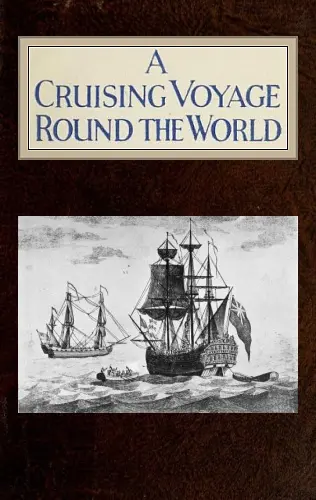
THE CLASSIC COLLECTION · 1712
"A Cruising Voyage Round the World" by Woodes Rogers is a historical account written in the early 18th century. The book chronicles Rogers's remarkable voyage on two ships, the "Duke" and "Dutchess", as they set out to explore the South Seas and engage in privateering during a time of intense maritime competition and conflict. The narrative not only details the expedition's adventures and challenges but also provides insight into the life and character of Rogers, a significant figure in British maritime history. The opening of "A Cruising Voyage Round the World" introduces Captain Woodes Rogers as he prepares for a notable expedition in 1708, aiming to disrupt the lucrative South Sea trade dominated by France and Spain. His foresight leads him to gather a skilled crew, including the experienced Captain William Dampier, and organize two ships to sail from Bristol. The narrative unfolds with the preparations for the journey, the initial challenges faced by the crew—including mutiny and illness—and their eventual encounters with treasure ships and capture of prizes, setting the stage for a dramatic tale of adventure, resilience, and naval exploits that highlights the spirit of the age.
Introduction adapted from the source catalogue; source summaries may be automatically generated.
Free to read · English · 160,581 words · No account needed
MAKE TIME FOR A GOOD BOOK
On by default. Untick to stop anonymous reading totals. Each page counts after 10 seconds in view. How this works.
Anonymous counting is on unless you have switched it off.
August 31. Yesterday in the Afternoon we put ashore our useless Negroes, I having concluded with Sen. Navarre, and taken the best Methods we could to be paid at Jamaica for them, he had also 4 Bales of Bays, and one Piece of Camlet, and became obliged to our Owners for 3500 Pieces of Eight, to be remitted by way of Portobello, with the English trading Sloops to Jamaica; which if he do, ’tis much better than to turn the Negroes ashore as Prisoners of War, as otherwise we must have done to save Provisions. Capt. Courtney took one Obligation, and I the other, he having sign’d a Duplicate to us. We had the best Opinion of this Man’s Honesty and Ability, which made us trust him solely. In the Evening we clear’d our Prisoners, and put them all aboard the Prize, which we left in the Road with only one ordinary Anchor and Hawser, and no Rigging, except what belong’d to the Fore-sail and Fore-yard, which we left them to run the Vessel at High Water into the River. We turn’d ashore here our least responsible Hostage for Guiaquil, resolving to keep but two, which must be carried home. According to the last Conclusion in a Committee of the 29th instant, we came to sail at 6 this Morning. Capt. Cooke lost 2 Spanish Negroes, which he supposed swam ashore from his Ship in the Night. A fresh Gale at S. S. W. At Noon Cape St. Francisco bore S. by W. 1/2 W. distant about 6 Leagues.
[Sidenote: Description of Tecames.]
The Land to the Northward, which is the Limits of the Bay of Tecames, is a long bluff high Point, and looks white down to the Water. The next Land to the Southward of Tecames is also white Cliffs, but not so high. I saw no Land on any part of the Shore, like those white Cliffs. Between them, which is about 3 Leagues, the Land is lower, full of Wood, and trimming inward makes a small Bay, and the Village of Tecames lies in the Bottom, consisting of 7 Houses and a Church, all low built of split Bamboes, cover’d with Palmetto Leaves, and standing on Posts, with Hog-sties under them. These Houses have notch’d Pieces of Timber instead of Stairs to get up to ’em. The Village lies close by the Water-side, and may be seen when the Bay is open above 4 Leagues. ’Tis suppos’d they had sent off their best Furniture on notice of our Approach, for there was nothing of Worth in their Houses nor Church. The Women had only a Piece of Bays tied about their Middle. The Men are dextrous at hunting and fishing. There is a large Village about 4 Leagues off, where the Padre resides, and several Indians live between these Villages. The next River, 3 Leagues to the Northward, is very large, and call’d Rio de las Esmeraldas, but shoal’d; the Country about is thinly inhabited by Indians, Mullattoes and Samboes. By the Village of Tecames there’s a River into which a Boat may enter at half Tide; it flows here above 3 Fathom Water, the Flood runs to the Northward, and the Ebb to the Southward; there is an infinite Number of Plantains for 3 Days Journey into the Country, the nearest are about a League from the Houses, and were brought to our Boats down this River in their Canoes. Here runs a great Surf on the Shore, so that were it not in these Parts of the World, it would be but an ordinary Road. Ships generally come in from the Southward, or at least directly in with the Southermost white Land, and then bear away, because (as we were inform’d) there is an ugly Shole runs off the Northernmost white Land, about 2 Leagues into the Sea, being the Place where we had but 8 Fathom Water on the 23d instant, as I noted before. We now came in from abreast off Cape St. Francisco, Lat. 1°. 00´´. N. and this lies in about E.N.E. near 6 Leagues from Cape St. Francisco. We came no nearer than half a League of the Shore, because there is a small Shole off of a Point about half way between Tecames; and the Cape, which is an indifferent high Promontory, and as we made it, falls down like Stairs to the Water. We had good clean Ground where we rode near half a League from the Shore in 7 Fathom Water, but a League into the Bottom of the Bay, where the Houses lie, there’s not above 3 Fathom a good Musket-shot from the Shore. There is another River enters in by a single House between us and Tecames Village, where we fetch’d our Water about 2 Leagues up this River; and it’s very narrow, and shoal’d all from the Entrance; we went in on half Flood. Here’s Sea and Land Breezes, as well as on all this Coast near the Main Land; the Sea Breeze at W. and W.S.W. the Land Breeze at S. and S. by E. The Sea Breeze comes generally in the Afternoon, and holds till Midnight, when comes the Land Breeze, which dies away calm towards the Middle of the Day. There’s a Rock under Water at quarter Flood, and a Shoal above a Cable’s Length off Shore, from the first Point as you go in for the narrow River where we water’d. A Ship ought not to come to an Anchor near the Shore, if High Water, in less than 6 Fathom, because at certain times, and out of course, as the Indians told us, the Tide ebbs exceeding low. It’s dry Weather here, tho’ showry to the Northward, being the Limits of the Rains at this time of the Year. From June to December ’tis always dry, and from the Beginning of January to the last of May there are Showers now and then.
Your reading position is saved on this browser. Take it to another device with a library code. Reading pages adapt to text, rather than matching a printed edition.
BEHIND THE BOOK
This eBook is for the use of anyone anywhere in the United States and most other parts of the world at no cost and with almost no restrictions whatsoever. You may copy it, give it away or re-use it under the terms of the Project Gutenberg License included with this eBook or online at www.gutenberg.org. If you are not located in the United States, you will have to check the laws of the country where you are located before using this eBook. Read the source licence.
The original source file, including credits and licence, is retained by this library. Request an original-format copy at no charge. Please include the book title and Project Gutenberg identifier #55538.
KEEP YOUR CURIOSITY GOING
Wilfrid Scawen Blunt
Wilfrid Scawen Blunt

E. W. (Edgar Watson) Howe
Cécile Tormay

Moritz Busch
John L. Ransom