THE CLASSIC COLLECTION✦My diaries, being a personal narrative of events 1888-1914, Part 2 (1900-1914)CLASSIC FREE BOOKS
My diaries, being a personal narrative of events 1888-1914, Part 2 (1900-1914)
Wilfrid Scawen Blunt
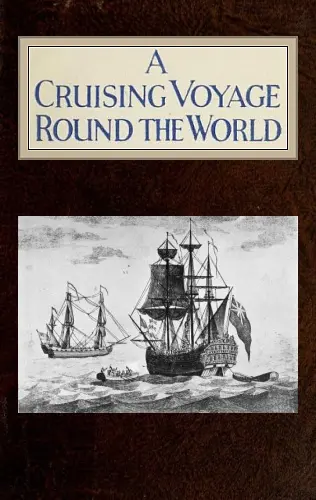
THE CLASSIC COLLECTION · 1712
"A Cruising Voyage Round the World" by Woodes Rogers is a historical account written in the early 18th century. The book chronicles Rogers's remarkable voyage on two ships, the "Duke" and "Dutchess", as they set out to explore the South Seas and engage in privateering during a time of intense maritime competition and conflict. The narrative not only details the expedition's adventures and challenges but also provides insight into the life and character of Rogers, a significant figure in British maritime history. The opening of "A Cruising Voyage Round the World" introduces Captain Woodes Rogers as he prepares for a notable expedition in 1708, aiming to disrupt the lucrative South Sea trade dominated by France and Spain. His foresight leads him to gather a skilled crew, including the experienced Captain William Dampier, and organize two ships to sail from Bristol. The narrative unfolds with the preparations for the journey, the initial challenges faced by the crew—including mutiny and illness—and their eventual encounters with treasure ships and capture of prizes, setting the stage for a dramatic tale of adventure, resilience, and naval exploits that highlights the spirit of the age.
Introduction adapted from the source catalogue; source summaries may be automatically generated.
Free to read · English · 160,581 words · No account needed
MAKE TIME FOR A GOOD BOOK
On by default. Untick to stop anonymous reading totals. Each page counts after 10 seconds in view. How this works.
Anonymous counting is on unless you have switched it off.
Engagement, every one acted the same Part he ought to have done, if in earnest, firing with Ball excepted. Our Prisoners were secured in the Hold by the Surgeons, who had their Instruments in order, and to imitate Business for them, I order’d red Lead mixt with Water to be thrown upon two of our Fellows, and sent ’em down to the Surgeons, who, as well as the Prisoners in the Hold of the Ship, were very much surpriz’d, thinking they had been really wounded, and the Surgeons actually went about to dress them, but finding their Mistake, it was a very agreeable Diversion.
August 23. Yesterday, at one in the Afternoon, we tack’d and stood for the Shore, but at two we drew near discolour’d Water, and sounded, had but 8 Fathom, and very near an ugly Shoal, which the Spaniards tell me runs off about 2 Leagues from the Shore, off a high white Cliff, 3 Leagues to the N. of Tecames. At 6 last Night, Cape St. Francisco bore S. by W. distant about 6 Leagues. We sounded again, and had 40 Fathom Water. We stood off at Night, and at 6 in the Morning tack’d for the Shore. The Wind is here always more Southerly, as we draw near the Equinox.
August 24. At 10 this Morning, I went with Captain Dover aboard the Dutchess, where we agreed to send the Bark into Tecames, being now under our Lee, and we to follow them. We order’d our Linguist to buy Provisions of the Indians there, and put several Men well arm’d a-board, to keep the Bark till our Ship could arrive near enough to protect her, if occasion, in Case of an Attack.
August 25. About 2 Yesterday in the Afternoon we bore away for Tecames, after the Barks. I went aboard the Dutchess, and found our Pilot, and most of the Spaniards, who are generally ignorant, uncertain whether it was the Port under our Lee, tho’ I never saw more remarkable Land; this made us the more timerous, and me in particular, because Capt. Dampier, who was here last Voyage, and said he had pass’d near it very often, was full as dubious as our selves, that never saw it: This occasion’d me to hurry aboard our own Ship to secure her; for I doubted our being near Shoals, because the Water was very thick and white. Capt. Courtney sent his Pinnace a Head sounding, and we follow’d, he having then all the Pilots aboard. We kept the Lead sounding from 40 to 13 Fathom Water, very uneven Depths, till we came within 2 Leagues of the Anchoring place. We had every Cast about 14 Fathom Water, and saw the Houses by the Water-side; then I was easy and satisfied. Before we got in, the Barks were at Anchor, and our Linguist, Mr. White, without Orders, ventur’d a-shore with a Spanish Prisoner; we design’d that the Prisoner alone should discourse the Indians, and try to trade for a Refreshment: It was Night as they landed, just against the Houses where the Indians lay in Ambush, with Fire-Arms, Bows, Arrows, and Lances, among the Trees, and fir’d several Times at our Boats, tho’ they told the Indians in Spanish, that they were Friends, and call’d to them often to forbear firing. Our Men having the good Luck to escape being shot, they hid themselves all Night, whilst we feared they were either kill’d or taken; but at Day-light they call’d again to the Indians, and prevail’d with them to trade for what we wanted, provided their Padre would give Consent, he lived about 6 Leagues off, and they promis’d to send and ask his Leave. Our Linguist told them we had a Padre aboard, whom we esteemed, and he would absolve them, if they traded with us: Upon this, they desired we would permit him to come a-shoar, which we granted.
Your reading position is saved on this browser. Take it to another device with a library code. Reading pages adapt to text, rather than matching a printed edition.
BEHIND THE BOOK
This eBook is for the use of anyone anywhere in the United States and most other parts of the world at no cost and with almost no restrictions whatsoever. You may copy it, give it away or re-use it under the terms of the Project Gutenberg License included with this eBook or online at www.gutenberg.org. If you are not located in the United States, you will have to check the laws of the country where you are located before using this eBook. Read the source licence.
The original source file, including credits and licence, is retained by this library. Request an original-format copy at no charge. Please include the book title and Project Gutenberg identifier #55538.
KEEP YOUR CURIOSITY GOING
Wilfrid Scawen Blunt
Wilfrid Scawen Blunt

E. W. (Edgar Watson) Howe
Cécile Tormay

Moritz Busch
John L. Ransom