THE CLASSIC COLLECTION✦My diaries, being a personal narrative of events 1888-1914, Part 2 (1900-1914)CLASSIC FREE BOOKS
My diaries, being a personal narrative of events 1888-1914, Part 2 (1900-1914)
Wilfrid Scawen Blunt
THE CLASSIC COLLECTION · 1712
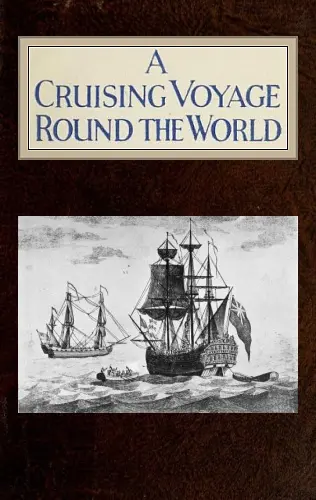
"A Cruising Voyage Round the World" by Woodes Rogers is a historical account written in the early 18th century. The book chronicles Rogers's remarkable voyage on two ships, the "Duke" and "Dutchess", as they set out to explore the South Seas and engage in privateering during a time of intense maritime competition and conflict. The narrative not only details the expedition's adventures and challenges but also provides insight into the life and character of Rogers, a significant figure in British maritime history. The opening of "A Cruising Voyage Round the World" introduces Captain Woodes Rogers as he prepares for a notable expedition in 1708, aiming to disrupt the lucrative South Sea trade dominated by France and Spain. His foresight leads him to gather a skilled crew, including the experienced Captain William Dampier, and organize two ships to sail from Bristol. The narrative unfolds with the preparations for the journey, the initial challenges faced by the crew—including mutiny and illness—and their eventual encounters with treasure ships and capture of prizes, setting the stage for a dramatic tale of adventure, resilience, and naval exploits that highlights the spirit of the age.
Introduction adapted from the source catalogue; source summaries may be automatically generated.
Free to read · English · 160,581 words · No account needed
MAKE TIME FOR A GOOD BOOK
On by default. Untick to stop anonymous reading totals. Each page counts after 10 seconds in view. How this works.
Anonymous counting is on unless you have switched it off.
[Sidenote: At Guiaquil.]
[Sidenote: At Guiaquil.]
April 22. It was very hot Yesterday, and we were pester’d and stung grievously by the Muskitoes, as we lay under the Mangroves. At 6 in the Evening the Bark and Boats made way up the River. By 12 at Night we were in sight of the Town with all the Boats, in which we had 110 Men. We saw a very great Fire on the top of an adjoining Hill, and Lights in the Town. In half an hour we were a-breast of it, and ready to land, but saw abundance of Lights appear at once coming down the Hill, and the Town full of ’em. We enquir’d of the Indians, our Pilots, whether it was any Saint’s Day, or what might be the Occasion of it, and they answer’d us, that it must be an Alarm. It was very dark whilst we lay still driving on the River, being just High-water, we heard a Spaniard from the Shore, talking loudly that Puna was taken, and that the Enemy were coming up the River. This made us conclude it was an Alarm. Immediately after we heard their Bells making a confused Noise, and then a Volly of Small Arms, and two Great Guns. Above an Hour was spent in Debate betwixt Capt. Dover, Capt. Courtney, and my self, whether we should land. I asked the Consent of the Lieutenants in all the Boats about Landing, telling ’em I suppos’d this to be the first Alarm, and that we had best land during their Consternation; but they differ’d in opinion, and few were for landing in the Night. I asked Capt. Dampier how the Buccaneers behav’d themselves in such Cases, and he told me they never attack’d any large Place after it was alarm’d. It drew near two in the Morning, and the Ebb run so strong, that the great Boat and Yall could not row up to Land; so that it being too late to attempt the Town, I advised to fall down the River out of sight of it, to meet our Barks, and land with the Morning Flood. Upon this all our Boats drove down with the Ebb about a League below the Town, where we lay till Daybreak, and saw our Bark, Mr. Glendall Commander, brought by the honest Indian Pilot a Mile above us, for we had passed by him in the Night: We rowed back to him, and recruited our Men as well as we could. We found the Water fresh there, and drank of it, tho’ yesterday it was a little brackish. The Bark lay against a Wood of tall Trees close by the Shore, and we kept a File of Musketeers with their Arms pointing into the Wood, with Orders to fire if they saw any Men; and we kept firing a Musket now and then into the Woods, to prevent Ambuscades. About 3 our Yall and Launch came aboard, for they could not row back with us to the Bark, till the Tide slacken’d, and the Flood was coming. At 10 we saw the Dutchess’s Bark come in sight; immediately I order’d the Anchor to be got up to fall on the Town, which was about two Miles from us; but Capt. Dover oppos’d it, press’d that we might have a Consultation with as many of the Officers as were present, and to lie in the Boat astern of the Bark, that what was debated might not be overheard by the rest of our Company. We immediately assembled there accordingly, and Capt. Dover insisted on the Difficulty of attempting the Enemy now they had been so long alarm’d; alledging we should but throw away our own and our Mens Lives, or else weaken our selves so much, as might occasion the Loss of the remaining part of the Voyage, that chiefly brought us from England, and was our greatest Dependance: That the Town appeared large, and consequently was much more able to hold out than we to attack it; and tho’ the Spaniards in these Parts had no extraordinary fighting Character, yet if they armed the Mullatto’s, as they generally did on the like Occasions, we might find the Attempt very desperate, with other Objections not fit to recite here. He concluded, that our best Method would be to send a Trumpeter with Proposals to the Enemy to trade with us for the Cargoes of Negroes and other Goods aboard our Prizes, that an immediate Meeting should be appointed, the Prices for the Negro’s and Goods fix’d, and good Hostages given us for the Performance within a limited Time, and if they agreed to this, that we would not land. This Proposal I withstood by the best Arguments I could, and urged our landing immediately, least the Enemy gaining Time by our Delays, might send off their Wealth, and get leisure to strengthen themselves, so as to bid us defiance. This being put to the Vote, the Majority was for landing, and as an Obligation on Capt. Dover, who was a part Owner in our Ships, we agreed he should lead on the Attack as he requested, and if he took the Town, he should give the Watchword that Night, and Capt. Courtney and I to take it in turns after him: But this Resolution did not hold; for Capt. Dover reflected on me, and said I should be answerable for all the Damage that might happen to us on our Landing. By these Reflections, and some other Peoples Indifferency, I had reason to doubt the Consequence of attempting the Enemy with Success, since we were so divided amongst our selves; therefore at length I yielded to send two of our Prisoners, instead of a Trumpeter, as Capt. Dover first propos’d, with the foregoing Proposals. The other Prisoners in our Bark oblig’d themselves for the Return of these two in less than an Hour; and this Method every one seem’d to be pleas’d with; so we put the Captain of the French-built Ship, and the Lieutenant of Puna ashore in our Boat, and charged them to return from the Shore in less than an Hour, otherwise we would land. In the mean while we ran up with the other Bark, and lay against the Middle of the Town at an Anchor. As we sail’d up we saw 4 Barks put off from the Town to go higher up the River, and just as the limited Hour was past, we sent our Boats well mann’d and arm’d after them, who soon took and brought ’em to us. Mean while our Prisoners returned in a Boat from the Town, with the Spanish Master le Camp, who discoursed with us, and told us, that at his Return ashore the Corregidore or Governour, with another Gentleman, would come off and treat with us. We soon put him ashore again, and quickly after came off the Corregidore with another Gentleman. Capt. Dover and I met them in our Boat, with a Linguist, and carried them aboard one of the Barks that our Boats had taken as they endeavour’d to escape up the River.
Your reading position is saved on this browser. Take it to another device with a library code. Reading pages adapt to text, rather than matching a printed edition.
BEHIND THE BOOK
This eBook is for the use of anyone anywhere in the United States and most other parts of the world at no cost and with almost no restrictions whatsoever. You may copy it, give it away or re-use it under the terms of the Project Gutenberg License included with this eBook or online at www.gutenberg.org. If you are not located in the United States, you will have to check the laws of the country where you are located before using this eBook. Read the source licence.
The original source file, including credits and licence, is retained by this library. Request an original-format copy at no charge. Please include the book title and Project Gutenberg identifier #55538.
KEEP YOUR CURIOSITY GOING
Wilfrid Scawen Blunt
Wilfrid Scawen Blunt

E. W. (Edgar Watson) Howe
Cécile Tormay

Moritz Busch
John L. Ransom