THE CLASSIC COLLECTION✦My diaries, being a personal narrative of events 1888-1914, Part 2 (1900-1914)CLASSIC FREE BOOKS
My diaries, being a personal narrative of events 1888-1914, Part 2 (1900-1914)
Wilfrid Scawen Blunt
THE CLASSIC COLLECTION · 1712
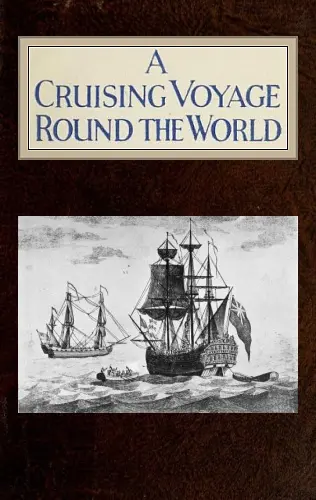
"A Cruising Voyage Round the World" by Woodes Rogers is a historical account written in the early 18th century. The book chronicles Rogers's remarkable voyage on two ships, the "Duke" and "Dutchess", as they set out to explore the South Seas and engage in privateering during a time of intense maritime competition and conflict. The narrative not only details the expedition's adventures and challenges but also provides insight into the life and character of Rogers, a significant figure in British maritime history. The opening of "A Cruising Voyage Round the World" introduces Captain Woodes Rogers as he prepares for a notable expedition in 1708, aiming to disrupt the lucrative South Sea trade dominated by France and Spain. His foresight leads him to gather a skilled crew, including the experienced Captain William Dampier, and organize two ships to sail from Bristol. The narrative unfolds with the preparations for the journey, the initial challenges faced by the crew—including mutiny and illness—and their eventual encounters with treasure ships and capture of prizes, setting the stage for a dramatic tale of adventure, resilience, and naval exploits that highlights the spirit of the age.
Introduction adapted from the source catalogue; source summaries may be automatically generated.
Free to read · English · 160,581 words · No account needed
MAKE TIME FOR A GOOD BOOK
On by default. Untick to stop anonymous reading totals. Each page counts after 10 seconds in view. How this works.
Anonymous counting is on unless you have switched it off.
Mar. 22. This Morning a Spaniard belonging to us, nam’d Silvester Ramos, died suddenly, and we buried him at night. Most of our Men are healthy, except two or three who are ill of the Scurvey.
Mar. 23. This Morning we began to scrub our Ship, and clear’d abundance of Barnacles off her Bottom, almost as large as Muscles. A Ship grows foul very fast in these Seas.
Mar. 25. We caught plenty of very good Fish. The Seals are numerous here, but not so many as at Juan Fernandez: A large one seiz’d a stout Dutchman, had like to have pull’d him into the Water, and bit him to the bone in several places, in one of his Arms and Legs.
Mar. 26. This Morning the Dutchess came in with a Prize call’d the Santa Josepha, bound from Guiaquil to Truxillo, Burden about 50 Tuns, full of Timber, with some Cocou, and Coco-Nuts, and Tobacco which we distributed among our Men: The Dutchess and Beginning took her between this Island and the Main; she had very little of Value on board.
Mar. 27. This Morning we gave our Ship a good heel, and tallow’d her low down. A Dutchman belonging to the Dutchess died of the Scurvy ashore, and was buried on the Island.
Mar. 30. Yesterday afternoon we got the second Prize (which we call’d the Increase) aboard us, and clean’d her. We brought all off shore, and launch’d our new Boat to tow at our stern, and at ten a clock came to sail, after we had put Mr. Stratton to command the Beginning, and all our sick Men and a Doctor of each Ship aboard the Increase, of which Mr. Selkirk, our second Mate, was appointed Master.
[Sidenote: Description of Lobos.]
By Observation we had here, this Island lies in Lat. 6. 50. S. the Variation 3. 30. Easterly; and I reckon it lies in the Longitude of 87. 35. West from London. The two largest Islands, call’d Lobos de la Mar (to distinguish them from others call’d Lobos de la Terra, within 2 Ls. of the Land) are about 16 Ls. from the Main, and 6 Miles in length. There’s another small Island close by the Eastermost to Windward, not half a mile long, with some Rocks and Breakers near the Shore, all round and off of each side of the Entrance to the Road, which is bold and has no visible Danger. There’s a Passage for Boats to Windward, to come into the Road, which is to the Leeward of these Islands in a Sound between them. ’Tis not half a mile broad, but above a mile deep has from 10 to 20 fathom Water, and good Anchor-ground: there’s no coming in for Ships, but to Leeward of the Islands. We went in with a small Weather-Tide, tho I never perceiv’d it flow above 3 foot whilst we lay here. The Wind commonly blows Southerly, veering a little to the Eastward: on the Eastermost Island (which was on our Larboard side as we lay at anchor in the Sound) there is a round Hummock, and behind it a small Cove very smooth, deep, and convenient enough for a Ship to careen in; there we haul’d up, and fitted our little Frigat. The highest part of the Island appears in the Road not much higher than a large Ship’s Top-Mast head. The Soil is a hungry white clayish Earth, mix’d with Sand and Rocks. There’s no fresh Water, or green things on the Islands: Here’s abundance of Vultures, alias Carrion-Crows, which look’d so like Turkeys, that one of our Officers at landing bless’d himself at the sight, and hop’d to fare deliciously here. He was so eager, that he would not stay till the Boat could put him ashore, but leap’d into the Water with his Gun, and getting near enough to a parcel, let fly at ’em; but when he came to take up his Game, it stunk insufferably, and made us merry at his Mistake. The other Birds here are Penguins, Pellicans, Boobys, Gulls, and a sort of Fowls like Teal, that nestle in holes on the Land. Our Men got Loads of ’em, which they skin’d, and prais’d them for very good Meat. We found abundance of Bull-Rushes and empty Jars that the Spanish Fishermen had left ashore. All over this Coast they use Jars instead of Casks, for Oil, Wine, and all other sorts of Liquids. Here’s abundance of Seals and some Sea-Lions; the Seals are much larger than at Juan Fernandez, but the Fur not so fine. Our People kill’d several with a design to eat their Livers; but one of our Crew, a Spaniard, dying suddenly after eating ’em, I forbad the use of ’em. Our Prisoners told us, they accounted those old Seals very unwholesom. The Wind always blowing fresh over the Land, brought an ugly noisom Smell aboard from the Seals ashore; which gave me a violent Head-Ach, and every body else complain’d of this nauseous Smell; we found nothing so offensive at Juan Fernandez.
Your reading position is saved on this browser. Take it to another device with a library code. Reading pages adapt to text, rather than matching a printed edition.
BEHIND THE BOOK
This eBook is for the use of anyone anywhere in the United States and most other parts of the world at no cost and with almost no restrictions whatsoever. You may copy it, give it away or re-use it under the terms of the Project Gutenberg License included with this eBook or online at www.gutenberg.org. If you are not located in the United States, you will have to check the laws of the country where you are located before using this eBook. Read the source licence.
The original source file, including credits and licence, is retained by this library. Request an original-format copy at no charge. Please include the book title and Project Gutenberg identifier #55538.
KEEP YOUR CURIOSITY GOING
Wilfrid Scawen Blunt
Wilfrid Scawen Blunt

E. W. (Edgar Watson) Howe
Cécile Tormay

Moritz Busch
John L. Ransom